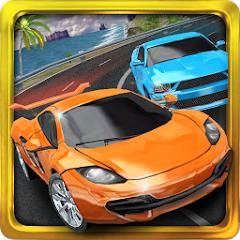
Turbo Driving Racing 3D
A small, offline endless traffic-dodging racer whose recorded strengths are the practical kind: our records credit it with running smoothly on almost any legacy Android device, needing no connection, and pairing tilt steering our stored feedback rates highly with a scoring loop that pays for near-misses. The same records file four limits beside them — dated content, unrealistic collision physics, environments that loop after level 20, and no cloud save, so progress stays on the device that earned it.
- Players on older or low-spec Android hardware — our records note a small file size and a floor of Android 4.1 or higher, and our database's leading strength is smooth performance on almost any legacy Android device
- Anyone who wants a game that works with no connection — the listing FAQ states no active internet connection is required, and our database files offline support as a strength for quick sessions
- Players who get on with tilt steering — our source describes accelerometer steering plus on-screen brake and accelerator pedals as the default, and responsive tilt handling is one of the three themes in our stored user feedback
- Score-chasers who enjoy a risk economy — our records credit bonus cash and high-score multipliers for close-proximity near-miss overtakes and roadside ramp stunts
- Anyone who wants short, self-contained sessions rather than a long campaign, which is the scope our own material describes
- Anyone who changes phones often or reinstalls apps regularly — our database's cons and our stored feedback both record no online account sync or cloud-saving, meaning unlocked cars and collected coins do not carry over
- Players who want contemporary visuals — our cons record graphics, cars and tracks feeling dated for want of modern content updates
- Anyone who wants precise, simulation-grade contact — our cons record unrealistic collision physics that can lead to awkward crashes, and inconsistent traffic behaviour
- Long-run players who need the environments to keep changing — our cons state stages loop continuously and can feel highly repetitive after reaching level 20
- Anyone looking to race other people: the listing FAQ states this is a single-player endless racer with no online matchmaking or multiplayer elements


Overview
The strongest recorded argument for Turbo Driving Racing 3D and the strongest argument against it are nearly the same fact. Our database entry describes a classic entry in the endless traffic-dodging genre, built to run smoothly without modern hardware; our cons record that it lacks modern content updates, leaving graphics, cars and tracks feeling highly dated. One of the three themes in our stored user feedback holds both halves at once: a highly enjoyable classic whose lane-weaving loop still holds up for quick sessions, and one without new features in years. The decision comes down to whether “unchanged” reads to you as dependable or as stale.
The two strengths our records put first
Two recorded advantages decide most of this, and neither is the driving. The first is size. Our database’s leading pro is an extremely lightweight game that runs smoothly on almost any legacy Android device, and our source material supports it from two directions: a small file size, and a stated floor of Android 4.1 or higher. That is a wide compatibility window, and it is a durable strength rather than a consolation — a game that installs quickly and runs on an old handset is useful in a way no amount of content can substitute for, if an old handset is what you have.
The second is that it needs nothing connected. Our database files accessible offline support as a strength and calls it an excellent choice for quick sessions without internet; the listing FAQ is unambiguous that the application does not require any active internet connection. Between them, these two entries describe a game that asks very little of your phone or your signal, and on our own material the case for it starts here rather than with the racing.
What the driving actually is
Our source material describes high-speed lane-weaving with the object being to avoid slow-moving civilian vehicles, across three recorded settings: busy urban streets, quiet countryside roads and scenic coastal shores. In our material’s description this is an endless run against traffic, and the scoring is where the design takes a position.
Our source records that the mechanics encourage risky driving — players earn bonus cash and high-score multipliers by performing close-proximity “near-miss” overtakes and by launching off roadside ramps to pull off aerial stunts. The listing FAQ frames the same thing as advice, telling players who want cash quickly to drive at top speed, take near-miss overtakes, use the stunt ramps and turn on two-way traffic. Our database files that structure as a pro in its own right, crediting mechanics that reward daring overtakes and jumps. The practical reading: the economy pays for the tighter line, and that loop is what our records credit with the game’s excitement.
Controls, and the one that isn’t the default
Our source material puts the default scheme on the accelerometer: tilt steering combined with on-screen brake and accelerator pedals, which our records say gives the lane-weaving a natural, physical feel. Our database lists highly intuitive tilt-to-steer controls among the strengths, and one of our three stored feedback themes singles them out as exceptionally responsive and precise enough to thread dense traffic. Two independent parts of our file agree on the handling, which is more corroboration than a single pro usually carries.
Tilt steering does not suit everyone, and our records cover the alternative: our source states the game includes a fully touch-based directional button system, and the listing FAQ confirms players can switch to it from the options menu. It is a menu step rather than the state you start in.
Coins, eight cars, and what “customization” means here
Progression is recorded as straightforward: our source material describes collecting coins during runs to unlock and upgrade 8 high-performance sports cars, and calls the visual customization basic but functional — 9 distinct paint finishes and 9 custom wheel designs. The listing FAQ repeats both figures, and our database files the simple progression system as a pro in the same modest terms.
Eight cars and two nine-item cosmetic lists make a finite unlock ladder, and we would rather report the scale plainly than inflate it: coherent for something built around short sessions, and the whole of it for anyone who wants a large garage to work through.
Two-way traffic, the difficulty dial
The one structural mode our records name is the dual-highway system: an activatable two-way traffic mode that our source says significantly increases risk, score rewards and cash yields, and that our database files as an exciting, high-stakes challenge for experienced players. Set against the FAQ’s earnings advice, it is the difficulty setting and the economy accelerator at once — the fastest documented route to coins is the one our records describe as the riskiest.
Physics, and where our own records push back
The most concrete criticism in our material concerns contact: our database’s cons record unrealistic collision physics that can lead to awkward car crashes, and inconsistent traffic behaviour alongside them. In a game whose scoring pays for passing within inches of another vehicle, that is not a cosmetic note — the criticism lands on the exact moment a near-miss becomes a hit. We cannot say how often it intrudes, and report it at the scope our database gives it.
The second recorded limit is repetition: our cons state the environmental stages loop continuously and can feel highly repetitive after level 20. That describes a long-run ceiling rather than a first evening.
An age question our own records leave open
Our material carries a tension worth naming. Our database’s cons record an absence of modern content updates and our stored feedback echoes it with a note about years without new features, yet our records also show the Play listing updated on August 21, 2025. We are not going to settle that from a date: a listing update can reflect a compatibility or compliance change rather than new cars, tracks or modes, and nothing in our records says which applies here. We draw no maintenance conclusion in either direction and leave it unresolved, as our material does.
The cloud-save gap
This is the recorded issue most likely to cost someone something concrete. Our database’s cons state that the absence of an online account sync or cloud-saving system means progress is lost if you change devices. One of our three stored feedback themes calls it the biggest drawback in near-identical terms: delete the app or move to a new phone and the unlocked cars and collected coins go with it.
It is corroborated from two directions inside our own material, and it compounds the progression above: coins toward those eight cars are tied to the installation that earned them. Anyone one handset upgrade away should weigh it before building a garage.
What our records do not cover
One plain note on scope: our data for this listing carries nothing on monetization — no ad formats or frequency, no in-app purchase, no subscription, no ad-removal product and no prices. The only currency our material describes is the in-game cash and coins earned by driving. That is a gap in our own records rather than a finding about the app in either direction, and anyone for whom the commercial model is decisive should check the store listing.
Who it’s not for
Anyone who switches phones or reinstalls often: our records are explicit that there is no account sync and no cloud save. Anyone who wants current-generation visuals, given the recorded criticism of dated graphics, cars and tracks. Anyone who needs contact and traffic behaviour to feel consistent, which our cons call unrealistic. Long-haul players who need the environments to keep evolving past level 20. And anyone hoping to race other people, which the listing FAQ rules out.
Our take
Our file on this game runs six recorded strengths against four recorded weaknesses, and the strengths are not the incidental ones. Running on almost any legacy Android device, working with no connection, handling that our stored feedback independently praises, a scoring loop that rewards nerve and a two-way mode that sharpens it — those are the properties that decide whether a short-session racer stays installed, and our records credit the game with all of them.
We land at 3.7 because the four recorded weaknesses are concentrated rather than scattered. The collision criticism lands on the precise mechanic the scoring is built around; dated content and looping environments are the same complaint at two timescales; and the missing cloud save is the only one that takes something away rather than simply failing to give it. Two of the four are corroborated twice inside our file, by the cons and by our stored feedback, and that double weighting keeps the number below four.
We file it as situational because the deciding factors are knowable before install rather than after. If you want something that starts fast, runs on an old phone, needs no signal and asks for ten minutes at a time, our records describe a competent version of that. If you expect your garage to follow you to your next handset, our material says plainly it will not.
How We Evaluate
We did not hands-on test this game. We did not install it, complete a run, tilt a phone, trigger a crash, unlock a car or measure anything on a device. This is a desk assessment, and it rests on our own editorial database entry for Turbo Driving Racing 3D: the mechanics recorded there (lane-weaving through slow civilian traffic, near-miss overtakes, roadside stunt ramps, the coin economy, the eight unlockable cars, the paint and wheel options and the two-way traffic mode), the pros and cons filed alongside it, the listing FAQ, and the recurring themes across published user feedback — which we read as sentiment summaries written up by our team rather than verbatim quotes, and to which we attach no individual star ratings. That feedback set is three themes, not a survey, and we weight it accordingly. We also weighed the store signals: a 3.8 average from 697,211 ratings, 100M+ downloads, nine screenshots, a Play listing updated August 21, 2025, and developer TerranDroid. Three limits on what follows. First, we describe controls, vehicle counts, modes and traffic rules only where our source states them, and leave anything unstated rather than filling it in with a genre default. Second, where our material is silent we report that as a gap in our own data rather than as a finding about the app. Third, where two parts of our own material sit awkwardly together, we say so instead of quietly picking the tidier version.
Pros & Cons
Extremely lightweight game size that runs smoothly on almost any legacy Android device.
Highly intuitive tilt-to-steer controls that provide a natural driving feel on mobile gyroscopes.
High-risk gameplay mechanics that reward daring close-proximity overtakes and jumps.
Simple progression system featuring 8 upgradeable vehicles with basic paint and wheel options.
Accessible offline support, making it an excellent choice for quick gaming sessions without internet.
Exciting two-way traffic modes that add a high-stakes challenge for experienced players.
- ✕
The game lacks modern content updates, leaving the graphics, cars, and tracks feeling highly dated.
- ✕
Unrealistic collision physics can lead to awkward car crashes and inconsistent traffic behavior.
- ✕
The absence of an online account sync or cloud-saving system means progress is lost if you change devices.
- ✕
Environmental stages loop continuously and can feel highly repetitive after reaching level 20.
Download
 Get it on Google Play
  Get it on App Store
 FAQs
Can Turbo Driving Racing 3D be played completely offline?
Yes, the application does not require any active internet connection, making it highly reliable for offline gaming.
How do players earn cash quickly to unlock higher-tier vehicles?
To maximize earnings, drive at top speed, perform close-proximity near-miss overtakes, use stunt ramps, and activate two-way traffic mode.
Does this game support an online multiplayer mode?
No, Turbo Driving Racing 3D is a single-player endless racer and does not include online matchmaking or multiplayer elements.
What options are available for customizing cars?
The custom options are basic but straightforward, allowing players to choose between 9 paint finishes and 9 wheel rim styles.
Is there an alternative steering configuration to tilt controls?
Yes, players can open the options menu and switch from gyro-tilt steering to a fully touch-based button layout.
Hot Reviews
This game is a highly enjoyable classic. While it has not received updates or new features in years, the simple mechanics and lane-weaving gameplay loop still hold up incredibly well for quick gaming sessions.
The tilt controls are exceptionally responsive and feel highly natural compared to many modern mobile games, allowing players to dodge dense traffic patterns with high precision.
The biggest drawback is the lack of an online account sync system. If you delete the app or switch devices, all unlocked cars and collected coins are lost, meaning you have to start over from scratch.