
Evil Nun: Horror at School
The acoustic tracking is the load-bearing idea here, and on the records we can check it earns that billing — Sister Madeline follows noise, so exploring becomes a series of deliberate quiet decisions rather than a sweep. The constraint to weigh before installing is session shape: our records list no manual save, so a run that gets interrupted is a run you repeat.
- Players who want tension to come from sound rather than sight — our source material records Sister Madeline's acoustic tracking AI reacting to footsteps, dropped tools and opened cabinets, and published user feedback singles out that same system as what works
- Anyone who can play with stereo headphones somewhere quiet — our FAQ records them as highly recommended for tracking directional audio cues, and that channel is what the design runs on
- Players who replay for alternative solutions rather than faster times — our FAQ records multiple escape routes, each needing a unique item configuration and delivering a different ending
- Newcomers who like to learn a layout before being tested on it — our FAQ records Ghost Mode as making the player invisible, for free exploration and puzzle practice without threat
- Players whose sessions get interrupted — our cons list records the absence of a manual save system, so leaving the app during a long run resets progress and requires starting over
- Completionists working through the hidden narrative material in one continuous pass — our cons list records that escaping immediately resets item placements
- Anyone who will be playing on a phone speaker with background noise around them, since the directional cues our FAQ describes are how the antagonist gets located
- Players who are easily pulled out of an atmosphere by advertising — our cons list records frequent ad breaks in the free version as disruptive to immersion
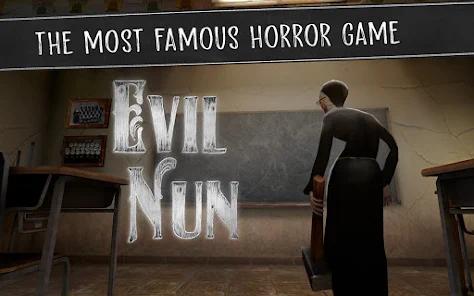
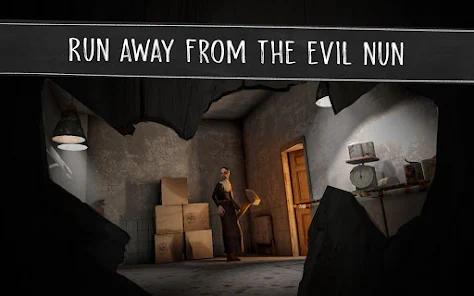
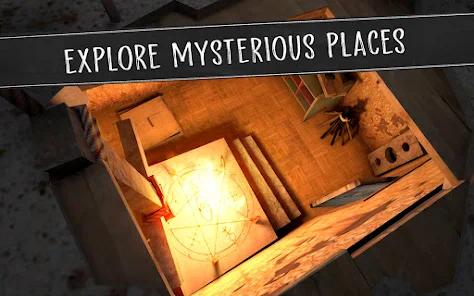
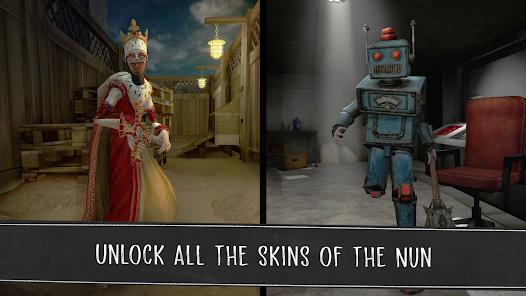


Overview
The design decision worth judging this game on is that it makes noise the threat instead of sight. Sister Madeline, our records tell us, tracks sound: footsteps, a dropped tool, an opened cabinet. That one rule changes how the space gets played — you stop moving efficiently and start moving deliberately, and the map becomes something to negotiate rather than sweep. It is a clean idea, well corroborated in published feedback, and the reason to install. What we would weigh against it is not the tension but the plumbing: our records list no manual save, so an interrupted run is a repeated run.
The antagonist follows sound
Our source material records the acoustic tracking AI as the game’s primary mechanism: any noise the player generates immediately draws Sister Madeline to that location, forcing a careful approach to exploration. Our own editorial database leads its strengths with that same system, crediting her responsive behaviour with a dynamic, high-tension hide-and-seek experience rather than a fixed patrol to be memorised.
Published user feedback corroborates it with an example rather than an adjective: one reviewer describes having to freeze and hide because a dropped key had alerted her, and calls the resulting suspense genuine. Our description on file, our own pros list and independent published feedback converge on the same mechanic as the thing that works.
The map is the other half of it
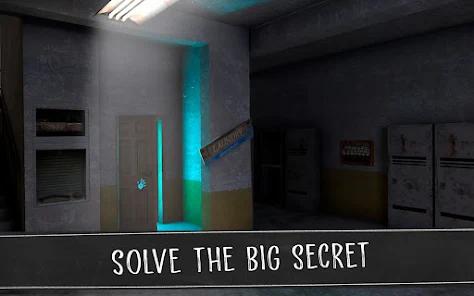
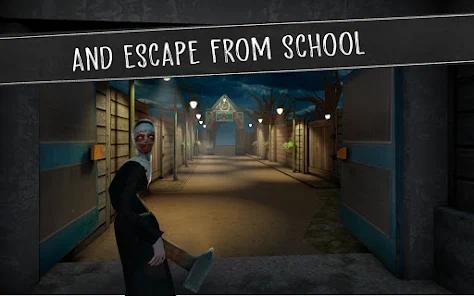
A stealth loop built on noise needs somewhere worth being quiet in. Our source material places the game inside the expansive map of Eagle’s Junior High School and records the layout as spanning multiple levels, with secret passages, crawlspaces and interactive environmental elements. Escaping means completing logical puzzles and finding key items, and our own pros list credits the design with hidden pathways and shortcuts that reward thorough exploration.
That last word carries weight here: where sight lines are not the threat, a shortcut is not just a convenience but a way of covering ground without making the noise that gives you away.
What the headphone note is actually for
The most practically useful line in our records is a small one. Our FAQ records that stereo headphones are highly recommended, because they let a player accurately track the directional audio cues of Sister Madeline’s footsteps and movements. In a design that converts sound into information, that is less an atmospheric suggestion than a description of the interface: on a phone speaker with noise around you, you are giving up the channel the systems run on. If you take one operational note from this review, take that one.
More than one way out
Our source material records multiple escape routes, and our FAQ adds that each requires a unique item configuration and offers a different ending. Our own pros list treats that as the replay argument: alternative solutions to find rather than one path to repeat.
There is also narrative material to uncover. Our FAQ answers a question about the boy with the blue hands by naming him William Bismarck, a central character whose backstory is revealed through narrative cutscenes and hidden notes. Our records do not set out what that history contains. Our source material groups narrative secrets with the different endings as part of the replay argument — material found by exploring, not only by finishing.
The practice mode earns its place
Our source material records multiple difficulty settings, including a threat-free Ghost Mode for safe puzzle exploration; our FAQ is more specific, recording that it renders the player invisible to Sister Madeline for free exploration and puzzle practice without threat. Our own pros list files it as an accessibility feature: a route to learning puzzle solutions and layouts without pressure.
We would give that more weight than its position on a feature list suggests. A design that hides shortcuts, crawlspaces and several exits asks a player to hold a large multi-level layout in their head, and a mode for building that mental map with no threat attached is an onboarding tool, not a difficulty slider.
What you unlock along the way
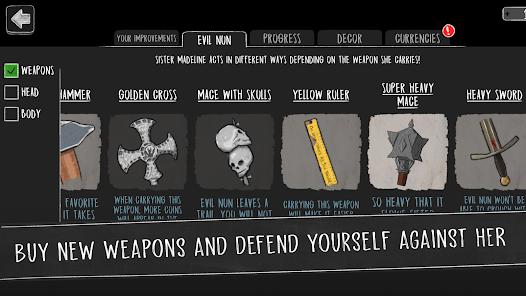
Our own pros list records unlockable customisation as a progression reward, and our FAQ sets out what is on offer: alternative skins for Sister Madeline, changeable weapon models, and decorative items for the environment. It is a cosmetic layer and we report it as one — something for a returning player to accumulate across runs, with no effect on the systems described above. For a game whose replay argument rests on running the same map repeatedly, a visible reason to keep going is doing real work.
When your own footsteps get louder than hers
The documented frictions begin, awkwardly, on that same audio channel. Our cons list records footstep sound mixing issues: the player’s own loud footsteps can occasionally drown out the sound of the approaching nun. Published user feedback repeats the observation, describing the sound design as highly immersive while noting that the volume of the player’s own footsteps occasionally masks her approaches.
Both sources put it at the same scale — occasionally, not constantly. It is still worth naming, as the one recorded flaw landing directly on the mechanic everything else is built around.
The save behaviour is the thing to plan around
This is the most consequential item in our records, and it is general rather than situational: it reaches every player, not a subset. Our cons list records the absence of a manual save system — leaving the app during a long run resets progress and requires starting over. Published user feedback puts the cost plainly, describing the puzzle and horror elements as highly engaging while calling the missing mid-game save something that makes long sessions unnecessarily punishing.
A second, narrower reset sits alongside it. Our cons list records that successfully escaping immediately resets item placements, which our records say hinders players hunting for lore secrets. That one is situational — it lands on players treating the game as an archive to catalogue rather than a run to finish — but for that group it is the more pointed of the two, since success is what undoes the groundwork.
Ghost Mode is the nearest thing on record to a counterweight, since layouts and mechanics learned there are not paid for with a lost run.
Ads in the free version
Our cons list records frequent dynamic ad placements, and is specific about the scope and the cost: frequent ad breaks in the free version can disrupt the immersive horror atmosphere. It registers more than a timing annoyance would: a break landing in the middle of an audio channel the player is actively listening to interrupts the mechanic itself.
Who it’s not for
Players who game in short, interruptible bursts. With no manual save on record, an interrupted run is a run to be repeated, and that governs when this is worth starting more than any difficulty setting does.
Anyone who cannot play with stereo headphones, or somewhere quiet enough to use them: our FAQ’s recommendation is not decoration, and the directional cues are the locating tool.
Completionists cataloguing every hidden note in one unbroken project, since our records say item placements reset the moment you escape. And anyone whose objection to advertising is about atmosphere rather than time, given the immersion cost our cons list records for the free version.
Our take
We put this at 4.1, a little under the 4.3 the store shows across 548,362 ratings, and the gap is deliberate rather than cautious.
The case for a high number is strong and we would not argue it away. Five documented strengths, and on the central one our description on file, our own pros list and published user feedback all name the same system as the thing that works. Around it sit a multi-level map with hidden routes, several exits with distinct endings, a useful threat-free practice mode and a cosmetic layer to accumulate — a coherent design rather than a feature pile.
The deduction is for one item. Of the four recorded frictions, two are situational: the post-escape reset lands on players hunting lore, and the mixing issue is recorded as occasional. The ad frequency is general but confined to the free version. The fourth is general and structural — with no manual save, the length of run you can safely attempt is set by your circumstances rather than your skill.
We asked whether an average built on 548,362 ratings has already absorbed that, and we think it partly has; a sample that size is not naive about how the game behaves. But an average is a blunt instrument for a friction that changes how a session has to be planned rather than how much of it is enjoyed. So we take 0.2 off for that one item and nothing for the rest, which we would score at or above the store’s number.
How We Evaluate
We did not hands-on test Evil Nun: Horror at School. This assessment rests on the description we hold on file — which is our own editorial write-up rather than developer marketing — together with the pros and cons recorded in our own editorial database, our FAQ entries, and the themes in published user reviews. Every claim about how the tension, the audio or the puzzles feel in practice is therefore reported as someone else's and attributed to its source. We also weighed the store signals: a 4.3 average across 548,362 ratings, 50M+ downloads, seven screenshots, a Play update dated November 18, 2025, and developer Keplerians Horror Games. The published reviews we hold carry star labels we do not consider reliable — several positive labels sit on critical observations — so we read that feedback for its content only and attach no score to any theme. We hold no pricing information: our records mention a free version but describe no paid tier and give no purchase amounts, so we quote none. We also hold no data on how often the recorded audio mixing issue occurs or under what conditions.
Pros & Cons
Advanced Acoustic Tracking AI: Sister Madeline's responsive behavior creates a dynamic, high-tension hide-and-seek experience.
Intricate Level Design: The detailed school map is filled with hidden pathways and shortcuts that reward thorough exploration.
High Replay Value: The inclusion of multiple escape routes and secrets encourages players to explore alternative solutions.
Accessible Practice Mode: Ghost Mode allows players to learn puzzle solutions and map layouts without pressure.
Satisfying Progression Rewards: Unlockable customization items allow players to personalize their gameplay experience.
- ✕
Footstep Sound Mixing Issues: Loud player footsteps can occasionally drown out the sound of the approaching nun.
- ✕
Absence of a Manual Save System: Leaving the app during a long run resets progress, requiring players to start over.
- ✕
Immediate Progress Resets on Success: Successfully escaping automatically resets item placements, hindering players hunting for lore secrets.
- ✕
Frequent Dynamic Ad Placements: Frequent ad breaks in the free version can disrupt the immersive horror atmosphere.
Download
 Get it on Google Play
  Get it on App Store
 FAQs
How does Ghost Mode help new players?
Ghost Mode renders the player invisible to Sister Madeline, allowing them to freely explore the map and practice puzzle mechanics without threat.
Who is the boy with the blue hands mentioned in the game?
He is William Bismarck, a central character whose tragic history is revealed through narrative cutscenes and hidden notes.
Can the game be completed using different methods?
Yes, the game features multiple escape routes, each requiring unique item configurations and offering a different ending.
What is the benefit of playing with stereo headphones?
Stereo headphones are highly recommended to accurately track the directional audio cues of Sister Madeline's footsteps and movements.
Are players able to customize the visual look of the game?
Yes, players can unlock customized skins for Sister Madeline, change weapon models, and modify school decorations.
Hot Reviews
The AI is incredibly effective. Having to freeze and hide because a dropped key alerted the nun creates genuine suspense.
The puzzle and horror aspects are highly engaging, but the lack of a mid-game save system makes long sessions unnecessarily punishing.
The sound design is highly immersive, but the loud volume of the player's own footsteps occasionally masks the nun's approaches.
The game balances environmental puzzles with high-stakes tension perfectly, reminding players of classic console survival horror games.