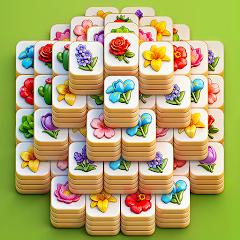
Tile Explorer - Triple Match
A 4.9 average across 1,803,228 ratings is the strongest store signal in our catalogue to date, and the design behind it is easy to name: a layered matching puzzle with no clock, where the tension comes from a seven-slot holding bar rather than a countdown. The caveat our own database records is the ad reliance for free players — the same rewarded-ad route that keeps the game generous is, by our database's account, what can break up the calm it is built around.
- Players who want a matching puzzle with no clock — our source material records a no-timer design in which the pressure comes from a seven-slot holding bar rather than a countdown, so nothing is lost by sitting and studying the board
- Anyone who would rather watch an ad than buy their way out of a stuck board: our source material records a 30-second ad route to a shuffle or an extra slot, and a published-feedback theme records many users praising the game on exactly that fairness
- Players on older or storage-constrained phones, and anyone who plays without a connection — our database records a 150MB footprint, battery-friendly optimization and offline play support
- Anyone whose priority is uninterrupted quiet — our own database records a high reliance on video ads for free users, which it says can disrupt the game's calm atmosphere
- Players who want the mechanics to keep changing: our database records the loop becoming repetitive after the first 500 levels, as the mechanics evolve slowly
- Competitive players who want rankings and rivalry — our database records the social features, leaderboards included, as currently less developed
- Anyone shopping for a verified relaxation, sleep or cognitive product — the calm framing in our material is design intent and user sentiment, not an effect we have verified, and we hold no research on it
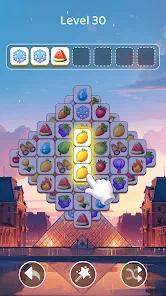
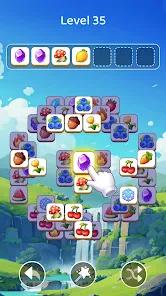
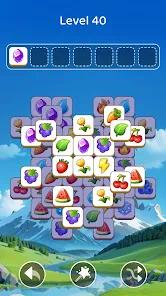
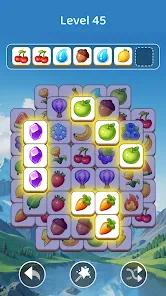


Overview
A 4.9 average across 1,803,228 ratings on 100M+ installs is the strongest store signal in our catalogue so far, and we do not think it arrived by accident. Tile Explorer makes a structural choice our source material sets against the traditional match-3 template of speed and chain reactions: there is no clock, and the pressure comes from a seven-slot holding bar that fills whether you play fast or slowly. What to settle before installing is the trade our own database records against that: a high reliance on video ads for free users, which is also what keeps the game generous.
What the board actually asks of you
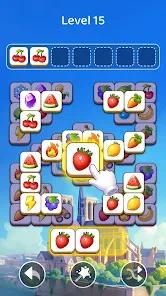
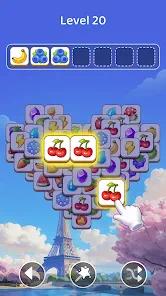
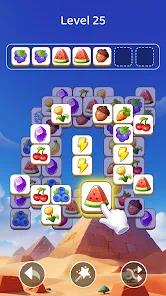
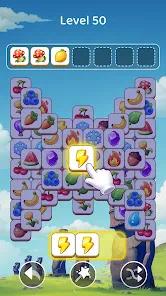
Our source material’s analytical account describes a “tile stack” system: tiles sit in multiple layers, you tap them into a holding bar, and three identical tiles clear. Removing one reveals whatever sits beneath, so every tap reshapes the board you are planning against.
The seven-slot bar is the real constraint. Our FAQ gives the failure condition plainly: if all seven slots fill with unmatched tiles, the game ends. Every unmatched tile taken costs a slot. A clock punishes hesitation; a seven-slot bar punishes imprecision. On the rule as recorded, the interesting decision is a refusal — the tile you can see and choose not to take. That is reasoning from a documented mechanic, not from a session at the board.
No timer, and why we would put it first
Our source material frames the design around what it calls “serene strategy”: depth rather than speed. Paired with what the same account calls an “infinite retry” philosophy — a stuck player can often watch a 30-second ad to shuffle the board or add a slot — running out of time is not one of the ways to lose. Our material says often, not always. Removing the countdown removes the penalty for thinking, which changes who the game is for.
Destinations as chapters, not wallpaper
Our source material calls the theme “environmental escapism”, and the structure matters more than the scenery: progress runs through thousands of puzzles across destinations — Paris, Tokyo, the Great Barrier Reef and ancient temples are the ones on record — each a chapter with evolving tile sets and rising tactical complexity.
The Travel Journal, boosters and tile styles
Our FAQ records a Travel Journal that collects a virtual postcard from every city visited, and our database calls it a satisfying meta-layer of achievement. Our source material is blunter about the function, calling the app a “retention engine” — its framing, not ours.
Our database credits a booster set — Undo, Shuffle and Hint — with ensuring players are rarely permanently stuck, and our FAQ records how they arrive: daily login gifts, seasonal events, or short video ads. The FAQ also lists unlockable tile sets: fruits, flowers, travel gear, historical artifacts.
The ad economy, both sides
Our source material frames the 30-second ad for a shuffle or an extra slot as a compromise that keeps casual users engaged without financial pressure, positioning it against what it calls “pay-to-win” puzzle games that force players to buy lives. That is our material’s framing, not a comparison we have run. A published-feedback theme runs the same way: many users praise the game for its fairness, frequently noting you can keep playing as long as you are willing to watch an occasional ad — our team’s summary of sentiment, not a quotation.
Against it, our own database records a con plainly: a high reliance on video ads for free users, which can disrupt the game’s calm atmosphere. The trade is worth naming rather than resolving: the mechanism that removes the paywall is the same one that interrupts the quiet the game is built to offer. We attach no frequency figure — none is on record, we measured none — and read no intent into it. No pricing is on record either, so we cannot say whether an ad-removal purchase exists or what it would cost.
After the first 500 levels
Our database’s most specific criticism deserves reporting as recorded rather than flattened: the loop can become repetitive after the first 500 levels, as the mechanics evolve slowly. The complaint is about mechanical evolution rather than content volume — new destinations and tile sets keep arriving; the underlying verb changes less. We would not wave that through: a game asking for this much of your time is exactly where a slowly evolving loop bites hardest. Our material records no total level count, so we cannot say what share of the game sits past that marker.
Footprint, older phones, and the offline question
Our database records a small 150MB footprint and battery-friendly optimization, and credits both with keeping the game accessible on older hardware. We give that weight, because on a phone with little free space, install size is often what settles whether a game gets tried and kept. We ran no benchmark and hold no size comparison against anything else: both lines are our database’s record, not measurements of ours.
Offline play support is recorded too, a natural fit for a puzzle with no timer. One honest unknown: rewarded ads need a connection, and our material does not say how that route behaves with no signal, so we make no claim either way.
Windows, and the thinner part of the offering
Our FAQ records the game as available on Windows via Google Play Games; we make no claim about how it performs there. Our database records leaderboards and the surrounding social features as currently less developed — we keep that “currently”: it describes the present state, not a permanent absence.
About the calm — what is documented and what is not
Three things in our material touch this, and they should not be blurred together.
First, our source material’s analysis records that the ASMR soundscapes and smooth animations are designed to reduce physiological stress during play — design intent recorded in our material, not a measured effect.
Second, our own editorial database separately lists a pro describing a loop that balances brain training with stress relief. That is our database’s wording, not a finding we have tested.
Third, a record describes users often reporting they use the app as a bedtime or commute tool to quiet their minds, the click of tiles repeatedly mentioned as calming. That text appears twice in our material, in the FAQ and among the feedback themes, word for word: one record duplicated, not two independent signals.
We have verified no stress-reduction, relaxation, sleep or cognitive effect here, hold no research on it and cite no study; nothing above is a health claim in either direction. Nobody should install this as a relaxation aid, a sleep aid or a cognitive product on our say-so.
What is documented is narrower and still worth crediting: no timer, and retries our material describes as effectively unlimited. Those are mechanics, and our source material presents them as a deliberate departure from a match-3 tradition built on speed. Whether they produce any physiological or psychological effect sits outside what a desk assessment can settle.
Recency, scale and the category
On maintenance we hold one date: our data records an April 12 2026 Play update, with eight screenshots on the listing and Oakever Games as the developer. The scale is the headline: 4.9 across 1,803,228 ratings on 100M+ installs is a very large audience agreeing, and not a number we intend to argue away.
We have run no head-to-head, so read this as framing. What distinguishes the design on paper is the layered stack in which clearing one tile reveals those beneath, the seven-slot squeeze in place of a countdown, and a progression that changes scenery as well as difficulty. A published-feedback theme cites the stylized graphics and smooth animations as superior to generic entries in the category, and the transitions between destinations as a reward for persistence — that theme’s characterization, not ours; we have not seen the game run.
Who it’s not for
Four groups should think twice. Anyone whose priority is uninterrupted quiet should weigh the ad reliance our database records. Players who need the mechanics themselves to keep evolving should note the repetition flagged after the first 500 levels. Competitive players who want rankings will find the social side currently less developed. And anyone shopping for a verified relaxation or cognitive product should not read the calm framing as evidence of one.
Our take
Tile Explorer has an unusually clear idea of where its tension should come from. The layered board, the seven-slot bar that makes restraint the skill, the destination chapters, the Travel Journal, the boosters, offline play and a 150MB footprint are documented strengths, and 4.9 across 1,803,228 ratings reflects an enormous audience finding what it came for. We land a little under the store average rather than against it, and the gap is three things our database records: the ad reliance, the slow mechanical evolution past level 500, and the thinner social side. The largest of those is a trade rather than a flaw — the rewarded-ad route that spares free players from buying past a stuck board is also what breaks up the quiet. If watching an occasional ad is a price you would rather pay than a paywall, this is an easy recommendation; if interruption is what would spoil it, settle that before you install.
How We Evaluate
We did not hands-on test this game. This review is a desk assessment built from Tile Explorer's Google Play listing and from our source material's own analytical description of the app, together with its stated features: the layered tile-stack puzzle in which removing one tile reveals those beneath, the seven-slot holding bar, the absence of a timer, destination chapters with evolving tile sets, the Travel Journal and postcard collection, the Undo/Shuffle/Hint booster system, unlockable tile styles, offline play, and the rewarded-ad route to shuffles and extra slots. We also weighed the pros and cons recorded in our own editorial database, our database's FAQ, and recurring themes in published user feedback — which we read as sentiment summaries written by our team rather than as verbatim quotes, and whose original scope wording we have preserved. The store signals we weighed: a 4.9 average across 1,803,228 ratings, 100M+ installs, eight screenshots on record, an April 12 2026 Play update, and developer Oakever Games. Three limits we state rather than paper over. We have verified no stress-reduction, relaxation, sleep or cognitive effect from this game, hold no research on it and cite no study. The ASMR and relaxation text appears twice in our material — once in our FAQ, once among the feedback themes, word for word — so we treat it as a single duplicated record rather than two independent signals. And no pricing is on record, so we make no claim about what anything costs.
Pros & Cons
A remarkably relaxing gameplay loop that successfully balances brain training with stress relief.
The "no-timer" system allows for thoughtful strategy, making it popular among a more mature demographic.
Stunning, diverse backdrops that provide a sense of global exploration and visual variety.
The game is highly accessible on older hardware, with a small 150MB footprint and battery-friendly optimization.
A robust booster system (Undo, Shuffle, Hint) ensures that players are rarely permanently stuck.
The "Travel Journal" and postcard collection add a satisfying meta-layer of achievement.
Offline play support allows users to continue their "journey" without an active internet connection.
- ✕
The gameplay loop can become repetitive after the first 500 levels, as mechanics evolve slowly.
- ✕
High reliance on video ads for free users, which can disrupt the "Zen" atmosphere of the game.
- ✕
The social features (leaderboards) are currently less developed.
Download


FAQs
How many tiles can I hold in my bar?
You have a maximum of 7 slots. If all 7 fill with unmatched tiles, the game ends.
What is the "Travel Journal"?
It’s a feature where you collect virtual postcards from every city you visit, serving as a progress tracker.
Are there different tile styles?
Yes, you can unlock unique tile sets including fruits, flowers, travel gear, and historical artifacts.
Can I play on PC?
Yes, Tile Explorer is available on Windows via Google Play Games for an "Official Google Experience".
How do I get more boosters?
Boosters can be earned through daily login gifts, seasonal events, or by watching short video ads.
ASMR and Relaxation
Users often report using the app as a "bedtime" or "commute" tool to quiet their minds. The sound of tiles clicking together is repeatedly mentioned as a calming feature.
Hot Reviews
Many users praise the game for its "fairness." Reviewers frequently note that unlike other match games that force you to buy "lives," Tile Explorer lets you keep playing as long as you're willing to watch an occasional ad.
The "stylized" graphics and smooth animations are cited as superior to generic mahjong clones. The transitions between "countries" feel like a reward for the player’s persistence.
Users often report using the app as a "bedtime" or "commute" tool to quiet their minds. The sound of tiles clicking together is repeatedly mentioned as a calming feature.