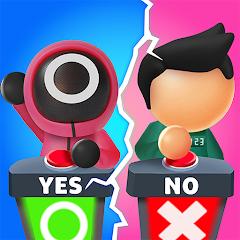
Guess Their Answer - IQ Games
A guessing game scored against the crowd rather than against the facts — an answer counts because enough other players typed it, not because it is true — and half a million ratings suggest that loop holds up. The friction is on the free tier: our records list an ad load that includes a placement overlapping the on-screen keyboard you type answers on, which makes the ad-free route — Play Pass, or approximately $7.99 — the deciding variable.
- Players who like being scored on what the crowd said rather than on what is factually correct — our FAQ is explicit that an answer is correct when it appears among the top most popular responses collected from the game's user base
- Google Play Pass subscribers — our source material and our pros list both record the app as included in the subscription with an ad-free experience, which removes the ad load at no extra cost
- People who play in short bursts: rounds are recorded at around 30 seconds, and published feedback cites the game as something that needs no large time commitment
- Chromebook, tablet and Windows 10 users — our source material records support across those platforms, and our FAQ notes Chromebook compatibility specifically for players who prefer a physical keyboard for typing answers
- Free-tier players typing against a countdown — our cons list records ad placement overlapping the on-screen keyboard, causing accidental clicks, which lands inside the round rather than between rounds
- Anyone who needs a match to survive a stray tap on 'Home' — our cons list records a report that pressing it during a match logs the player out entirely and loses progress
- Players who want a harder question set — our records note that some users find the questions 'super basic', which our notes say may not satisfy players looking for more difficulty
- Anyone expecting the headline mode to work offline — our pros list records 'zero WiFi' play for non-competitive modes only, and the core mode on record is real-time 1v1 matchmaking
- Players who may have to close the app partway through a tournament — our FAQ records that exiting during Qualifiers, Semi-Finals or Finals usually disqualifies you from the current bracket


Overview
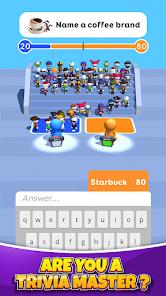
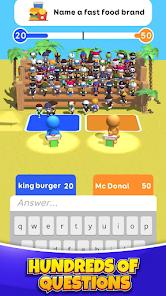
Guess Their Answer never asks whether you are right. It asks whether you are typical, and that one design choice is what makes it worth looking at. Our FAQ states the scoring rule plainly: an answer is correct if it appears among the top most popular responses collected from the game’s user base. You score not for naming something true but for naming what enough other players named first. A 4.5 average across 486,534 ratings on 50M+ downloads says that loop works on a very large scale. Sitting on top of it is an ad load our records list as a primary complaint among free-tier users — including, most concretely, an ad placement that overlaps the on-screen keyboard, in a game whose only input is typing fast.
What counts as correct here
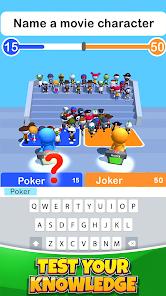
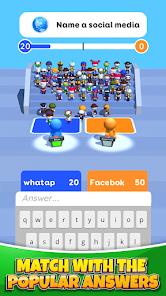
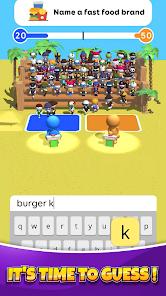
The scoring rule carries the whole game. Our source material records the questions as quirky surveys, its own two examples being what do people order at a bar? and common social media apps. Our FAQ supplies the mechanism: correctness is popularity, measured against responses already collected from the player base. Our source material adds that points are awarded on how popular your response is in that survey database, with answers closer to the majority scoring higher.
The consequence is unusual and, we think, the best reason to try it. A clever, accurate, unusual answer is worth less than an obvious one, on purpose. You are not recalling a fact; you are estimating what a large group of strangers would have typed. Our source material records the format as resembling that of the Family Feud television show, a useful shorthand for the survey-consensus idea.
The opponent sets the difficulty
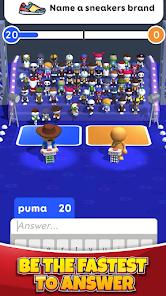
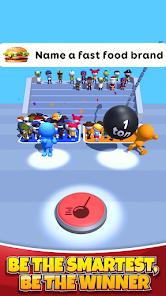
The core mode is a real-time 1v1 match. Our source material records players being matched globally and typing answers as fast as they can, with response popularity driving the score. Our own database entry counts the matchmaking among the app’s strengths for a specific reason: the difficulty of any given match is set by the opponent’s speed and creativity rather than by a fixed setting, so the same question is comfortable against a slow opponent and punishing against a quick one. It keeps a fixed question bank from feeling solved.
Published feedback supports the appeal. Reviewers describe the 1v1 battle as “really addicting” and characterise the pressure of typing popular answers against a live opponent as a high-energy “brain game” — their phrase for it.
Typing is the input, and it changes the hardware question
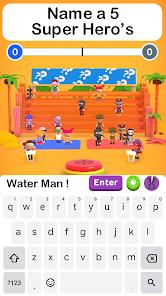
Our pros list records text entry rather than multiple-choice buttons as a deliberate source of challenge, testing spelling and typing speed under pressure. Tapping one of four options and producing a word from nothing are different demands, and the second is harder to do at speed.
It also makes the platform question practical. Our source material records support for Android, Windows 10 via Intel technology, Chromebooks and tablets, and our FAQ singles out Chromebook compatibility for players who prefer a physical keyboard for typing answers. If you have a keyboard available, the typing mechanic is precisely the part of this game it helps.
Topic range, and the complaint about depth
Our pros list records a wide topic span — foods, drinks, celebrities, social media — which is what a survey-consensus format needs to stay fed, since the questions only have to be things a crowd would have an opinion about. Breadth here is load-bearing rather than decorative.
Set against that, our records note that some users find the questions “super basic”, which our notes say may not satisfy players looking for a deeper challenge. That is a player assessment of the question bank, and we report it as a fit signal: the format rewards the obvious answer by design, and our records put the difficulty in the opponent and the clock rather than in the question.
Tournaments, and the cost of leaving one
Our FAQ records a Tournament structure that runs Qualifiers, then Semi-Finals, then Finals, along with one rule worth knowing before you enter: exiting the app during any of those stages usually disqualifies you from the current bracket. That is a reasonable rule for a live bracket, and also a real constraint on when to start one.
The ad load, and the keyboard placement
Our cons list records advertisement density as a primary complaint among free-tier users, with short 30-second rounds followed by longer interstitial ads. Published feedback describes the same ratio independently; one reviewer, noting how short the levels are, said they feel like they are “watching ads more than playing the game”.
The more concrete entry is the placement. Our cons list records ads overlapping the on-screen keyboard, leading to accidental clicks. In a game whose only input is typing an answer against a countdown, an ad over the keyboard is not an interruption between rounds — it is inside the round, on the surface you are being timed on. Of the four problems in our records, that is the one we would most want addressed, because it costs a player the round rather than the wait.
On the alternative: our records put the ad-free version at approximately $7.99, and the live Play listing is the authority on the current figure.
Play Pass changes the calculation
Our source material and our pros list both record the app as included in Google Play Pass, giving subscribers an ad-free experience. If you already subscribe, that removes the ad friction at no extra cost. One nuance from our FAQ matters alongside it: while Play Pass removes ads, individual in-game item purchases may still exist.
Offline, with a precise boundary
Our pros list records the app running with “zero WiFi” for non-competitive modes. Read that exactly as written. The core mode on record is real-time 1v1 matchmaking against a live opponent, which requires a connection by definition, so offline covers part of the game and not its headline act — a genuine convenience in a dead zone, not a promise that matches keep working.
One reported technical issue
Our cons list records that clicking the “Home” button during a match logs the player out entirely, resulting in lost progress. Lost progress is why we weight it: a logout landing mid-match takes the match with it, so the cost is a lost result rather than a reload. In a game where a round runs about thirty seconds, an exit is cheap to trigger and expensive to absorb.
What our records say about data handling
Two concrete items. Our source material records that TapNation stores user information primarily in France. Our FAQ records that personal data is kept for up to three years after the last contact. For what the app collects and shares today, the Data safety section of the Play listing is the current authoritative source.
Who it’s not for
Free-tier players who type under time pressure and have no patience for an ad landing on the input surface. The keyboard overlap is the most specific problem in our records, and the one most likely to cost you a round you were winning.
It is also not for players who want the questions themselves to be hard, nor for anyone expecting the competitive core to work without a connection — offline on record covers the non-competitive modes only.
And it asks something of your timing. Our FAQ records that exiting the app during a tournament stage usually disqualifies you from the current bracket, so a bracket run wants a window you can see through to the end.
Our take
We land at 4.2, slightly under the store’s 4.5, and the reasoning is about which complaints that 4.5 has already absorbed.
Six things are recorded in this game’s favour, and none are filler: a scoring rule that makes the crowd the answer key; real-time 1v1 matchmaking where a live opponent rather than a difficulty setting decides how hard a match is; Play Pass inclusion that removes ads outright for subscribers; a topic range wide enough to keep a survey format supplied; typed answers instead of multiple choice; and offline play for the non-competitive modes. That reads as one design rather than a feature list.
Against it sit four recorded problems, and they are not equal. Ad density and the roughly $7.99 ad-free price cost time and money, and a 4.5 across 486,534 ratings suggests an enormous audience has weighed exactly that and stayed, so we leave those two priced where that audience already put them. The “super basic” complaint is a fit question rather than a fault; it tells you who this suits.
What we do price in are the two functional ones. The keyboard overlap is a placement fault rather than a volume one — the problem is not that an ad runs, it is that it runs on the surface you are typing on, which converts a keystroke into a mis-tap inside a scored round. The Home-button logout ends the match outright. Both cost a player the round rather than just patience, and in a game built on 30-second rounds the round is the unit that matters. Three tenths is what that is worth to us: enough to register, and short of arguing with half a million ratings.
How We Evaluate
We did not hands-on test Guess Their Answer. This assessment rests on the app's Google Play listing signals (a 4.5 average across 486,534 ratings, 50M+ downloads, the Trivia category, eight screenshots, developer TapNation), the description on record, the pros and cons in our own editorial database, our FAQ entries, and the themes in the published user reviews we hold. Not having played it did not bear on the score in either direction: the rating below is argued from the recorded pros and cons only, and the gaps in our material are disclosed here rather than deducted there. So anything about how the game actually plays — how matchmaking feels, how long a queue takes, how the question bank holds up across a long session — is attributed to whoever recorded it, and we hold no data on how often the reported Home-button logout occurs, on which devices, or on its current status. The star labels attached to feedback themes in our records are inconsistent — the same label sits on praise and on the ad-density complaint alike — so we did not treat them as a signal and have attached no rating to any feedback theme.
Pros & Cons
The "social intuition" mechanic is highly addictive and offers a refreshing break from the academic tone of traditional trivia apps.
The real-time competitive matchmaking ensures that every game is unique, as the difficulty is determined by the opponent's speed and creativity.
For Google Play Pass subscribers, the app becomes a premier ad-free experience, adding significant value to the service.
The game covers a wide range of topics—from foods and drinks to celebrities and social media—ensuring that it remains relevant to players of all ages.
The text-entry system, rather than multiple-choice buttons, adds a layer of challenge that tests spelling and typing speed under pressure.
Furthermore, the app's ability to run with "zero WiFi" for non-competitive modes makes it an excellent choice for offline mobile entertainment.
- ✕
Advertisement density is a primary complaint among free-tier users, with many reporting that short 30-second rounds are followed by longer interstitial ads. The price of the ad-free version (approximately $7.99) is noted as being relatively high for a casual game.
- ✕
Technical issues have been reported where clicking the "Home" button during a match logs the player out entirely, resulting in lost progress.
- ✕
Some users also find the questions to be "super basic," which may not satisfy those seeking a deeper intellectual challenge.
- ✕
Finally, the ad placement has been criticized for overlapping with the on-screen keyboard, leading to accidental clicks.
Download


FAQs
How does the game determine the "correctness" of an answer?
Since it is survey-based, an answer is "correct" if it appears in the top most popular responses collected from the game's user base.
What to know about the subscription?
Users should note that while Google Play Pass removes ads, individual in-game item purchases may still exist. The app requires roughly 722 characters of metadata description on its store page, highlighting its focus on "IQ" and "instincts".
How does the app protect user's data security?
TapNation stores personal data for up to three years after the last contact and uses technically evolved measures to prevent unauthorized disclosure.
What is Tournament?
The "Tournament" structure moves from Qualifiers to Semi-Finals and then Finals; if a player exits the app during any of these stages, they are usually disqualified from the current bracket.
What device is supported?
The game's compatibility with Chromebooks makes it a popular choice for students and casual users who prefer a physical keyboard for typing answers.
Hot Reviews
Many players describe the 1v1 battle as "really addicting," noting that the pressure of typing popular answers against a live opponent creates a high-energy "brain game" experience.
A recurring theme in reviews is the frustration with the ad-to-play ratio. One user noted that because levels are so short, they feel like they are "watching ads more than playing the game".
Users appreciate that the game doesn't require a huge time commitment. It is frequently cited as a great morning activity to "get the brain thinking" before starting the day.