
Fable Town: Merging Games
The story spine is what our records credit as the differentiator — a merge board with mystery, romance and family conflict layered on top — and 4.8 across 60,586 ratings suggests it lands for most players. The thing to weigh first is the energy economy: our database records that the cost of basic moves relative to the refill rate often caps play at short windows, and our source material's analysis records an excessive number of purchase pop-ups, sometimes $5–$11 bundles the moment the app opens.
- Merge players who want a plot rather than a level counter — our database credits the mix of investigation, love triangles and family conflict for keeping players invested in the town's secrets, and it is the clearest thing separating this from a plain merge board
- Short-session players by preference: if a ten-minute check-in on a commute is genuinely your pattern, the energy pacing our database flags as a limitation is simply the shape of the game, and the listing's Offline category plus an offline core merge-and-renovate loop suits that use
- Collectors and decorators who like several tracks running at once — town renovation, story chapters, and legendary creatures such as dragons and unicorns that our FAQ says you evolve and settle into habitats you have rebuilt yourself
- Anyone who wants long uninterrupted sittings without spending — our database records the cost of basic moves as high relative to the refill rate, often limiting play to short windows of around ten minutes
- Players with little tolerance for storefront interruption: our source material's analysis records an excessive number of in-app purchase pop-ups, sometimes bundles in the $5–$11 range immediately on opening the app, and our database records offers that can be difficult to close
- Free players depending on rewarded ads as their route around the energy meter (our database records some users reporting full ads that fail to grant the reward), and anyone who would be badly set back by the occasional update bug our database records as forcing a restart with lost progress





Overview
The story is the selling point; the meter sets the pace
Fable Town’s best idea is that a merge board can carry a plot, and plenty of people evidently agree: 4.8 across 60,586 ratings on 1M+ installs is not a number to shrug at. We land on “situational” as a statement about fit rather than quality. This is built for the player who dips in for a short session and wants a narrative pulling them back, and on the record we have it serves that player well. It fits less comfortably if you want an hour with the board, because an energy meter decides how much of that plot you reach in one sitting, and our source material’s analysis records a storefront that arrives in the foreground often.
The loop, and why the story is the differentiator
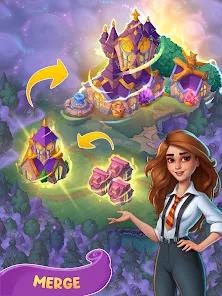
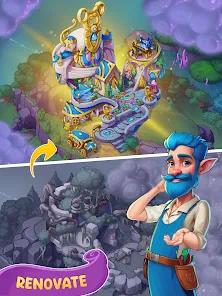
The premise is a town swallowed by a mysterious fog. You merge — rocks and plants at the humble end, magic wands and artifacts further up — to clear land and renovate historic buildings. Our source material’s analysis is blunt about the two halves: repetitive puzzle mechanics on one side, a deep character-driven narrative on the other, with investigation, love triangles and family conflicts running through it. The merging is repetition by design; on that account the story is the part meant to convert the repetition into a reason to continue, and the analysis credits it with giving players a stronger “why” than a traditional static puzzle game offers.
Our own editorial database agrees, listing the multi-genre narrative and the stylised character design among the pros; our source material credits the visual fidelity too for the rating holding up at this scale. Recorded assessments, not our own verdict on the art.
Three mines aimed at the genre’s oldest problem
Merge games have a familiar failure mode: the board stalls when the low-tier items feeding the chain run dry, and you wait on spawns. Our source material’s analysis records Fable Town’s answer as three “bottomless mines” where players consistently gather building materials for the garden — explicitly a measure against the progress walls common in the genre. Our database lists it as a pro under generous resource generation, precisely because it removes the wait on random spawns.
Our FAQ then supplies the catch, and it is not a small one: harvesting from those mines costs energy. So the mines are aimed squarely at the item-supply problem — we have not played, so we cannot say how well they clear it — and the pacing question goes back to the meter regardless.
Places, creatures, and the events around them
Our source material lists sandy beaches, mystical swamps and snowy valleys among the locations, each with its own legendary creatures. Our FAQ explains the collection: as you disenchant areas of the town you meet creatures such as dragons and unicorns, evolve them, and settle them into habitats you have renovated. We like that wiring on paper: as described, collection feeds back into the renovation rather than running as a side track with no bearing on the town. Renovation, story and collection run as three tracks at once, which our source material describes as built for long-term retention.
Around them sit the events. Our database credits frequent updates, naming weekly challenges and “Energy Lotteries” as a steady supply of content and free rewards; our FAQ describes the lotteries as a test of luck for free energy, gems or gold. Being a chance mechanic, that is a route around the meter rather than a predictable one.
Offline, with a real asterisk
The listing places Fable Town in the Offline category, and our FAQ is specific: the core merging and town renovation work offline, while events and some story updates need a connection. The first half is a genuine differentiator for flights and patchy commutes; the second means the parts handing out free energy are the parts that need a signal.
The energy economy, stated plainly
This is the honest spine of the review, and three parts of our material agree on it. Our source material’s analysis records an aggressive energy system in which basic actions consume a limited resource that regenerates slowly. Our database’s cons give that a concrete shape: the cost of basic moves is high relative to the refill rate, often limiting play to short windows of about ten minutes. User feedback lands in the same place from the wallet end — one recorded review describes a significant number of negative reviews criticising the pricing of the “Event Energy” offers, with users feeling the bundles are priced too high for a casual puzzle game. That is their view of the value, not ours.
The storefront friction is documented separately: our source material records an excessive number of in-app purchase pop-ups, sometimes bundles in the $5–$11 range immediately on opening the app, and our database’s cons record multiple high-priced offers that can be difficult to close. That range is quoted as recorded and nothing past it — prices change, so check the live listing.
Our own observation is structural, and we make no claim about anyone’s intent: the meter paces the session, and the routes to more of it our material records are waiting for the refill, the Energy Lotteries, rewarded ads, and paid bundles. Which of those you reach for decides whether the ceiling reads as a rhythm or a wall.
Two technical complaints that carry unusual weight
The first is the rewarded ad. Our database records that some users report full ads failing to grant the reward, citing “premature ending” errors even when the ad finished. In most games that is an annoyance; here it lands harder, because a rewarded ad is one of the few free routes back into a session our material records — when it fails, that route fails with it. “Some users” is the scope on record, and we are not widening it.
The second is progress loss. Our database records occasional update bugs reported to force restarts, causing some players to lose levels of progress, and one recurring technical complaint describes players made to start over after reaching a high level, with level 17 given as one reviewer’s example. Both hedges are deliberate: we do not know the cause, have no data on how many players are affected, and will not offer recovery advice we cannot support.
What the developer reports about data
Our FAQ records the developer’s own reported position, and we pass it on precisely: they report that they do not collect data themselves, but that they may use identifiers and usage data to track users across other apps for advertising. That is their statement rather than something we verified, and it is the whole of what we know.
Recency, platforms, and the listing
The Play update is dated April 20, 2026, which reads as a maintained title rather than a parked one, squaring with the weekly event cadence our database records. Five screenshots is a modest set for a 1M+ install game, and none can convey pacing — the thing a prospective player most needs to judge.
Our material also records the app running beyond Android: our FAQ notes iOS 15.0 or later and Macs with the Apple M1 chip or newer, and our database’s pros claim optimisation from entry-level Androids up to Apple Vision and M1 Mac hardware. That is our database’s claim, not a verified finding, and this remains an Android assessment. Merge-and-renovate is a crowded template and we cannot rank Fable Town against titles we have not assessed; its stated points of difference — narrative density and the mines — target two weak points our source material names in the genre: the thinner motivation of a static puzzle, and the progress wall.
Who it’s not for
It is not for players who want to sink an hour into the board in one go without spending, given the move-cost-to-refill ratio our database records. Nor for anyone with little patience for storefront interruption, given the pop-up frequency our source material records and our database’s note that offers can be hard to close. It is a poor fit for free players who would depend on rewarded ads for energy, since some users report those ads failing to pay out, and for anyone who would be badly set back by the occasional restart bug. And if you want story and events without a connection, the offline guarantee covers the core loop, not the event layer.
Our take
We land on 4.3, a little under the 4.8 store average, and the gap is measured rather than punitive. The game earns most of that rating on record: a narrative spine our database credits for keeping players invested, three bottomless mines aimed at the genre’s progress-wall problem, creatures and environments wired back into the renovation you are already doing, a weekly event cadence, and an offline core loop. One recorded review captures the appeal: an escape from everyday life, with the character drama and the satisfaction of tidying up the town as the long-term draw. We hold points back for the energy pacing, the frequency of the bundle offers and the difficulty of dismissing them, the rewarded-ad failures some users report, and the occasional restart bug. If you play in short bursts and are relaxed about a meter setting the pace, 60,586 ratings averaging 4.8 are a reasonable guide.
How We Evaluate
We did not hands-on test Fable Town, and we want to be exact about what this assessment rests on. It is built from the app's Google Play listing and our source material's own analytical description of the game; the features stated there and in our records — the merge loop over rocks, plants, wands and artifacts, the fog-clearing town renovation, the character-driven story spine, the three "bottomless mines", the legendary creatures, the weekly challenges and "Energy Lotteries", the energy system itself, and offline play; the pros and cons recorded in our own editorial database; our database's FAQ; and three individual user reviews recorded in our database, which we treat as single accounts rather than aggregate findings, reporting only the scope each one carries. The store signals we weighed: a 4.8 average across 60,586 ratings, 1M+ installs, five screenshots on the listing, a Play update dated April 20, 2026, and developer REEF GAMES LTD. We assess the Android package here. On money: beyond the $5–$11 bundle range recorded in our material we hold no pricing data, so we quote none, and prices change — check the live listing before you decide anything on the strength of that range.
Pros & Cons
Compelling Multi-Genre Narrative: Integrates mystery and romance into the puzzle loop, keeping players invested in the town's secrets.
Generous Resource Generation: The "bottomless mines" feature allows for persistent gathering of materials without waiting for random spawns.
Rich Visual Variety: Offers diverse environments like swamps and snowy valleys, each with distinct art and collectible creatures.
Frequent Event Updates: Weekly challenges and "Energy Lotteries" provide consistent new content and opportunities for free rewards.
Stylized Character Design: Features charismatic characters with deep backstories, enhancing the "fable" atmosphere of the game.
Cross-Device Performance: Optimized for everything from entry-level Androids to high-end Apple Vision and M1 Mac hardware.
- ✕
Aggressive Monetization UI: Users are frequently interrupted by multiple high-priced bundle offers that can be difficult to close.
- ✕
Slow Energy Regeneration: The cost of basic moves is high relative to the refill rate, often limiting gameplay to short 10-minute windows.
- ✕
Ad Reliability Glitches: Some users report that full ads fail to grant rewards, citing "premature ending" errors even when finished.
- ✕
Potential Data Loss: Occasional update bugs have been reported to force "restarts," causing some players to lose levels of progress.
Download
 Get it on Google Play
  Get it on App Store
 FAQs
What happens if I run out of resources in Fable Town?
The game features three "bottomless mines" where you can always gather materials for building and gardening, though harvesting from them costs energy.
Is Fable Town an offline game?
Yes, the core merging and town renovation mechanics can be enjoyed offline, although events and some story updates require a connection.
How do I get dragons and unicorns?
As you disenchant different areas of the town, you will encounter legendary creatures. You can evolve them and help them settle into habitats you've renovated.
What are "Energy Lotteries"?
These are special events where you can test your luck to win free energy, gems, or gold to help you progress without spending money.
Can I play Fable Town on a Mac or iPad?
Yes, the app is compatible with iOS 15.0 or later and Mac devices with the Apple M1 chip or newer.
Does the game collect my personal data?
The developer reports they don't collect data themselves, but they may use identifiers and usage data to track you across other apps for advertising.
Hot Reviews
Players frequently describe the game as an excellent way to "escape everyday life." The combination of character-driven drama and the satisfaction of "cleaning up" the town is a major draw for long-term players.
A significant number of negative reviews point to the pricing of the "Event Energy" offers. Users feel that the bundles are "predatory" and priced too high for a casual puzzle experience.
One recurring technical complaint involves players being forced to "start over" after reaching high levels (e.g., level 17). This loss of progress is a major point of friction for dedicated fans.