
Dice Dreams™️
The strengths on our record here are the ones a dice-and-raid game could skip and still function: a story spine that gives every roll a destination, a pet system whose bonuses feed back into raids, and production values our database rates highly — behind a 4.7 from 1,820,944 ratings. The friction to weigh first is the packaging rather than the design: rolls regenerate at roughly 10% an hour, and both our own database and one recorded user review single out how many offer windows sit between opening the app and rolling.
- Players who want the build-and-raid loop with an actual destination attached — Bob's route back to being Dice King, and themed Dream Boards to rebuild and decorate, rather than a counter that only climbs
- Check-in players who prefer short bursts several times a day: roll regeneration of about 10% an hour suits that rhythm, and the side quests and daily tournaments give each visit something time-limited to aim at
- Collectors and socially competitive players with friends already on Facebook — our FAQ records that sticker trading runs through a Facebook connection, and the pet system adds a nurturing track whose bonuses, such as extra coins from raids, pay back into the competitive side
- Anyone who needs offline play: our FAQ records that a persistent internet connection is required to sync social interactions, leaderboards and tournament progress — unusual for the Board category this sits in, so no plane rides and no dead spots
- Players with a low tolerance for offer screens — our own database records in-app purchase pop-ups arriving in sequences of five or more when the app opens, and one recorded user review describes navigating as many as six after major actions
- People on mid-range hardware, or on a tight battery budget: our database records the app as highly resource-intensive with significant battery drain, plus reports of crashing during high-stakes actions. Free-to-play players who want long uninterrupted evening sessions are also a poor fit, since rolls refill slowly once they are gone







Overview
A story spine on a spin-to-win loop
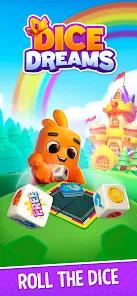
A dice game can get by on nothing but a counter that climbs. Dice Dreams gives you a character, a wrecked home and a title to win back, and our source material’s analysis reaches for that framing first when it explains what separates the app from more abstract slot-based competitors. It sits at 4.7 across 1,820,944 ratings on 50M+ installs — one of the largest samples in our catalogue, and not one we intend to argue away. We did not play it; this is read off the listing, our source material’s write-up and our own editorial database. What that reading turns up is a densely featured game whose documented friction sits mostly around the game rather than in it: how often it stops to sell, how slowly it lets you keep rolling, and how hard it leans on the phone.
Bob returns from a journey to find his home destroyed, and the way back to being Dice King runs through rolls and raids. Our source material’s analysis calls that a relatable, goal-oriented structure, and given the rating volume we think it holds up.
The loop, stated plainly
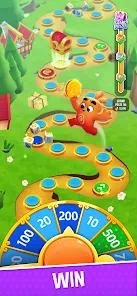
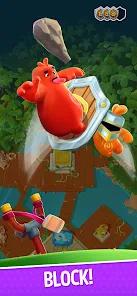
You roll dice; rolls produce coins, and coins rebuild and decorate themed kingdoms — Dream Boards, in the game’s vocabulary. Alongside building you attack: the slingshot mechanic fires projectiles at the kingdoms of friends or global rivals to loot their treasure, and our source material records a separate steal mechanic alongside it, without spelling out how the two differ. Defence is the shield, on paper the cleanest piece of the design. Our FAQ records that shields are collected through the dice-rolling board and automatically block incoming slingshot attacks until they are depleted — a defence with a stated end point rather than a vague status.
The social layer, described mechanically
Worth being precise here, because our source material describes this in loaded terms and we would rather hand you the mechanics. If your board is attacked while you are offline, the app sends a push notification. The revenge system then gives you a specific target to hit back at.
Our source material’s analyst characterizes that cycle in retention terms, as something driving daily active usage; we report that as their framing, not our finding. Our own database is more concrete, crediting the revenge mechanic with clear targets and satisfying animations for players who have been raided. Whether a game that pings you when someone loots your kingdom is welcome is a matter of taste — worth settling before you install.
Pets, stickers and the Facebook route
Two secondary systems do more work than they look like they should. Pets are adopted and fed cookies, and they level up; our FAQ records that levelling a pet yields bonuses such as extra coins from raids or increased luck during specific events. Our database calls this a cozy layer that still delivers practical mechanical advantages — a nurturing track that pays into the competitive economy, so less aggressive players get something to tend that still counts.
Sticker albums are the other: complete themed sets for rewards, trade the duplicates. One decision-relevant detail — our FAQ records that trading stickers requires connecting your account to Facebook, which is how duplicates reach friends or community trading groups. We are not advising you either way, but if a Facebook link is something you would rather not make, the trading half of the collection game runs through it.
Around both sits an event layer our database credits with keeping the core loop supplied: a diverse array of side quests and daily tournaments carrying time-limited prizes. Our database also records unusually generous new-player rewards, paired with monetization pressure increasing afterwards — expect the opening stretch to be the fastest.
The roll economy sets the pace
Rolls regenerate at approximately 10% an hour. Plainly: a session ends when your rolls run out, and resumes when they refill or are purchased. Our own database records that pace as a con: excessively slow, and capable of halting progress for hours at a time for non-paying users. Check in a few times a day and it is close to invisible; settle in for an evening, or push during a timed tournament, and it is the wall you meet. Our source material’s analysis frames the arrangement as a monetization strategy built on resource scarcity; we would rather give you the rate and let you judge.
The offer windows: two figures on record
The loudest complaint in our material comes with two different numbers, reported here as two rather than averaged into one. Our own editorial database’s con records in-app purchase pop-ups characterized as crazy annoying, often appearing in sequences of five or more windows when the app opens. Separately, one individual user review in our database — a record our notes describe as a common point of frustration — reports navigating as many as six different offer windows after every major action or on starting the game, calling it crazy annoying and time-consuming.
Different records, slightly different triggers, so we will not manufacture one authoritative figure. Both agree on the shape: a stack of offer screens between you and the dice, frequent enough that clearing them becomes routine. It is our sharpest criticism here, and the most fixable: presentation frequency, not architecture.
Battery, stability and one recorded account
Our database records the app as highly resource-intensive, with significant battery drain and reports of the software crashing during high-stakes actions on mid-range hardware. We keep the reports-of hedge deliberately: we cannot say how often it happens. The load matters more here than in a quiet board game, given a design built on frequent check-ins. Separately, one individual user review describes some long-term users reporting a decline in technical stability, citing frequent crashes and glitches where rewards were not properly credited — one account rather than an aggregate, reported with its scope as written.
Support and undelivered purchases
Our FAQ records the guidance for a purchase that does not arrive: wait a few minutes for delivery, and if it still fails, contact support through the in-game settings menu. That is the recorded route and we will not add to it. The same individual user review also records criticisms of the support team’s perceived dismissiveness when players supply video proof of errors. We report that as it stands: a perception recorded in the feedback of some long-term users, not an established fact about how support operates.
Online only, filed under Board
Our FAQ records that a persistent internet connection is required to sync social interactions, leaderboards and tournament progress. Worth stating because of where the app sits: the Board category is full of titles you reach for on a plane or in a basement. This one is not. Coherent, given a design built on other players — but a real limit on when you can play.
Recency, and where it sits in the category
Our data carries no Play update date for this listing, so we cannot speak to cadence, and we will neither invent one nor read anything into its absence. What we can lean on is volume: that 4.7 rests on one of the larger rating samples in our catalogue. Our database separately records developer responsiveness to free-to-play sustainability concerns, citing the reintroduction of watch-video-for-rolls. On the competition we stay generic, not having assessed comparators: the build-and-raid template is well established, and the differences claimed here are the Bob framing, pet bonuses feeding into raids, the sticker albums, and production values our database rates highly, calling the 3D animation adorable and the sound calming.
One individual user review in our database points the same way: it describes the aesthetic as widely praised and the mix of building and attacking as a good blend of creativity and competition, with some players calling it the “best mobile game ever” despite its reliance on microtransactions. One account rather than a tally, caveat included — but it lines up with the pros on file.
Who it’s not for
Not for anyone who needs offline play; a persistent connection is required. Not for players who want long uninterrupted sessions: regeneration of roughly 10% an hour can stall non-paying players for hours, per our database. Not for people with a low tolerance for offer screens, on either figure above. A poor fit for mid-range hardware on a tight battery budget, given the resource load and crash reports on file. And not for anyone wanting a solitary builder — being raided by others is the design, not a side effect.
Our take
We land on 4.4, close to the 4.7 store average and deliberately so. The evidence describes a well-made game: a story spine that gives the rolling somewhere to go, a pet system with real mechanical payoff, collection and tournament layers that keep it stocked, and production values our database rates highly — behind a rating base of 1,820,944 that did not accumulate by accident. We hold a little back for two documented specifics: the volume of offer windows, which both our database and one recorded user review single out, and the resource load. Neither is a reason to skip it — both are reasons to know what you are installing: a social, always-online game paced by roll regeneration, generous at the start and asking more of your attention later.
How We Evaluate
We did not hands-on test Dice Dreams, and we want to be exact about what this assessment rests on. It is built from the app's Google Play listing and our source material's analytical description of the app; the features stated there — the high-frequency dice-rolling loop, the Dream Board kingdoms, the slingshot attack, the steal and revenge mechanics, the pet nurturing system, sticker albums and Facebook-based trading, side quests and daily tournaments, and roll regeneration; the pros and cons recorded in our own editorial database; our database's FAQ, where the shield mechanic is recorded; and three individual user reviews recorded in our database, which we treat as single accounts rather than aggregates and never as star ratings. The store signals we weighed: a 4.7 average across 1,820,944 ratings, 50M+ installs, a Board category placement, eight screenshots on the listing, and developer SuperPlay. Three sourcing notes. Our data carries no Play update date for this listing — the field is empty — so we make no claim about update cadence in either direction. We hold no pricing data for this app, so we quote no prices, pack sizes or currency amounts anywhere in this review. And where our source material's analysis characterizes the loop in retention or psychological terms, we report that as our source material's framing and describe the underlying mechanics plainly, not adopting it as a finding of our own.
Pros & Cons
The application features exceptionally high production values, characterized by "adorable" 3D animations and "calming" sound effects that mask the competitive nature of the game.
The rewards for new players are notably more generous than in competing titles, facilitating a fast-paced initial progression that successfully hooks users before monetization pressure intensifies.
Seamless Facebook integration allows for a vibrant social experience, making it easy to trade stickers and compete directly with real-world acquaintances.
The "revenge" mechanic is expertly tuned to drive re-engagement, providing clear targets and satisfying animations for players who have been raided.
A diverse array of side quests and daily tournaments ensures that the core loop is constantly supplemented with fresh challenges and time-limited prizes.
The pet system adds a "cozy" gameplay layer, offering players a long-term nurturing objective that yields practical mechanical advantages.
Regular technical updates, such as the reintroduction of "watch video for rolls," demonstrate developer responsiveness to free-to-play sustainability concerns.
- ✕
The frequency of in-app purchase pop-ups is described as "crazy annoying," often appearing in sequences of five or more windows upon opening the app.
- ✕
The application is highly resource-intensive, leading to significant battery drain and reports of the software crashing during high-stakes actions on mid-range hardware.
- ✕
Roll regeneration is perceived as excessively slow (only 10% per hour), which can halt progress for hours at a time for non-paying users.
Download


FAQs
How can I protect my kingdom from being attacked?
You can collect shields through the dice-rolling board; these shields automatically block incoming slingshot attacks until they are depleted.
What are the benefits of the pet system?
Feeding and leveling your pet provides bonuses such as extra coins from raids or increased luck during specific events.
Is an internet connection required to play?
Yes, Dice Dreams requires a persistent internet connection to sync social interactions, leaderboards, and tournament progress.
How do I trade stickers with other players?
You must connect your account to Facebook, which allows you to send duplicate stickers to friends or join community trading groups.
What happens if I don't receive a purchase?
The support team recommends waiting a few minutes for delivery; if it still fails, users must contact support through the in-game settings menu.
Hot Reviews
The game is widely praised for its "adorable" aesthetic and addictive mechanics. Users find the combination of building their own kingdom and attacking others to be a perfect mix of creativity and competition, often describing it as the "best mobile game ever" despite its reliance on microtransactions.
A common point of frustration is the overwhelming number of sales pitches. Players report that after every major action or upon starting the game, they must navigate through as many as six different offer windows, which is described as "crazy annoying and time-consuming".
Some long-term users have reported a decline in technical stability, citing frequent crashes and glitches where rewards are not properly credited. Additionally, there are criticisms regarding the support team's perceived dismissiveness when players provide video proof of errors.