Falling Filter: Loop Me Prank


Overview
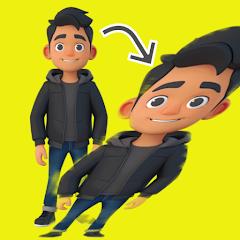
Falling Filter: Loop Me Prank, engineered by VysionApps, is a micro-utility application designed to operationalize viral short-form social media video mechanics into an immediate, single-tap capture workflow. Developed in response to the viral "falling" and "loop me" challenges popularized across platforms such as TikTok and Instagram Reels, the application isolates and automates the visual phenomenon where a subject appears to drop continuously forward or backward within a seamless, perpetual camera loop.
The underlying mechanics of the application diverge from general-purpose mobile video editing suites. Rather than requiring creators to manually configure keyframes, splice video clips, reverse playback segments, or establish spatial masking paths, the application utilizes an automated real-time frame buffering and looping engine. Upon opening the live viewfinder, the camera processes the input stream and applies five distinct simulated falling physics trajectories. These presets vary the acceleration curves, optical axis tilt, and directional drop vectors (both forward and backward falls), allowing users to capture physical comedy and reaction clips without post-production latency.
At a technical package size of approximately 21.6 MB, the software maintains a lightweight footprint that eliminates secondary compute overhead. The graphics pipeline operates entirely on client-side frame manipulation, executing live previews with continuous looping transitions directly in the native viewfinder. This architecture prioritizes capture-to-export velocity. Users tap a single trigger to activate the effect, record the interaction, and render an exportable MP4 file formatted specifically for vertical video feeds.
In comparison to multifaceted AR platforms where challenge filters are often nested deep within expansive community registries—Falling Filter operates as a decoupled, standalone utility. This structural design insulates creators from network latency or algorithm-driven filter deprecation. However, this extreme specialization also introduces an inherent product life-cycle constraint: the application’s long-term retention relies almost entirely on the longevity of the specific visual meme format it emulates. For content creators seeking immediate, repeatable execution of loop-based physical comedy without the complexity of full-scale timeline editors, the tool provides an accessible and frictionless solution.
Pros & Cons
Compact package footprint of approximately 21.6 MB ensures rapid installation and minimal device storage consumption.
Real-time zero-latency live viewfinder preview allows creators to evaluate falling trajectories instantly.
Single-tap operational workflow bypasses complex keyframe configuration and timeline editing curves.
Five distinct directional and velocity falling motion modes provide creative variation across scenarios.
Standalone execution architecture operates independently of social network accounts and heavy background frameworks.
- ✕
Highly narrow functional scope limits long-term utility beyond short-form prank formats.
- ✕
Lacks manual keyframe control and granular animation curve speed adjustment.
- ✕
Advanced effects presets require in-app purchases for full permanent access.
Download
 Get it on Google Play
 Get it on App Store
FAQs
How does the application simulate the falling motion effect?
The application utilizes an automated frame-buffering engine that captures live camera input and applies pre-configured directional motion vectors and spatial perspective shifts to produce an illusion of falling.
Is an active internet connection required to apply the loop effects?
The core rendering pipeline executes entirely on the local device hardware, allowing real-time capture and video generation without requiring an active network connection.
Can the falling effect be applied to pre-recorded videos from the device gallery?
The application is engineered primarily around live camera stream capture, prioritizing real-time viewfinder execution over multi-track post-processing of external video files.
What output formats are supported for exported media?
The software renders standard vertical video files (MP4) optimized for direct distribution across short-form platforms including Instagram Reels, TikTok, and YouTube Shorts.
Does the application collect or store biometric facial identification data?
The motion algorithms rely on geometric frame manipulation rather than biometric identity mapping, with core data safety declarations indicating zero external third-party data transmission for identification.
Hot Reviews
Summarized from Google Play reviews and community discussions.
Users note that the transitions between forward drops and reverse motion loops execute smoothly without jarring visual artifacts during short prank takes.
Feedback highlights the advantage of producing trending challenge formats in seconds without setting up complex desktop video editors.
Several reviews indicate that the app serves a singular novelty purpose, expressing a desire for broader general-purpose video tools.
Users frequently suggest adding timeline support for applying physics simulation to archived mobile footage rather than live viewfinder feeds only.