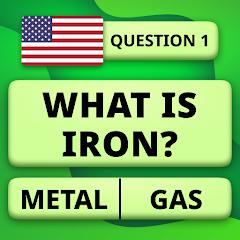
QuizzLand. Quiz & Trivia game
The maze structure and the explanation attached to every question make this one of the more deliberately structured trivia apps we have assessed, and 4.8 across 1,738,617 ratings is a signal we are not going to argue away. The one thing to hold separately is the language about improving IQ and cognition running through our material — we hold nothing that verifies it, and the app is better judged on what it plainly offers: broad recall practice that explains its answers.
- General-knowledge players who want more than a right/wrong tick — our source material's description records a detailed explanation attached to every question, whether you got it right or not
- People who want a quiz session to have a shape: the maze-and-exit-tile structure replaces the linear question queue, and difficulty is manually selectable to match your confidence on the day
- Anyone worn down by heavy ad loads in free trivia games — our own editorial database records the ads as generally short and non-intrusive, according to most user reports
- Anyone shopping for a verified brain-training or IQ product — the cognitive language comes from our source material's description and our own database's wording, we have verified none of it, and we hold no research on record
- Anyone who needs the facts to carry authority — revision, teaching, settling a dispute: we hold no sourcing information, no error rate and no editorial process for the questions or the explanations
- Advanced trivia players who want difficulty to stay where they left it: our database records that some advanced users report the game sometimes resetting to easy questions after a wrong answer
- Players who want everything to work without a connection — our database's FAQ records that Duel multiplayer and the Majority Vote hint both require one


Overview
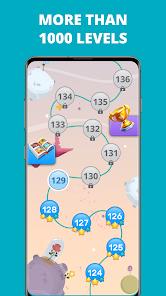
Most trivia apps are a conveyor belt: a question arrives, you answer, the next arrives. QuizzLand puts a floor plan between those moments — you are not queuing for questions, you are crossing a board looking for the way out.
What the maze changes
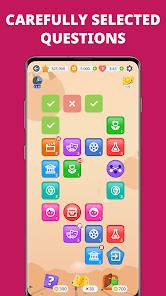
Our source material’s description positions this as having “revolutionized the trivia genre” with an “educational maze”. We would not go that far, but the mechanic beneath the positioning is concrete: our database’s FAQ records that you navigate by tapping tiles and answering questions until you uncover and tap the exit tile.
That gives a level two decisions where a linear quiz has one — the answer, and where to go next. One reviewer in our database calls the maze idea a strong one and says it makes them think about which path to take while being tested; that is one person’s account. The honest limit: a maze around a question bank does not change the questions, only the pacing and the sense of progress.
The explanation after every question
Our source material’s description records a detailed explanation accompanying every question, so the context arrives whether or not you answered correctly. Our own editorial database lists this as a pro, crediting it with making the game a legitimate educational tool rather than a time-killer — our database’s wording, not a judgement we have tested.
We are rating the design decision, not the execution: we have read none of these explanations, so we cannot tell you whether any one of them is clear or correct. What we can describe is the format — an explanation follows every question rather than a bare verdict on your answer — and not what it does to anyone who reads it. One reviewer calls the explanations the best part, because a wrong answer still hands them a fact, and adds that they have learned more here than in years of school — one person’s enthusiasm about their own experience, not evidence of educational efficacy.
Breadth, difficulty, lives and mini-games
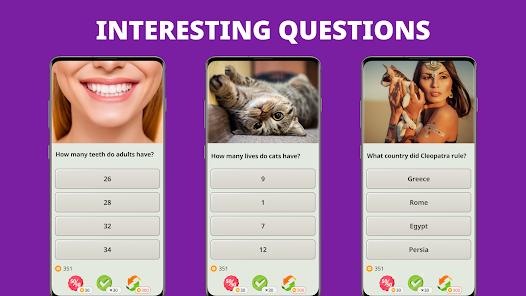
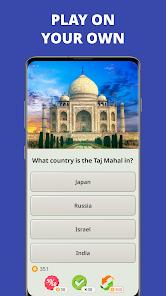
Subject range is a documented strength: the description names history, science, nature and pop culture, and our database’s pro puts the span from obscure history through to modern sports. The one volume figure on record is over 21 trivia questions per level, and another reviewer says the diversity compares well with other games. Our database also credits difficulty settings that players switch manually to match their confidence on the day — a small feature with an outsized effect on whether a quiz feels like a test or a pastime.
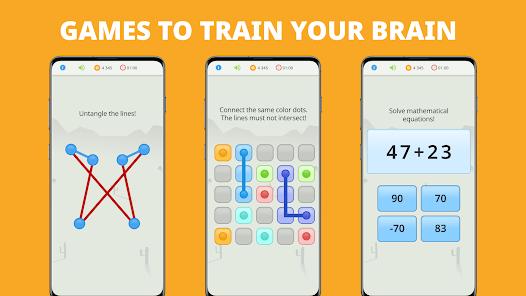
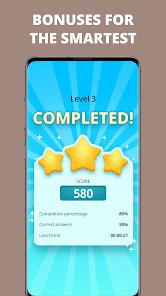
Our FAQ records that a wrong answer costs a life, that lives sit in the upper-left corner, and that they refill over time; no refill interval is on record. Between levels come short math and memory mini-games: our source material’s description frames them as refocusing breaks, and our database’s FAQ adds that they follow each level and earn bonus points. On paper that is sound session design, varying the rhythm and giving a natural stopping point.
Duels, the crowd hint, and what needs a connection
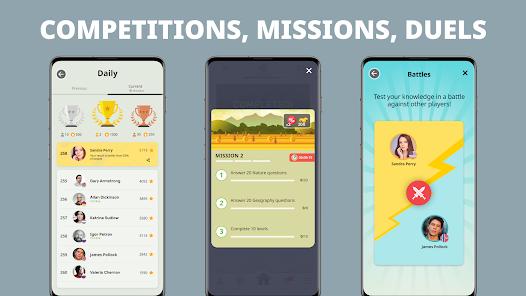
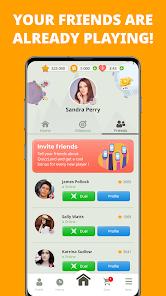
Duel multiplayer appears in the description and our FAQ as a competitive mode where you challenge others for higher ranks. The caveat comes from the same FAQ: much of the solo content is accessible, but duels and the Majority Vote hint require a connection — partial rather than full offline support.
Our database lists Majority Vote as a pro, reasonably: seeing what the wider player base chose is a real lifeline on a question you have no purchase on. The point we would add, lightly, is that it reports what other players picked — a popularity signal rather than a correctness one. On well-known material those converge; on a tricky question they may not.
The claims about IQ, memory and concentration
This part of the material needs the most care, and the sources need keeping apart.
Our source material’s description claims the maze structure turns a knowledge test into a strategic “brain test” that improves IQ, memory, concentration and logic. Separately, our own editorial database carries a pro headed “High-Impact Brain Training”, asserting that the memory and logic mini-games help improve overall cognitive function and attention span — that is our database’s wording. Our database’s FAQ likewise describes the mini-games as training memory and concentration. And separately again, one reviewer calls the app their favourite daily brain workout, which is one person’s description of their own habit.
We have verified none of it. We hold no research, no study and no measurement on record, we cite none, and we are not in a position to evaluate a claim about IQ. Nothing here is a health claim in either direction, and nobody should install this as a cognitive intervention. Equally, we are not saying the claim is false — we have no evidence for that either, and we make no suggestion about anyone’s intent in stating it.
What we can say is narrower and more useful: on the record we hold, the app offers recall practice with an explanation attached to every question. That is a description of the format. Whether it produces measurable cognitive change is outside what an app review can assess, and unsupported on the evidence we hold.
The thing we cannot check
A general-knowledge quiz stands or falls on its content being correct, and explanations raise the stakes rather than lowering them. We cannot verify the factual accuracy of the questions or of the explanations attached to them: we hold no error rate, no sourcing information and no editorial process on record for this app’s content.
We are not alleging any question or explanation here is wrong; we have no evidence of that. Nor can we reassure anyone that it is accurate. It is the largest unknown in the package, and anyone minded to treat the app as a reference should know it going in.
Where our database records friction
Two entries in our own cons list belong in front of a prospective player. First: some advanced users report the game sometimes resetting to easy questions after a wrong answer, which can feel patronizing. Both qualifiers matter. A player who has worked their way into harder material is unlikely to welcome having it adjusted on their behalf after one stumble.
Second: some users have reported levels not saving correctly, or Duel attempts lost to server-side bugs. Neither is cosmetic — a level that does not save is progress done twice, and a lost Duel attempt is one spent for nothing, on currency our own cons list records as slow to earn without paying. We do not know how often, and we make no claim about whether it persists today.
Money, and the ads
The core game is free. Our database records that certain hints and Duel attempts require virtual currency that can be slow to earn without paying — and you want a hint most at the moment you are stuck. No prices are on record, so we quote none; check the live listing.
The ads are a genuine bright spot. Our database’s pro records them as generally short and non-intrusive, according to most user reports, and one reviewer says they are less annoying than in most free apps. That scope stays: it is what most reports indicate, not a measurement — and the app is not ad-free. In a category where ad load is the standard complaint, that counts.
Recency, scale and the category
Maintenance looks current: the listing was updated on February 12 2026, and our source material describes a 2026 “March Mystery” event plus an expanded mini-game library, pointing to content being added rather than only patched.
On scale, we will not argue a big number down: 4.8 across 1,738,617 ratings on 100M+ installs is among the largest and most positive signals in our catalogue, and it deserves weighing alongside every caveat above. We have run no head-to-head comparison, so treat this as framing — against the category generally, what stands out is the maze in place of a question queue, the explanation after every answer, and an ad load most user reports describe as light.
Who it’s not for
Look elsewhere if you want a verified cognitive product — the brain-training and IQ language is positioning and database wording, not something we have checked. Likewise if you need factual authority for revision or teaching, because we hold nothing on how the content is sourced. Advanced trivia players who want difficulty to hold steady should weigh the reset reports, and anyone who needs everything to work offline should note that duels and Majority Vote do not.
Our take
QuizzLand has a real structural idea and a strong habit: the maze, which gives a session shape, and the explanation after every answer. Add wide subject coverage, difficulty you set yourself, mini-game breaks, a Duel mode and an ad load most reports describe as light, and the 4.8 across 1,738,617 ratings stops being surprising. Carry the caveats in rather than being put off by them: hint and duel currency can be slow to earn, some advanced users report the difficulty sometimes dropping back after a mistake, and some users have reported save and duel-server faults. Treat the cognitive claims as unverified and the content accuracy as unaudited, and this is an easy app to recommend to anyone who enjoys knowing things.
How We Evaluate
We did not hands-on test this app. This is a desk assessment, and it rests on a specific and limited set of inputs: the Google Play listing, our source material's own promotional-analytical description of the app, and the features that description and our database state — the trivia maze and its exit tile, over 21 trivia questions per level, a detailed explanation attached to every question, the lives system, Duel multiplayer, the "Majority Vote" hint, the math and memory mini-games between levels, manually selectable difficulty, and the 2026 "March Mystery" event. On top of that we weighed the pros and cons recorded in our own editorial database, our database's FAQ, and three individual user reviews recorded in our database — which we treat as three single accounts, not as aggregates or as evidence of a pattern. The store signals: a 4.8 average across 1,738,617 ratings, 100M+ installs, eight screenshots, a February 12 2026 Play update, category Single player, developer Quiz & Trivia Games by Mno Go Apps.
Two limits we state outright rather than paper over. First, the claims that this app improves IQ, memory, concentration and logic come from our source material's description and from our own database's wording. We have verified none of them, we hold no research, no study and no measurement on record, and we are not in a position to evaluate a claim about IQ. Nothing here is a health claim in either direction. Second, we cannot verify the factual accuracy of the trivia questions or of the explanations attached to them — we hold no error rate, no sourcing information and no editorial process for the content. No pricing is on record for the in-app currency or anything bought with it, so we quote none; check the live Play listing before spending.
Pros & Cons
Immersive Maze Logic: The trivia-maze mechanic provides a sense of discovery and progression that standard quiz apps lack.
Deep Educational Context: Detailed explanations for every question make the game a legitimate educational tool rather than just a time-killer.
Vast Subject Diversity: Covers an incredible range of categories, from obscure history to modern sports, ensuring there’s something for everyone.
High-Impact Brain Training: The inclusion of memory and logic mini-games helps improve overall cognitive function and attention span.
Flexible Difficulty Settings: Players can manually switch between difficulty levels to match their mood and confidence on any given day.
Clean and Minimal Ads: Unlike many free-to-play titles, the ads in QuizzLand are generally short and non-intrusive, according to most user reports.
Helpful Community Hints: Features like the "Majority Vote" allow users to leverage the knowledge of the global player base when they are stuck.
- ✕
Inconsistent Difficulty Logic: Some advanced users report that the game sometimes resets to "easy" questions after a wrong answer, which can feel patronizing.
- ✕
Occasional Technical Faults: Some users have reported issues where levels don't save correctly or "Duel" attempts are lost due to server-side bugs.
- ✕
In-App Purchase Reliance: While the core game is free, certain hints and "Duel" attempts require virtual currency that can be slow to earn without paying.
Download
 Get it on Google Play
  Get it on App Store
 FAQs
How do I win a level in QuizzLand?
You must navigate the maze by tapping tiles and answering questions until you uncover and tap the "Exit" tile.
What happens if I get a question wrong?
Each wrong answer takes away one "life," which are displayed in the upper-left corner; lives refill over time.
Can I play QuizzLand with my friends?
Yes, the app features unique multiplayer "Duel" modes where you can challenge others for higher ranks.
What are the mini-games for?
These short brain games appear after each level to help you refocus and earn bonus points while training your memory and concentration.
Is an internet connection required?
While much of the solo content is accessible, social features like duels and the "Majority Vote" hint require a connection.
Hot Reviews
I’ve learned more from this app than from years of school! The explanations for each question are the best part—even if I get it wrong, I walk away with a new piece of information. It’s my favorite daily brain workout.
The maze idea is brilliant. It makes you think about which path to take to find the exit while testing your knowledge. I love that I can pick my favorite categories like nature and science.
I play this every day to get ready for Jeopardy. It has a great diversity of questions compared to other games, and the ads aren't nearly as annoying as most free apps. Highly recommended!