Yalla Ludo - Ludo&Jackaroo
Yalla Ludo isn't really a Ludo app with chat attached — it's a social space built around board games, and that inversion is the whole point. The real-time voice chat woven into every match makes it a genuine 'virtual cafe' for MENA and South Asian players, and a strong 4.3 across roughly 1.2 million ratings backs that up. Just go in knowing the VIP upsell is persistent, the public voice rooms are only lightly moderated, and live audio channels are hard on an older phone's battery.
- Players — especially across the Middle East, North Africa, South Asia and their diaspora — who want a lively, social board-game hub with built-in voice chat to play Ludo, Jackaroo, and Dominoes with friends or strangers, and groups who'll actually use the local pass-and-play mode
- People who enjoy cosmetic customization (dice skins, nameplates, chat frames) and frequent limited-time events, and who don't mind a busy, chat-forward interface built around staying connected as much as winning
- Players who want a quiet, single-player or offline board game without a social layer, and anyone uncomfortable with heavily pushed VIP tiers, microtransactions, or the in-game-currency wagering available in VIP rooms
- Users concerned about unmoderated public voice chat — including parents of younger players — and people on older phones sensitive to the battery drain of running live voice channels during play





Overview
A board-game app that’s really a social space
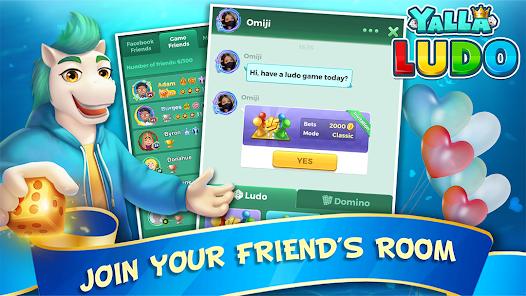
Yalla Ludo is one of those apps where the category label quietly undersells what’s going on. Google Play files it under Board, and yes, at its center sit Ludo — the digital descendant of the ancient Pachisi — and Jackaroo, a card-and-board team game, with Dominoes rounding out the roster. But if you download this expecting a quiet place to roll dice against a bot, you’ll miss the entire design. The real product is the room around the table: real-time voice chat, animated stickers, virtual gifts, and public and private chat spaces built directly into the gameplay loop rather than bolted on beside it. Developer Aviva Sun has effectively built a “virtual cafe” that happens to run on Ludo, and for its core audience across the Middle East, North Africa, and South Asia, that framing is exactly right. The app carries a strong 4.3 across roughly 1.2 million ratings on 100M+ installs — a healthy signal at that scale — and our score lands at 4.1, a notch below.
What you’re actually playing
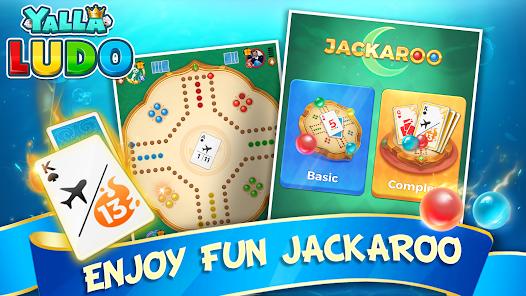
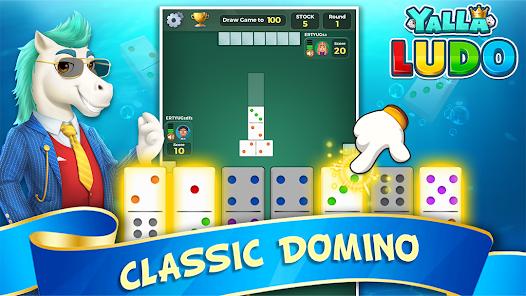
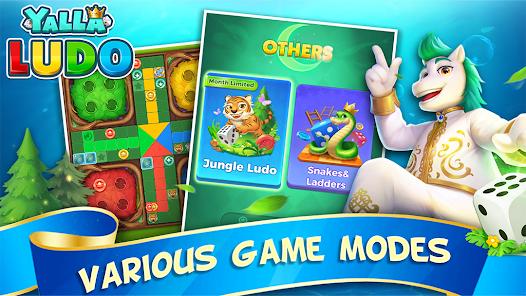
The game roster is broader than most digital Ludo apps bother with, and that variety is a real strength. Ludo itself is deep enough to have modes: it plays 2-player, 4-player, and team-based, across styles the app calls Classic, Master, Quick, and Arrow. The distinctions matter more than the names suggest — Quick is the fast-session variant, while Arrow introduces shortcut tiles that trigger a boost, injecting unpredictability that keeps matches from feeling like pure dice luck. Jackaroo is the more strategic pillar: it swaps dice for a deck of playing cards and leans on teammate coordination, so it rewards planning in a way plain Ludo doesn’t. Dominoes fills in with both the Draw Game and All Fives. Taken together, that’s a varied library under one roof, and users specifically credit the pacing variety — fast Jackaroo cardplay next to a slower team Ludo match — for keeping the app from going stale.
The social layer is the whole point
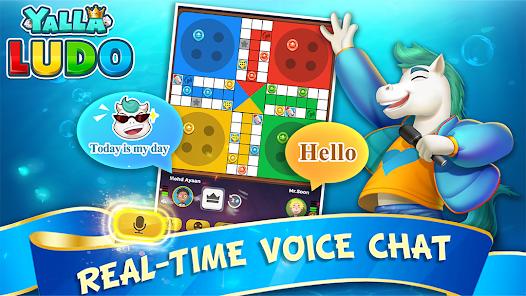
If one feature defines Yalla Ludo, it’s the voice chat, and the important detail is that it’s woven into the gameplay rather than sitting off to the side. Players drop into global public chat rooms, host private family spaces, trade tips, fire off animated stickers, and send virtual gifts mid-match. The recurring theme in user feedback is that this is a primary social platform first and a game second — people describe talking with friends in voice channels while playing Ludo as a way to stay connected, and treat the app as a gathering hub. For its target regions, where this kind of social-play space has become a cultural fixture, that role isn’t marketing fluff — it’s the thing people actually show up for.
Liquidity, and a genuinely useful offline mode
A social app is only as good as its population, and here the numbers work in players’ favor. High player liquidity means matchmaking is fast at essentially any hour — you’re rarely left waiting for a table, which matters when the whole point is spontaneous, casual play. Just as usefully, there’s a Local Mode: up to four people can play on a single device by passing it around, no internet required. That pass-and-play option is easy to overlook next to the voice rooms, but it’s a real point in the app’s favor for family game night.
Customization and events
The cosmetic layer is a big part of the appeal for regulars: custom dice skins, nameplates, and chat frames let you personalize your presence in the rooms, and frequent events like the recurring Lucky Ludo keep the calendar fresh. None of it is essential to Ludo, but it’s part of why the app feels alive rather than static.
The monetization, described plainly
Here’s where we start weighing the friction. Yalla Ludo is free to play, but it leans on VIP subscriptions and microtransactions, and users report both are pushed fairly hard. The subscriptions come in two named tiers: Knight at $11.99 per month and Baron at $39.99 per month, buying daily gold and diamond claims, exclusive nameplates and rooms, and the ability to host private tables with custom limits. The recurring user sentiment is that progression can feel restricted without VIP, and that the economy nudges you toward spending. That’s a very common shape for a free social game, but the upsell’s persistence is real, and if a steady drumbeat of purchase prompts wears on you, it’s worth knowing going in.
The in-room wagering, flagged neutrally
One specific feature deserves a plain, neutral mention. The VIP tiers let players host private tables with custom betting pools — matches played for in-game-currency wagers with limits the host sets. We want to be precise: as the app describes it, this is wagering with virtual in-game currency inside private rooms, not a real-money gambling product, and we’re neither promoting it nor framing it as a way to win anything of cash value. But we’ll flag it honestly as a consideration. If you prefer to avoid gambling-style mechanics — or you’re setting the app up for a younger player — the presence of currency-wagering rooms is something to weigh, and easy to miss until you’re already deep in.
Voice moderation and comfort
The flip side of a social app built on open voice rooms is moderation, and this is the caveat we’d want a prospective user — especially a parent — to read carefully. High-concurrency public voice channels, by their nature, present moderation challenges, and Yalla Ludo’s are no exception; dropping into a busy public room means dropping into live, largely unmoderated stranger audio. That’s a comfort-and-safety consideration worth taking seriously for younger users or anyone who simply doesn’t want it. The genuine mitigation, which we’ll credit clearly: the app lets you toggle your mic and incoming audio off with a single tap, so you can play a quiet match whenever you want, and private family rooms are a far more controlled environment than the global channels. The tools to make it comfortable are there — but the default public experience is loud and open, so expect to use those controls rather than assuming the rooms are curated.
Battery and matchmaking caveats
Two smaller downsides round out the honest picture. First, running live voice channels during play carries a real resource cost — the app has a high battery and performance footprint, and on an older phone the drain from a long voice-and-Ludo session is noticeable. Second, matchmaking, for all its speed, can occasionally serve up unbalanced runs; users describe streaks where matches feel stacked and losses come in rapid succession. Neither is a dealbreaker, but both are everyday friction.
How it compares
Against the broader field of digital Ludo and board-game apps, Yalla Ludo’s position is easy to summarize: many competitors are single-player against bots or ad-driven experiences with a thin or absent social layer, and that’s precisely the gap this app fills. If what you want is a clean, quiet, ad-free board game, there are simpler options; if you want the board game to be the excuse for the conversation, little else on mobile does it at this scale.
Recency and reputation
The signals are those of a large, actively maintained app: the Play listing was updated February 13, 2026, and it sits on 100M+ installs with a 4.3 average across roughly 1,209,433 ratings and eight screenshots, from developer Aviva Sun. A 4.3 across more than a million votes on a base that large is a strong, credible signal — a little below the category’s very top tier, but earned at a scale that makes it hard to argue with.
Our take
Yalla Ludo earns a 4.1 from us, just under its 4.3 store average, and the gap is deliberate. This is a genuinely strong social board-game platform: the voice-first design is real rather than a bolted-on gimmick, the game and mode variety is broad, matchmaking is instant, the local pass-and-play mode is a quiet win, and its role as a “virtual cafe” for MENA and South Asian players is a distinctive strength worth taking seriously. We hold the score a notch back because the friction is real and widely felt — the VIP tiers and microtransactions are pushed hard and progress can feel gated without them, the public voice rooms are only lightly moderated, the in-room currency wagering is a consideration, and live voice channels are hard on battery. It isn’t for players who want a quiet, offline, single-player board game, anyone put off by aggressive monetization or gambling-style mechanics, users worried about unmoderated stranger audio (parents of younger players included), or people on older phones sensitive to the drain. But if you want a lively place to play Ludo, Jackaroo, and Dominoes with friends or strangers and actually talk while you do it, Yalla Ludo is one of the most fully realized versions of that idea on mobile — and the 4.1 is less a warning than a marker of who it’s built to satisfy.
How We Evaluate
We did not hands-on test Yalla Ludo. This review is built from the game's own Google Play listing and store description, its stated features and modes (Ludo styles Classic/Master/Quick/ Arrow, Jackaroo, Dominoes, the real-time voice rooms, local pass-and-play, the Knight and Baron VIP tiers), its published FAQ — including the stated VIP prices of $11.99 and $39.99 per month — its listed pros and cons, its recurring user-review themes, the 4.3 store rating across roughly 1,209,433 ratings and 100M+ installs, its eight screenshots, the February 13, 2026 Play update, and the app's public reputation as a social-first board-game platform from developer Aviva Sun. Where we summarize user sentiment, we're reflecting documented recurring feedback from that public material, not personal play sessions.
Pros & Cons
Highly integrated real-time voice chat supports active social communication.
A diverse range of game modes is available across Ludo, Dominoes, and Jackaroo.
High player liquidity ensures fast matchmaking at any time of day.
Local multiplayer pass-and-play support allows group sessions on a single device.
A vibrant customization ecosystem features custom dice skins, profile nameplates, and chat frames.
Frequent event updates, such as Lucky Ludo, introduce refreshing gameplay twists.
- ✕
The premium VIP tiers and microtransactions can feel heavily pushed.
- ✕
High-concurrency public voice chat rooms occasionally present moderation challenges.
- ✕
The app's resource footprint and battery consumption are high due to running live voice channels during play.
- ✕
Matchmaking algorithms can occasionally result in highly unbalanced, rapid-loss streaks.
Download


FAQs
What games are included in Yalla Ludo?
Yalla Ludo features full digital adaptations of Ludo (Pachisi), Jackaroo (a card-and-board team game), and classic Dominoes (Draw Game and All Five rulesets).
How do the Knight and Baron VIP subscriptions differ?
Knight ($11.99/month) and Baron ($39.99/month) subscriptions provide players with daily gold and diamond claims, exclusive nameplates, and the ability to host private tables with custom wagering limits.
Can voice chat features be completely disabled?
Yes, players can toggle their microphone and incoming audio off with a single tap on the board interface to maintain privacy during casual matches.
Is an active internet connection required to play?
While online multiplayer and voice rooms require internet, Yalla Ludo offers a Local Mode allowing up to four players to play on a single device by passing it between turns.
What is the benefit of Ludo's Arrow Mode?
Arrow Mode introduces special arrow tiles on the board; landing on these tiles allows players to take immediate shortcuts across the track, creating highly dynamic and unpredictable matches.
Hot Reviews
This application has become a primary social platform. The ability to seamlessly talk with friends in voice channels while playing Ludo makes it a great way to stay connected.
The addition of Jackaroo alongside Ludo is a great choice. The fast cardplay and teamwork requirements keep the gameplay fresh and highly strategic.
While the matchmaking is fast, matches can sometimes feel heavily influenced by matchmaking streaks, and progress can feel restricted without purchasing VIP packages.