
Word Search Explorer
A 4.9 average across 1,041,949 ratings is an enormous audience agreeing, and the puzzle under it is a clean one: pure swipe-to-connect grids whose word lists are themed to the landscape behind them, with our FAQ putting the majority of the puzzle library within reach offline. The thing to settle before installing is the monetization picture our own records return to repeatedly — ads that play audio during gameplay, and a daily-puzzle format split into segments with ads between them.
- Players who want the pure grid-search form rather than crossword-style mechanics — our source material describes a 'swipe-to-connect' design with themed word clusters that match the scenery behind them
- Anyone who plays on flights or with patchy data: our database records offline functionality as a major technical advantage, and our FAQ says the majority of the puzzle library is reachable without Wi-Fi or cellular
- Free players who accept ads as the cost of entry, and anyone willing to buy their way out — our FAQ records an ad-free version available for purchase, with rewarded ads for extra hints still offered as an option
- Parents looking for a low-pressure spelling and vocabulary companion — our FAQ records a 3+ age rating and describes the app being used as a supplementary teaching tool, an intended use we have not independently verified
- Anyone whose main reason to install is quiet — our own database records 'noisy' ads that play audio during active gameplay, and a recorded feedback theme cites that as the leading reason veteran players uninstall
- Daily-puzzle regulars who valued a quick ritual: our database records the new split format as having roughly doubled the ad views required for a single reward
- Players who expect the puzzle itself to keep evolving deep into the game — our records log high-level players reporting that once you reach the mid-300s, difficulty comes more from grid size than from genuinely harder vocabulary
- Anyone unwilling to link a Facebook account, since that is the only route to cross-device progress our records name
- Anyone shopping for a verified brain-training or vocabulary product — the educational framing in our material is intent and description, not an effect we have measured, and we hold no research on it


Overview
Word Search Explorer is the cleanest possible version of a very old idea, and we mean that as a compliment: a pure swipe-to-connect grid whose word list belongs to the landscape sitting behind it, designed around offline play. A 4.9 average across 1,041,949 ratings is an enormous number of people finding what they came for, and we have no argument with it. What we do have is the thing our records circle three times: an advertising model our source material, our database’s cons and our recorded feedback themes all describe as cutting into the calm the game is built around.
What the grid actually asks of you
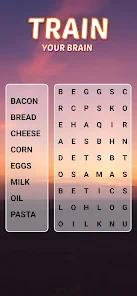
Our source material is specific about the genre: the game “focuses less on crossword-style mechanics and more on the pure ‘swipe-to-connect’ grid search.” The verb is the whole interaction: you swipe to connect the letters. Our material calls the result “flow state” gameplay and a more “mindless” yet engaging experience — its characterization, not a session we have played.
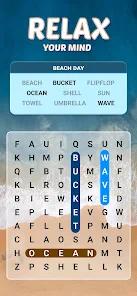
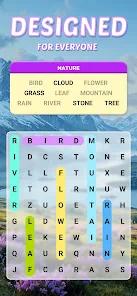
The structural claim our records make is thematic rather than mechanical: themed word clusters that relate to the background scenery, so the list you are hunting belongs to the picture you are hunting it on. We hold no evidence about how other word games build their grids, so we draw no comparison. Progression is “hundreds of levels that scale in complexity,” the only count on record — we will not sharpen it into a figure our data does not hold, or imply what fraction of it is what. Our material names a “journey” motif and a multi-layered progression system without saying what the layers are, so we leave it vague.
What the app is trying to feel like
Our source material places the presentation in the “relaxation economy,” where high-definition landscapes and calming auditory backdrops are, in its framing, as vital to retention as the puzzles — aesthetic as retention mechanism, not art direction. Our database’s pro list agrees, crediting a design “meticulously crafted to foster a meditative environment.” Intent from our records, not an effect we have measured.
The ads, stated plainly
This is where our data is most consistent, and least flattering. Our database’s first recorded con is an increasingly intrusive advertising model that now includes “noisy” ads playing audio during active gameplay. A recorded feedback theme puts it more sharply: loud, unmutable advertisements during play, described as the primary reason for uninstallation among veteran players. When a game’s appeal is a meditative atmosphere, an ad that makes noise over the top of it competes directly with the reason to open it.
The second thread concerns the daily puzzles. Our source material records them being “split,” with advertisements required between segments; our database’s con list says this roughly doubled the ad views needed for a single reward, which long-term players read as a decline in service quality. A recorded feedback theme adds that users widely see the split as a tactic to force extra ad impressions, and that a quick daily ritual now feels like a chore — that reading belongs to the theme and to our material, reported once and left there. We hold no ad-frequency data and cannot establish intent from a desk, so what we stand behind is the mechanic: the puzzle arrives in segments, with ads between them.
Both halves of that record deserve holding: the database lists the daily challenge system as a pro, crediting it with fresh, non-linear content that rewards long-term loyalty. The criticism is of what the format now costs to complete, not of the feature itself.
On paying to reduce this, we state exactly the scope our records give. The FAQ says the game is free to play and that users can purchase an ad-free version, while noting that certain “rewarded” ads for extra hints may still be available as an option — a caveat we keep attached. No price is on file, so we claim nothing about cost.
One more item for the record: the FAQ carries a dedicated entry on the app crashing during an advertisement, answered with cache-clearing advice and a note that recent updates have focused on ad-engine stability. We hold no crash-rate data, so we report the entry and stop.
The progression wall, and the hint meant to prevent it
A third recorded feedback theme describes a coin-progression bottleneck: at higher levels, grid difficulty is said to require hints that come from lengthy ad-watching or real-money purchase, which users call a pay-to-progress dynamic. That is the theme’s account of user perception, passed along rather than adopted.
It sits in tension with something our records credit. Our database lists “Guiding Hints” as a pro, on the grounds that they prevent frustration on obscure word placements and keep the progression curve smooth. Both are in our data, and the honest reading is that the same hint system both stops players getting stuck and carries a cost where being stuck becomes common. We cannot resolve that from a desk.
Our database also records a plateau in mechanic innovation, and the scope matters: high-level players report that once a user reaches the mid-300s, the game relies more on grid size than on genuine linguistic difficulty. That is a criticism of how difficulty is produced, not of how much content exists, and since our records only say “hundreds of levels,” we cannot say what share of the game sits beyond that marker.
Offline play, and the sync caveat
Offline support looks like the most durable strength on file. Our database calls it a major technical advantage for flights and low-connectivity areas, and the FAQ says the app is fully optimized for offline use, reaching the majority of its puzzle library without Wi-Fi or cellular data. We keep that “majority” — it is the FAQ’s own hedge, not ours, and we will not round it up to “works offline”. Our records do not say which puzzles fall outside it, or how hint and rewarded-ad features behave with no signal, so we claim nothing there.
Cross-device progress has a sharper edge. The FAQ and our database describe one route: log in through the Facebook integration in settings to sync progress to the cloud, framed around moving between Android devices. No alternative sign-in appears in our data — an absence in our records rather than a confirmed absence in the app, but if linking Facebook is a line you would not cross, treat cross-device progress as unsettled.
Vocabulary, spelling and “cognitive flexing”
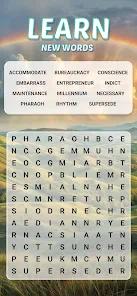
Our source material describes the app as designed for vocabulary expansion and cognitive “flexing,” and records educational elements it judges suited to younger players practising spelling and word recognition — its judgement, not a developer statement. Our database adds that thematic word groups expose players to new vocabulary in a low-pressure setting, and the FAQ, answering a question about primary-aged children, cites a 3+ age rating and describes use as a supplementary spelling and vocabulary tool.
Those are claims made in our material, reported rather than endorsed. We have verified no vocabulary, educational, stress-reduction or cognitive benefit here, hold no research on it and cite no study — and we are not arguing the other way either. We simply have nothing that tests it.
Recency, scale and where it sits
The maintenance signal we hold is a Mar 5 2026 Play update, roughly five months before this review, with four screenshots on the listing. Scale is the headline: 50M+ downloads, 4.9 across 1,041,949 ratings. Our source material also records the app as ranked #2 top free word game on visual polish and content library — an undated snapshot from our material, not a current fact and not a ranking we have checked. We have run no head-to-head.
Who it’s not for
Five groups should think twice. Anyone installing this for quiet, given the audio ads our records describe. Daily-puzzle regulars, given the split format and the roughly doubled ad views per reward. Deep-progression players, since on high-level players’ account grid size rather than vocabulary difficulty carries the challenge past the mid-300s. Anyone unwilling to link Facebook, since cross-device progress is unresolved in our data. And anyone shopping for a verified vocabulary or brain-training product, which the educational framing in our material is not evidence of.
Our take
Word Search Explorer does something narrow with real competence, and our database’s pro list credits it seven times over: an extensive themed library, a presentation built to calm you down, most of it reachable offline, hints that keep people moving, cross-device sync, a daily challenge with fresh content, and an educational angle we decline to vouch for. Over a million ratings at 4.9 is an audience finding what it came for. We land a little under the store average, and the gap is the three cons our database records: ads that play audio during a game whose selling point is quiet, a daily format that now takes about twice the ad views, and the mid-300s difficulty plateau high-level players describe. Three documented frictions against seven documented strengths, assessed from a desk — a real deduction, and a modest one. If ads are simply the price of a free puzzle game, this is an easy install, and the FAQ records an ad-free purchase — with rewarded hint ads still possible after it. If what you want is a word search for a few undisturbed minutes, settle that first.
How We Evaluate
We did not hands-on test this game. This review is a desk assessment built from Word Search Explorer's Google Play listing signals and from our own source material's analytical description of the app — a write-up produced by our team, not vendor marketing copy — plus the pros, cons and FAQ recorded in our editorial database and the recurring themes in our recorded user feedback. The mechanics we describe are only those our material describes: the swipe-to-connect grid search, themed word clusters tied to the background scenery, "hundreds of levels" that scale in complexity, Guiding Hints, a daily challenge system, offline play, and Facebook-linked cross-device sync. We deliberately imported nothing from other word games we have reviewed. Store signals weighed: a 4.9 average across 1,041,949 ratings, 50M+ downloads, four screenshots on record, a Mar 5 2026 Play update, and developer PlaySimple Games. Four limits we state rather than paper over. We have verified no vocabulary, educational, stress-reduction or cognitive effect from this game, hold no research on it and cite no study. No pricing is on record, so we make no claim about what the ad-free purchase or any hint pack costs. No ad-frequency figure is on record, so we quantify nothing. And our three recorded feedback entries are our database's own theme summaries, not Play Store review listings, and the five-star tag attached to each is an artefact of how our records store them rather than a rating anyone gave; we read the text only and give that tag no weight either way.
Pros & Cons
The application offers an extensive and diverse library of themed puzzles that provide a consistent sense of achievement through progressively challenging levels.
The visual and auditory design is meticulously crafted to foster a meditative environment, utilizing breathtaking landscapes and soothing soundscapes to reduce user stress.
From a technical standpoint, the offline functionality is a major advantage, ensuring that the core gameplay remains accessible during flights or in areas with limited data connectivity.
Additionally, the inclusion of "Guiding Hints" prevents player frustration by providing assistance on particularly obscure word placements, thereby maintaining a smooth progression curve.
The educational value is also noteworthy, as the thematic word groups effectively expose players to new vocabulary in a low-pressure setting.
Furthermore, the app's cross-device synchronization via Facebook provides a seamless experience for users who transition between mobile phones and tablets.
Finally, the daily challenge system incentivizes consistent engagement by offering fresh, non-linear content that rewards long-term loyalty.
- ✕
The primary drawback cited by users is the increasingly intrusive nature of the advertisement model, which now includes "noisy" ads that play audio during active gameplay segments, shattering the relaxing ambiance.
- ✕
Recent structural changes to daily puzzles have essentially doubled the required ad views for a single reward, which many long-term players perceive as a degradation of service quality.
- ✕
High-level players also report a plateau in mechanic innovation, suggesting that once a user reaches the mid-300s, the game relies more on grid size than genuine linguistic difficulty to provide challenge.
Download

FAQs
What should I do if the app crashes during an advertisement?
Users are advised to clear the application cache or ensure they are running the latest version, as recent updates have focused on ad-engine stability.
Does Word Search Explorer require a continuous internet connection?
No, the application is fully optimized for offline use, allowing players to access the majority of its puzzle library without Wi-Fi or cellular data.
How do I retrieve my game progress on a new device?
To ensure data persistence, users should log in through the Facebook integration found in the settings menu, which syncs progress to the cloud.
Is this application appropriate for primary-aged children?
Yes, the app is rated for ages 3+ and is frequently used as a supplementary tool for teaching spelling and vocabulary in a fun, interactive way.
Are there ways to mitigate the frequency of advertisements?
While the game is free to play, users can purchase an ad-free version; however, certain "rewarded" ads for extra hints may still be available as an option.
Hot Reviews
A significant number of users have reported that the recent introduction of loud, unmutable advertisements during gameplay has severely impacted their ability to enjoy the app as a relaxation tool. This shift is often cited as the primary reason for uninstallation among veteran players.
Feedback indicates that the new format of daily challenges—which splits a single quote or puzzle into two parts—is widely seen as a tactic to force extra ad impressions. Users have expressed frustration that what was once a quick daily ritual now feels like a chore.
Players reaching higher levels have noted a "progression wall" where the difficulty of the grids requires hints that can only be obtained through lengthy ad-watching or real-money purchases, leading to a perceived "pay-to-progress" dynamic.