
Pokémon TCG Pocket - Card Game
A collecting game with a card battler attached — and once you accept that ordering, Pokémon TCG Pocket is one of the most quietly generous free-to-play experiences on mobile, built on two free packs a day and genuinely gorgeous Immersive Cards. Just go in knowing the streamlined rules lean hard on coin flips, and the 'Pokegold' storefront turns aggressive the moment you want more than the daily ritual gives you.
- Pokémon fans and collectors who live for the daily pack-opening ritual and want the gorgeous card art — especially the rare 3-star 'Immersive' pulls — more than a deep competitive ladder
- Casual players who want streamlined 5–10 minute matches with no energy-screw frustration, and free-to-play players content to build a collection on two packs a day
- Competitive TCG players who want deep, skill-dominant strategy and will bristle at matches swung by coin flips and RNG
- Anyone likely to feel pressure from aggressive 'Pokegold' monetization or being matched against whales with optimized meta decks — and collectors who want physical or cross-platform card ownership



Overview
A collector’s game that knows exactly what it is
Pokémon TCG Pocket is, first and foremost, a collecting game with a card battler attached — and the sooner you make peace with that ordering, the more you’ll enjoy it. This is The Pokémon Company’s reimagining of the classic trading card game rebuilt for the “micro-session” era of mobile, where the point isn’t the long competitive match but the small daily pleasure of tearing open a pack. Judged as exactly that — a beautifully-produced daily habit built around card art and collection — it largely succeeds, and its 4.5 average across roughly 1.5 million ratings is one of the strongest signals we track. Our score lands right alongside it, at 4.4. But there’s a real asterisk, and it’s the same one the game’s own fans keep raising: the streamlined rules that make it so accessible also make its battles lean heavily on luck, and the free daily generosity sits right next to a storefront that gets aggressive fast. Both things are true at once.
The daily ritual is the whole design
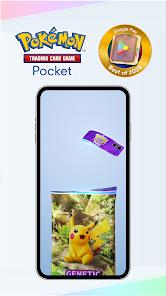
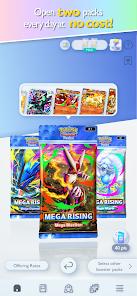
Everything in Pocket is organized around one loop: you open two booster packs, free, every day. That’s the heartbeat of the game, and the developer has clearly poured its production budget into making those few seconds feel good — the pack-opening is stylized with haptics and swipe gestures that mimic tearing the foil off a physical pack, and it’s genuinely one of the more tactile-feeling interactions on mobile. Players corroborate the effect directly: a recurring review theme describes it as a nostalgia hit, saying opening packs “feels like 1999,” and calls it the perfect adult “coffee break” game. That’s the design intent landing exactly as intended.
The free packs don’t expire — they accumulate as “Pack Stamina” — but that stamina caps at two packs, so the game is quietly built to pull you back each day rather than let you bank a week’s worth. It’s a gentle nudge rather than a punishing energy meter, but it is a nudge worth naming.
Immersive Cards, and why the hype is mostly earned
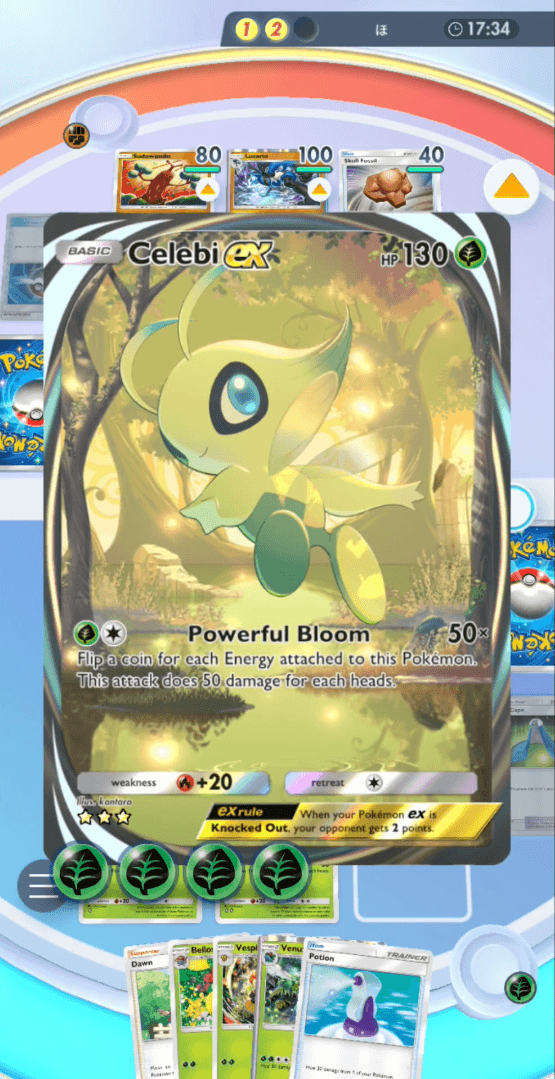
The headline feature is what the developer calls “Immersive Cards” — a digital-exclusive presentation using 3D parallax and expanded illustrations so a card appears to “leap into” its own world, something it argues can’t be replicated in physical cardboard. That framing is the vendor’s, and we’d normally hold marketing language like that at arm’s length. Here we won’t, because the users back it up: an independent recurring theme in positive reviews calls the art on the new cards, and especially the immersive ones, “breathtaking.” When the marketing claim and the unpaid player sentiment point the same direction, we’re comfortable crediting it as a genuine strength. The Immersive cards themselves are rare pulls, marked by a 3-star rarity symbol, so chasing them becomes the long-tail collection goal.
Streamlined rules: accessible by design, shallow by design
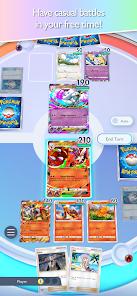
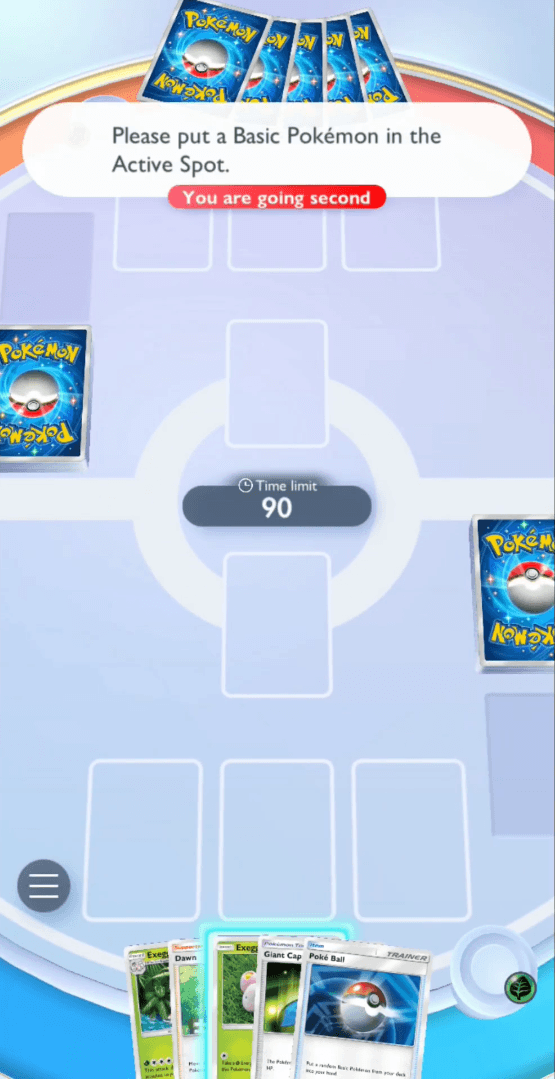
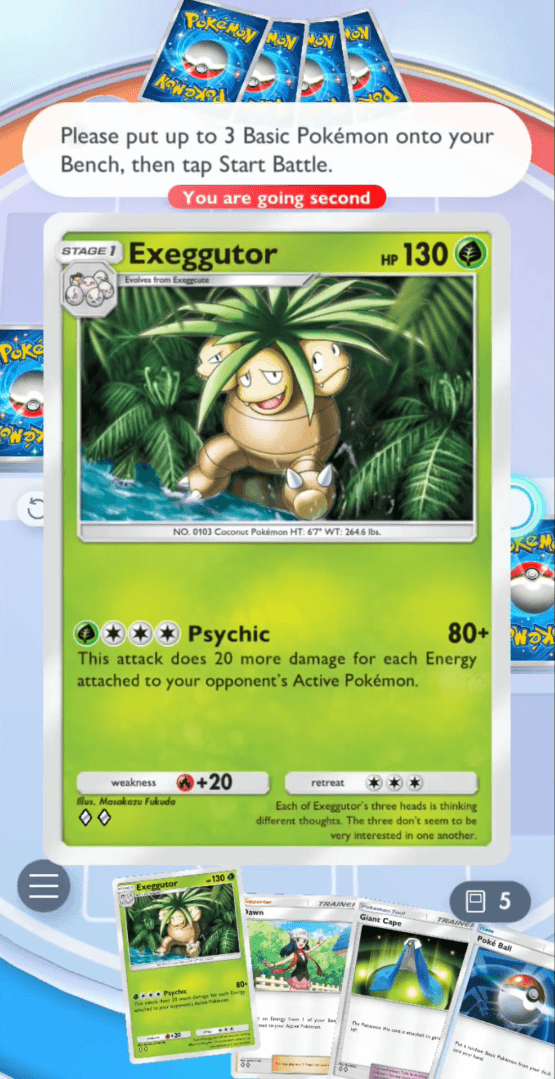
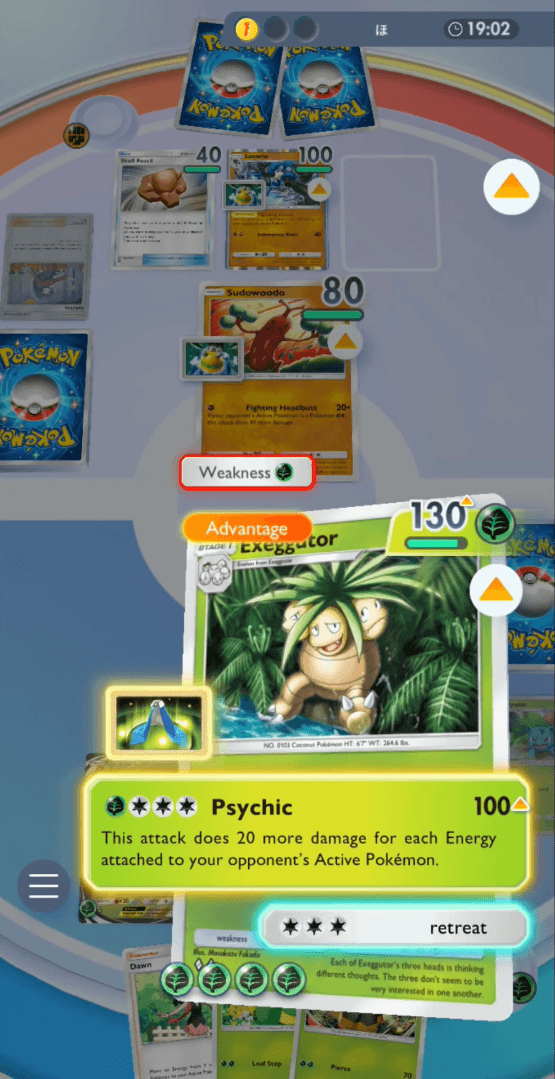
Pocket takes the traditional TCG and sands down its sharpest edges. The biggest change is that the old “Energy Card” system — where you drew and manually attached energy, and could get badly starved or flooded — is gone, replaced by an “Energy Zone” that generates energy automatically. The win condition is simplified too: instead of racing through six prize cards, you earn “Prize Points” for knockouts, and usually three points takes the game. The net effect is matches that wrap up in about five to ten minutes.
For the audience this game is chasing, that’s a real win. The “energy screw and flood” frustration that turns newcomers off physical TCGs simply isn’t here, and a five-minute match fits the micro-session framing cleanly. Regular events and challenges add goals beyond completing the base set, so there’s structure to keep you engaged once the collection bug bites.
Where the shallowness bites: coin flips and RNG
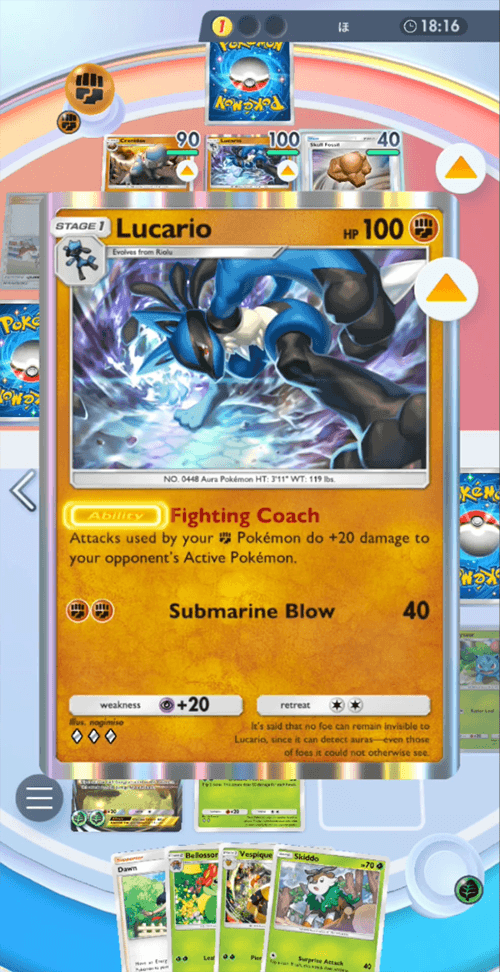
Here’s the honest counterweight, and it’s notable because it surfaces even inside otherwise glowing reviews. Simplifying the rules removed a lot of the strategic texture, and what’s left leans on randomness — several mechanics hinge on coin flips, and players feel it. One representative review calls the game a masterpiece for collectors but frustrating for strategy players, saying the coin flips “feel like they go against you,” and flags the lack of a turn-one energy attachment as a strange choice. We’d frame this as a deliberate trade-off rather than a defect: this is a collector-first game, and competitive depth was intentionally kept shallow to keep matches short and approachable. If you come to a card game for skill expression, that trade-off will chafe, and no amount of gorgeous art papers over it.
The monetization, described plainly
Pocket is free-to-play, and to its credit a lot of players find it unusually fair for the genre — one widely-echoed review calls it “the most generous Pokémon game,” reporting a nearly complete set without spending a cent, just by logging in twice a day to claim packs. That generosity is real, and we won’t undersell it.
But it sits right next to a premium economy we’d describe as aggressive. The paid currency, “Pokegold,” drives the spending side of the game, and some of the bonus products on offer require significant real money. We won’t quote specific prices — the store listing doesn’t give us reliable figures, and we won’t invent them — but the shape of the model is worth going in clear-eyed about: the daily free ritual is genuinely satisfying right up until you decide you want more than two packs a day, at which point the storefront is waiting. How that tension sits with you should factor into the download decision.
Whales, matchmaking, and the collector-versus-competitor split
The monetization has a second-order effect worth flagging: because spending accelerates how fast you assemble a strong deck, PvP matchmaking can pair a casual collector against a “whale” running a fully-optimized meta deck. For someone there to enjoy their card art and play a few relaxed rounds, that’s not a fun mismatch. Combined with the coin-flip randomness, the competitive side of Pocket is the part we’d manage your expectations around hardest. The collecting is the star; the ladder is the supporting act.
Social features, trading, and the show-off factor
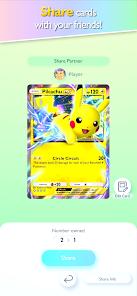
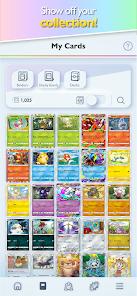
Collecting is more fun when someone’s watching, and Pocket leans into that with “Digital Binders” and “Display Boards” for curating and showing off rare pulls to a global community. There’s also a trading feature to swap cards with friends — but read the fine print: trading is limited to specific rarities and requires “Trade Tickets” earned in-game, so it’s a gated system rather than an open marketplace. It’s a meaningful social layer, just a deliberately constrained one.
One thing collectors should know going in
A factual limitation that matters for anyone treating this as an investment in a collection: the cards are digital-exclusive to the “Pocket” ecosystem. You cannot transfer them to the physical trading card game or to Pokémon TCG Live. What you build here lives here, and that’s a permanent boundary rather than something likely to change.
Recency and reputation
One housekeeping note in the interest of accuracy: the Play listing doesn’t expose a “last updated” date for us to cite, so we won’t pretend to one. What we can point to is substantial and consistent — 50 million-plus installs, a 4.5 average across roughly 1,542,246 ratings, eight screenshots, and The Pokémon Company itself as developer. A 4.5 sustained across more than a million and a half votes is about as strong a satisfaction signal as this category produces, and it’s the backbone of our confidence here.
Our take
Pokémon TCG Pocket earns a 4.4 from us, essentially in step with its store average, and the alignment is deliberate. This is a lovingly-made collecting game: the two-free-packs-a-day model is genuinely generous, the Immersive Cards are as good-looking as both the developer and the players claim, the pack-opening ritual is a small daily joy, and the streamlined Energy Zone and Prize Point rules make a famously fiddly hobby approachable in five-minute sessions. We’re crediting all of that. What keeps it from a higher mark is the honest friction its own fans name: battles swung by coin flips and RNG rather than skill, a “Pokegold” storefront that turns aggressive the moment you want past the daily allotment, and PvP that can throw casual collectors against optimized whale decks. Who is it not for? Competitive players who want deep, skill-dominant strategy; anyone likely to feel the pull of aggressive monetization or the sting of lopsided matchmaking; and collectors who want to actually own their cards across the physical game or other platforms. But if you want a gorgeous, low-pressure daily ritual built on nostalgia and beautiful art — and you can take the battling as a light bonus rather than the main event — Pocket is one of the most polished free collecting experiences on mobile, and the 4.5 crowd is telling you the same thing.
How We Evaluate
We did not hands-on test Pokémon TCG Pocket. This review is built from the game's own Google Play listing and store description, its stated systems (the two-free-packs-daily economy, the "Immersive Cards" presentation, the Energy Zone and Prize Point rules, trading and social binders), its listed FAQ, its recurring user-review themes, the 4.5 store rating across roughly 1,542,246 ratings and 50M+ installs, eight screenshots, and the game's public reputation as The Pokémon Company's digital TCG. The "Immersive Cards" innovation is the vendor's own framing, though users independently corroborate that the art is striking, so we credit the visuals as a genuine strength. Where we cite user sentiment — the "most generous Pokémon game" praise, the coin-flip complaints — those lines reflect documented recurring feedback in the public reviews, not personal play sessions.
Pros & Cons
Free-to-play friendly model that provides two booster packs daily without requiring any financial spend.
Stunning "Immersive Cards" provide a visual experience that significantly exceeds traditional physical card collecting.
Streamlined rules make the TCG accessible to casual players who find the standard competitive game too complex.
High-fidelity pack-opening animations and sound design make the daily ritual addictive and rewarding.
Regular events and challenges provide consistent goals beyond just completing the base set.
Social features like binders and display boards allow for a legitimate "show-off" factor in the community.
The "Energy Zone" eliminates the frustration of "energy flood" or "energy screw" common in card games.
- ✕
Matches can feel determined by luck (RNG) due to the simplified mechanics and heavy coin-flip dependencies.
- ✕
Monetization for "Pokegold" is aggressive, with some bonus products requiring significant real-world currency.
- ✕
Matchmaking in PvP can sometimes pair casual collectors against "whale" players with fully optimized meta decks.
Download


FAQs
Can I transfer these cards to the physical game or TCG Live?
No, these cards are digital-exclusive to the "Pocket" ecosystem.
How do I get the "Immersive" cards?
They are rare pulls from standard booster packs, identified by a 3-star rarity symbol.
Is there a limit to how many cards I can trade?
Yes, trading is currently limited to specific rarities and requires "Trade Tickets" earned in-game.
What are "Prize Points"?
Instead of taking 6 prize cards, you earn points for knocking out Pokémon; usually, 3 points wins the match.
Do free packs expire if I don't open them?
No, you can accumulate "Pack Stamina," but it caps at two packs, so you should open them daily.
Hot Reviews
Opening packs feels exactly like it did in 1999. The art on the new cards is breathtaking, especially the immersive ones. It’s the perfect "coffee break" game for adults.
As a collector, this is a masterpiece. However, as a strategy game player, it can be frustrating. The coin flips feel like they go against you too often, and the lack of energy attachment on turn one is a weird choice.
I haven’t spent any money and I already have a nearly complete set. If you just log in twice a day, you get everything you need to enjoy the game.