
Signal Private Messenger
Overview
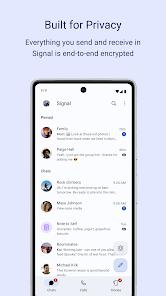
Signal is the definitive standard for secure, private communication. Built by the Signal Foundation, a non-profit organization, the application's primary objective is to provide end-to-end encrypted (E2EE) messaging, voice, and video calls that are entirely free from data collection and monetization. The Signal Protocol, which serves as the application's foundation, is so highly regarded that it has been integrated into other major messaging products, including WhatsApp and Google's RCS system.
An insightful observation regarding Signal is its extreme metadata resistance. Unlike other messengers that may collect information on who you talk to or when you were last online, Signal is designed to store virtually zero information on its servers. This has been validated in multiple court subpoenas where the only information Signal could provide was the date of account creation and the last date of connectivity. Furthermore, the app is fully open-source, allowing the global security community to independently verify its cryptographic implementations and ensure no "backdoors" exist.
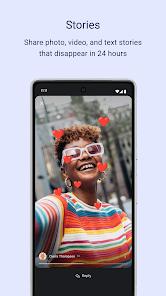
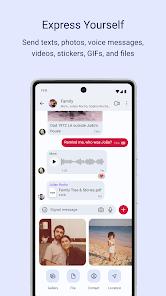
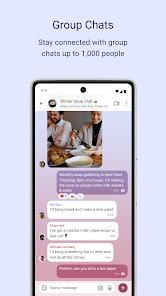
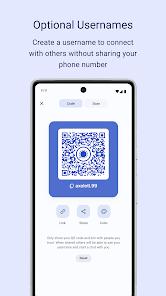
Signal has transitioned from a niche tool for activists into a mainstream consumer application. It now includes features like "Stories," animated stickers (which are also encrypted), and sophisticated group management for up to 1,000 members. Technically, the app uses Curve25519, AES-256, and HMAC-SHA256 as its cryptographic primitives, and it was one of the first major apps to implement "Quantum-Resistant" encryption to protect against future decryption threats. While it still requires a phone number for registration—a point of ongoing debate—recent updates have introduced "usernames" to allow users to connect without revealing their phone numbers to others.
Pros & Cons
Privacy-First E2EE: Every message, call, and attachment is automatically encrypted by default with the strongest available protocols.
No Metadata Collection: Proven in court to store practically zero data regarding user communications or contact lists.
Fully Open Source: The entire codebase is public, fostering a high level of trust through community auditing.
Non-Profit Mission: Funded by donations, ensuring no incentive to mine data for advertisers or investors.
Robust Security Extras: Features include "Screen Security" to prevent app previews and a built-in screen lock using biometrics.
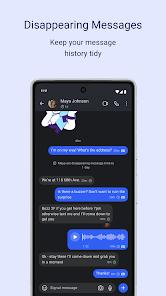
Disappearing Messages: Allows for automatic self-destruction of messages after a set timeframe for every conversation.
- ✕
Phone Number Dependency: Still requires a phone number for the initial account setup, which some users find counter-intuitive to privacy.
- ✕
Smaller Contact Network: Despite its fame, it lacks the massive user base of WhatsApp, meaning many of your contacts may not have the app.
- ✕
No Cloud Backups: For security reasons, Signal does not store messages in the cloud; if you lose your phone without a local backup, your history is gone.
Download

FAQs
Why is Signal unique?
It uses the Signal Protocol for encryption, and is a non-profit that collects no metadata.
Can I use Signal without a SIM card?
You need a phone number to receive a one-time verification code via SMS. Once the account is set up, the app only needs a data connection (Wi-Fi or mobile data) to function.
What is the "Thoughtcrime" name in the package ID?
It is a reference to George Orwell's novel 1984. The developer, Moxie Marlinspike, chose the name to signify the app's mission of making private thought and communication possible in an age of mass surveillance.
Does Signal work on multiple phones?
Currently, Signal only supports one "Primary" phone at a time. However, you can link up to five secondary devices, such as tablets or computers, to that primary account.
How can I back up my messages?
On Android, you can enable local backups which create an encrypted file on your device. You must securely store the 30-digit passphrase provided to restore this backup.
Hot Reviews
Users consistently praise Signal for being the only messaging app they truly trust. Reviewers often mention that "if Edward Snowden and Elon Musk use it, it’s good enough for me".
Many long-term users have noted that the app has improved significantly in terms of speed and aesthetics, moving from a clunky utility to a beautiful, modern messenger.
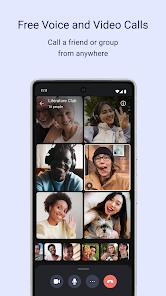
Some users report that video calls can be "choppy", particularly in regions with lower bandwidth, though they accept this as a trade-off for the security provided.