Best Card Games for Android in 2026: Six Hobbies, One Shelf
"Card games" is a single Play Store shelf holding six unrelated hobbies — an offline solo game, a level-by-level journey, a party game, a real four-player table, a collection, and a strategy hobby. We picked the best of each and named what each one asks you for before you install.
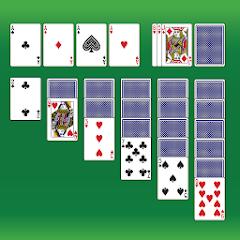
Solitaire - Classic Card Games
Draw 1 or Draw 3, Vegas or Standard scoring, unlimited undos, years of win-rate and solve-time stats, and a "Show Me How to Win" solver that steps a hard deal through from its opening position — and our database confirms the core game plays offline. The tradeoff our database records: frequent, long interstitial ads on the free version, and privacy opt-out menus that take real effort to navigate.
Read review
Tiki Solitaire TriPeaks
A tropical island-hopping campaign built on genuine TriPeaks rules, with board hazards and Social Clubs to keep progress accumulating between sessions. Our database flags that higher levels are hard to clear without power-ups or extra deals, and that a victory-screen freeze can deduct your entry coins without awarding the reward.
Read review
UNO!™
Free private rooms, your own House Rules, and 2v2 team play with voice chat make it the closest thing to the kitchen-table game with friends who live elsewhere. Our database flags a coin entry fee on every match, and the stack of ads and offer popups that lands right after one.
Read review
Spades Plus - Card Game
Real partnership spades with the bidding intact — Classic, Solo, Mirror and Whiz among the five ruleset variants our database counts — plus quick matchmaking. It needs a live connection, our database notes frequent prompts to buy high-cost coin bundles, and random partners can play loosely or leave mid-match.
Read review
Pokémon TCG Pocket - Card Game
Two free booster packs a day, digital-exclusive Immersive Cards, and matches that finish in five to ten minutes: the best collecting loop on the shelf, and the one game here we've reviewed in full. Our database notes matches lean heavily on coin flips, and PvP can seat you across from a fully optimized deck.
Read our in-depth review
Hearthstone
The deepest strategy here — class-based decks, Standard and Wild formats, Battlegrounds, weekly Tavern Brawls — with Arcane Dust crafting to aim your free rewards at the cards you actually want. Staying current in ranked Standard asks for a substantial time commitment or expansion purchases, and our database puts the install at 3 GB to over 5 GB.
Read review“Card games” is one shelf on Google Play holding six unrelated hobbies: a quiet offline solo game, a level-by-level journey, a noisy party game, a real four-player trick-taking table, a collection you build, and a strategy game with a meta to keep up with. Nobody wants all six, so this is a shortlist by mood, not a ranking. What each one asks of you varies more than the rules do — check that before you install.
Best Classic Solitaire: Solitaire - Classic Card Games
MobilityWare’s Klondike earns the default slot by asking for the least. At 4.6 stars across roughly 1.6 million ratings and 100M+ downloads, it offers Draw 1 and Draw 3, Standard, Vegas and Vegas Cumulative scoring (Vegas starts you at -52, per our database), unlimited undos, a “Show Me How to Win” solver that plays the current deal out from its opening position, and the long-term statistics our database singles out: win-loss ratios, streaks and fastest clear times. Our database confirms the core game plays offline and records no coin economy here; the cost is advertising instead — frequent, long interstitial videos on the free version, and data-privacy menus that take effort to navigate. A Google Play Pass subscription removes the ads.
Best Solitaire With a Journey Attached: Tiki Solitaire TriPeaks
Different game, different hobby. TriPeaks deals three overlapping pyramids you clear with any card one rank above or below the discard pile, and Scopely’s version (4.5 stars, roughly 660,000 ratings) wraps that in a tropical island-hopping campaign with seasonal events, board hazards, and Social Clubs that share coins and quests. Take it if you want progress that accumulates. Two caveats, from our database. Higher levels are hard to clear without power-ups, extra deals, or wild cards, and reviewers say the balance shifts from skill toward spending; our database’s overview puts in-app purchases at $0.99 to $99.99, though it also notes coins come from hourly bonuses, logins, and optional ads. The second caveat is specific: an occasional freeze on the victory screen that forces a restart, deducting your entry coins without awarding the level prize.
Best for Playing With Friends: UNO!
UNO! is the loud one, and the pick for people you actually know. Private rooms are free to create with your own House Rules — stacking +2s and +4s among them — and 2v2 team mode has voice chat. At 4.4 stars across roughly 2.3 million ratings it’s the most-rated game here, and our database credits its production values and social layer: Clubs, worldwide matchmaking. Understand the economy first: our database’s overview says matches charge a coin entry fee, and its FAQ says running out means waiting for the hourly gift, watching ads, or buying a coin pack. A recurring community complaint in our database is that card draws feel unfavorable in the higher-tier arenas — a player perception, not a finding of ours, and unlike Spades Plus, our database carries no developer statement either way. Our database also flags the ads and offer popups landing right after a match.
Best Traditional Trick-Taking Game: Spades Plus
If UNO! is the party, Spades Plus is the actual game. The highest store rating here — 4.7 stars across roughly 379,000 ratings — is earned with rulesets, not theme: Classic partnerships, Solo, Mirror (bid the exact number of spades you hold), Whiz (bid Nil or your exact spade count), with tournament brackets on top. Private tables let you set the ruleset, win score, blind bidding, and a custom entry cost in in-game coins, then invite by code. It needs a live connection, and our database notes frequent prompts to buy high-cost coin bundles, full-screen ads between rounds that can be hard to close, and random partners who leave mid-match. Some players express concern that card distributions feel artificially skewed — a perception we have not tested — and the developer’s position, per our database, is that shuffling and dealing are handled by automated computer algorithms for unbiased randomness.
Best for Collecting: Pokémon TCG Pocket
We’ve reviewed Pokémon TCG Pocket in full; the collecting is the product. Two booster packs a day, free, opened with a haptic swipe sequence; Immersive Cards use 3D parallax and exist only here; binders and display boards exist for showing pulls off. Matches are deliberately quick: an Energy Zone generates energy automatically, and Prize Points end games in five to ten minutes. One reviewer reports a nearly complete set without spending, from logging in twice a day. What it asks: Pokégold sits on top of the free packs, and our database calls that monetization aggressive, with some bonus products costing meaningful real money. Pack Stamina caps at two, so a skipped day is a lost pull. Our database also notes heavy coin-flip dependency and PvP that can seat casual collectors against players with fully optimized decks.
Best for Deep Strategy: Hearthstone
Hearthstone is a hobby, not a pastime, and its 4.2 stars across roughly 1.76 million ratings — the lowest here — sit next to review themes about storage and cost, not about the quality of play. Each class brings its own card pool and Hero Power; Standard limits decks to the last two years of expansions while Wild allows every card ever printed. Two counterweights matter, both from our database: Battlegrounds, the eight-player auto-battler, needs no pre-built collection at all, and Arcane Dust lets you break duplicates down to craft the cards you need. The rest our database states plainly: staying current in ranked Standard takes a substantial time commitment or expansion purchases, the install runs 3 GB to over 5 GB, and it needs a stable connection throughout.
How we chose
Every pick is live on Google Play with at least 3.5 stars, 20,000 ratings, and three screenshots. We read our own database’s app overviews and recurring review themes alongside its pros, cons, and FAQ notes; one pick, Pokémon TCG Pocket, we’ve reviewed in full. The notable exclusion is Gin Rummy Plus (4.5 stars, roughly 587,000 ratings): same publisher, same traditional-card-game-with-a-coin-economy lane as Spades Plus, so it would have chased the same award. Spades won it because experienced players in Gin Rummy Plus’s review themes say its condensed formats — games settled in a single hand, or at 50 points instead of the standard 200 — cut the strategic depth traditionalists come for; our database also flags purchase overlays that can be hard to dismiss. We also passed over the catalog’s crowd of near-identical Klondike apps — four share the exact name “Solitaire - Classic Card Games” — and took the most-rated one.
The bottom line
Match the game to the evening you want: alone and offline, a progression to chip at, friends on voice chat, a four-player table, a collection, or a strategy hobby. If you install only one, make it MobilityWare’s Solitaire — the one pick our database confirms plays offline, and the only one it records no coin economy for, so nothing can gate a game. Ads are the tradeoff. Before installing any of the other five, work out what its economy charges you for: entry coins, boosters, packs, or expansions. That’s what shapes the tenth hour, not the first.