
DoorDash - Dasher
As a dispatch tool this holds up at the scale that matters — published feedback calls it "sturdy" through rush hour, DasherDirect moves earnings onto a no-fee card after every dash, and order volume follows from the market position the listing claims. What keeps it short of the top of our scale is friction DoorDash's own material documents: declining an order lowers your Acceptance Rate, which the FAQ says may affect your order priority and "Top Dasher" status, and drivers report ghost notifications that drop that same rate for declines they never made.
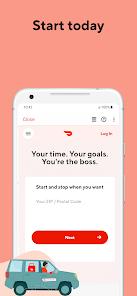
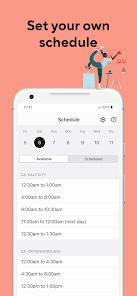
- People already doing delivery work who want to start on demand rather than book a block in advance — Dash Now is the feature the whole schedule hangs on, in markets busy enough to open it
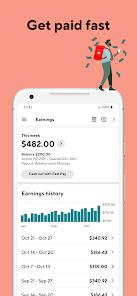
- Drivers who want earnings available the same day: DasherDirect is a no-fee prepaid Business Visa that receives your pay automatically after every dash
- Anyone working outside a dense metro — our data records coverage in over 7,000 cities across multiple continents, and coverage is what determines whether the app has anything to offer at all
- Drivers who weigh order volume above interface polish, and can plan a shift around a phone that is running GPS the entire time
- Anyone looking for the app that orders food — this is the driver-facing tool, and it has no consumer ordering function
- Drivers whose work is mostly grocery Shop & Deliver, which is the part of the app recent feedback most consistently says got worse
- Anyone who wants to decline unappealing offers with no effect on their standing — the FAQ is explicit that declining lowers the Acceptance Rate, and that the rate feeds priority and status
- People who cannot meet the stated eligibility bar: 18 or older, a smartphone, reliable transportation (car, bike, or scooter), and a passed background check
- Anyone who needs their phone to survive a long shift without a charger, given the documented battery cost of constant GPS and background processing



Overview
Most apps we review are optional. This one is a job’s control panel: it hands out the work, keeps the score that decides what work you are offered next, and moves the money. That raises the bar, and it is why a 4.1 average across roughly 577,814 ratings reads to us as respectable rather than reassuring. The distance between 4.1 and something higher is made of specific, documented friction — worth knowing before a first shift.
What the app actually is
Two products share one icon: a real-time dispatching tool that matches drivers with orders, and a financial management layer for independent contractors. The dispatch half has grown past restaurants: integration with grocery, pet supply and pharmacy chains means a shift can mean shopping a cart rather than collecting a bag, which changes what the app must be good at. Our database’s headline strength is the plainest: market share converts into more consistent order volume. The store description puts DoorDash’s share of U.S. food delivery at 55% to 67% — the listing’s own claim, and a range wide enough that we treat it as a listing figure rather than a measured one.
Dash Now, and the condition attached to it
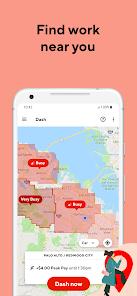
Dash Now is the feature the listing leads with, and our database credits it fairly as spontaneous earning without strict pre-scheduling: open the app and start, no block booked in advance. The condition sits in the description’s own sentence and is easy to read past — Dash Now works if your local market is sufficiently busy. That is not a defect — it is how on-demand dispatch works — but the marquee flexibility is availability when the market allows, not on request.
DasherDirect, and getting paid
The payout side is the app’s least controversial strength. DasherDirect is a prepaid Business Visa card that automatically receives your earnings after every dash with no transaction fees. Our database also records that 100% of customer tips pass through to the driver.
One wording note: the store description calls DasherDirect an “automatic, no-fee bank account,” while the FAQ describes it as a prepaid Business Visa card — not the same product, and the FAQ’s wording is the more precise. Beyond the no-transaction-fees claim we have no fee schedule to characterize.
The FAQ also states flatly that DoorDash does not pay for fuel: as an independent contractor, the driver is responsible for all vehicle-related expenses, maintenance included. We record that as a material fact about the arrangement the app operates inside, and we offer no guidance on it.
The Acceptance Rate system
This part of the app generates the most heat, and deserves precise handling rather than adopted rhetoric. The mechanism is documented by DoorDash itself. The FAQ asks whether a driver can decline a low-paying order and answers yes — but declining lowers the Acceptance Rate, which “may impact your priority for high-paying orders or ‘Top Dasher’ status.” The store description carries it a step further: declining low-paying orders can cost “Platinum” status, which in turn restricts a driver’s ability to choose their own hours. That is the vendor’s own account, not user speculation. Neither the listing nor the FAQ in our data publishes a threshold number for Platinum or Top Dasher, so we report none.
The sentiment is loud, and belongs here as sentiment. Our database’s own con language calls the system “punitive,” describing it as effectively pushing drivers toward low-profit orders, and a recurring theme in published feedback goes further, characterizing the app as “predatory” for penalizing what drivers see as rational decisions to skip unprofitable deliveries. Those are characterizations, and we report them rather than endorse them.
Our own observation is structural: a system that ties scheduling privileges to how often you accept offers sits in tension with the flexibility the same store page advertises. Dash Now is sold as working when you want; status tiers reward accepting what you are sent. That tension is the most important thing to understand before installing.
The ghost-notification problem
The section above is what makes this next item serious rather than irritating. A recurring theme in published feedback describes an order that never audibly arrived — the phone simply did not ring — and a driver who then found the Acceptance Rate had dropped for a decline they never made. Our database records the same defect as “ghost notifications” that lower a driver’s stats without their knowledge.
We cannot say how often it happens: published feedback records the complaint as recurring but attaches no rate to it, and we will not supply one. Severity, though, follows from stakes rather than from frequency. A missed push notification in a messaging app costs a delayed reply; here, by DoorDash’s own account, the number it silently moves feeds order priority and “Top Dasher” status, and the store description ties status to how freely a driver can pick hours. The failure mode is also self-concealing — an offer that never surfaced is one a driver had no opportunity to accept, decline or dispute, and the first visible sign is a metric that has already moved. A notification-delivery fault wired into a scoring system with consequences is the most defensible criticism in this review, and where we would want engineering attention first.
The FAQ does cover a crash mid-delivery — force-close, restart, contact Dasher Support so the order is not marked as failed. Our data records no equivalent documented remedy for a notification that never arrived.
Shop & Deliver, and a regression
The second concrete complaint is about a change rather than an absence. Recent updates are documented as having made the grocery shopping interface less efficient and more time-consuming, and veteran drivers in published feedback describe the 2025 versions as having “ruined” shopping orders — their word — by requiring constant screen-switching in place of a unified item list.
It lands harder than it would elsewhere: non-restaurant retail is one of the growth stories the listing leads with, and for those orders the shopping interface is the main workspace rather than a side screen, and screen-switching costs time on every item.
Battery, support, and behavior at peak
Unglamorous and real: our database records a significant impact on battery life from constant GPS and background processing. A shift-long GPS session is what the app is for, so the drain is an operating condition rather than a patchable bug.
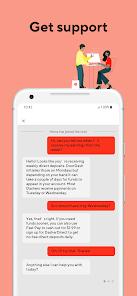
Our data credits integrated 24/7 support covering everything from missing items to safety emergencies, and the FAQ routes crash recovery there — a live channel that includes safety escalation is a genuine feature for solo work on the road. We cannot assess its quality: our data records no response times or resolution rates.
On peak behavior itself, published feedback credits the app as “sturdy” during massive rush hours, contrasting it with what those drivers describe as failures on competing platforms — attributed sentiment rather than our test, and we will not name rivals we have no data on.
Where it stands now
The Play listing was updated on March 19, 2026, so this is actively maintained, and 10M+ installs make it heavily used rather than niche. Note the timing: the shopping-interface complaints are tied to 2025 builds, and no listing date tells us whether the March 2026 version addresses them — evidence of maintenance, not proof of a fix.
Who it’s not for
Not the app that orders dinner: this is the driver-side tool, with no consumer ordering function. Not a comfortable fit for work that skews toward grocery Shop & Deliver, since the part most consistently described as having regressed is the part you would live in. Not for anyone who wants to decline offers with no effect on their standing — the FAQ is explicit that declining lowers the Acceptance Rate, and that the rate feeds priority and status. And not open at all without the stated eligibility bar: 18 or older, a smartphone, reliable transportation, a passed background check — or without a way to keep a phone charged through a GPS-heavy shift.
Our take
The 3.9 sits just under the store’s 4.1, and the gap is narrow on purpose: this app does the hard, boring parts well. It dispatches at volume across more than 7,000 cities, holds together when demand spikes, passes tips through in full, and pays out onto a no-fee card after every dash.
What holds us back is the compounding of two documented issues. The Acceptance Rate system, by the vendor’s own description, links declining orders to priority, status and ultimately scheduling flexibility — and drivers report a notification bug that can move that number without their knowledge. Fix the notification reliability and much of the frustration in published feedback loses its sharpest edge. Until then this is a capable, heavily used work tool whose most consequential weak point sits between the offer a driver never sees and the score that records it as a decline.
How We Evaluate
We did not hands-on test this app. We did not install it, complete a background check, accept a dispatch, shop an order, or receive a payout, and we have made no deliveries and earned nothing through it. This is a desk assessment, and one framing point matters before any of it: this is the driver-facing Dasher app, and we reviewed it as a work tool — dispatch, status, and payout plumbing — not as the consumer app people order food with. The signals we used are the app's Google Play listing and store description, its stated feature set (Dash Now on-demand starts, the DasherDirect payout card, the Acceptance Rate and status system, Shop & Deliver for non-restaurant retail, and 24/7 in-app support), the pros and cons recorded in our app database, the FAQ in our database, recurring themes in published user feedback, and the store signals: a 4.1 average across roughly 577,814 ratings, 10M+ installs, seven screenshots, a Play update dated March 19, 2026, developer DoorDash, and a Business category listing. Where we describe user sentiment — the Acceptance Rate pressure, the ghost-notification reports, the Shop & Deliver complaints, and the credit for stability at peak — we are summarizing recurring themes in published feedback rather than personal sessions. Words we put in quotation marks are the characterizations recorded in that feedback or in our database's own con language, not statements we attribute to a named driver, and we attach no star ratings to them. We report those characterizations; we do not adopt them. The market-share range in the store description is reported as the listing's own claim, not as a figure we verified. We have no earnings, pay-rate, fee, or Acceptance-Rate threshold data, so we state none. Nothing here is employment, tax, or financial advice, and nothing here is a recommendation about whether to do this work.
Pros & Cons
Unmatched market share ensure a higher volume of consistent order opportunities compared to rivals.
"DasherDirect" offers immediate financial liquidity through instant payouts with no transaction fees.
Extensive geographical coverage, operating in over 7,000 cities across multiple continents.
100% of customer tips are passed directly to the driver, ensuring transparency in earnings.
"Dash Now" functionality allows for spontaneous earning without the need for strict pre-scheduling.
Integrated 24/7 support that can help with everything from missing items to safety emergencies.
- ✕
The algorithmic "Acceptance Rate" system can feel punitive, effectively forcing drivers to take low-profit orders.
- ✕
Frequent technical glitches, such as "ghost notifications" that lower the driver’s stats without their knowledge.
- ✕
The app has a significant impact on battery life due to constant GPS usage and background processing.
- ✕
Recent updates to the "Shop & Deliver" interface have made grocery shopping less efficient and more time-consuming.
Download


FAQs
How do I qualify to be a Dasher?
You must be 18+, have a smartphone, and reliable transportation (car, bike, or scooter), and pass a background check.
What is "DasherDirect"?
It is a prepaid Business Visa card that automatically receives your earnings after every dash, providing instant access to cash.
Can I decline an order if the pay is too low?
Yes, but doing so will lower your Acceptance Rate, which may impact your priority for high-paying orders or "Top Dasher" status.
What should I do if the app crashes during a delivery?
Force-close the app and restart it. If it persists, contact Dasher Support immediately to ensure the order is not marked as failed.
Does DoorDash pay for my gas?
No, as an independent contractor, you are responsible for all vehicle-related expenses, including fuel and maintenance.
Hot Reviews
Veteran Dashers report that the latest 2025 app versions have "ruined" shopping orders, requiring them to constantly switch screens rather than having a unified list.
A common theme in reviews is that the app has become "predatory," punishing drivers for making logical financial decisions to skip non-profitable deliveries.
While some drivers complain about small bugs, many acknowledge that the app is "sturdy" during massive rush hours compared to the total failures of some competing platforms.
Drivers frequently report missing orders because the phone never rang, only to see their "acceptance rate" drop, which they view as a major technical flaw.