
Foundation: Galactic Frontier
A sci-fi strategy game our records describe as three loops in one — a flagship you fit out from the inside, third-person squad combat when you land somewhere, and real-time fleet strategy across a galaxy map — and that range is the appeal. Two documented things decide fit: an install our source material puts at roughly 3.15 GB against an FAQ asking for over 3.5 GB free, and the late-game construction timers and resource demands that the one critical theme in our recorded feedback singles out.
- Sci-fi strategy players who want variety in the moment-to-moment — our source material records three interconnected loops (flagship simulation, planetary ground combat, macro fleet strategy) rather than a single build-and-wait screen
- Players drawn by the Asimov connection — our source material records the game as drawing inspiration from Isaac Asimov's science fiction universe and the associated television series, while our FAQ answers a direct question about official adaptation with yes, citing collaboration with Skydance and the Apple TV+ series
- Solo-leaning players — our FAQ and a recurring feedback theme both record meaningful progress through the story campaign, exploration missions and fleet upgrading without immediately joining competitive guild wars
- Anyone with an Android phone that clears the recorded requirements — our FAQ lists Android 7.0 or higher and at least 4 GB of RAM, and our records tie the visual presentation to substantial device resources
- Anyone short on storage or running hardware below the recorded requirements — approximately 3.15 GB of installation footprint per our source material, over 3.5 GB of free space per our FAQ, and 4 GB of RAM
- Players with no patience for wait timers — our records note extended construction wait times at higher levels, and critical feedback describes building upgrades slowing significantly unless resources are managed meticulously
- New players who want to talk to people from day one — public chat access is locked until specific base upgrade thresholds are reached
- Anyone whose expectations were set entirely by the promotion — our editorial database records that promotional ad materials oversimplify the game's actual strategy and resource management mechanics



Overview
Ambition is the first thing our records show about Foundation: Galactic Frontier, and it is probably what decides whether you keep it installed. Our source material describes not one game but three interconnected loops running side by side. A 4.0 average across 42,198 ratings reads to us like a game people admire in pieces while grinding against documented frictions: the download is large, the late-game timers get long, and new accounts cannot speak in public chat until they have built past a threshold.
Three loops, not one
Our source material casts you as an interstellar trader and fleet captain navigating political turmoil after the collapse of the Galactic Empire, and splits the gameplay into three interconnected operational loops: flagship simulation, planetary ground combat, macro fleet strategy. That earns a longer look than the category label suggests.
The fleet layer is the widest of the three on our record: building combat fleets, forming commercial alliances, mining floating asteroid belts, battling rival factions for control of galaxy trade routes, with our FAQ adding that space battles focus on real-time fleet positioning. A database pro calls the map expansive, listing asteroid mining, space ruin exploration and trade route dominance; another calls the mix an innovative combination of galaxy RTS mechanics with active third-person squad combat. Their characterizations, not verdicts we can test. Our records go no further, and neither do we.
Inside the flagship
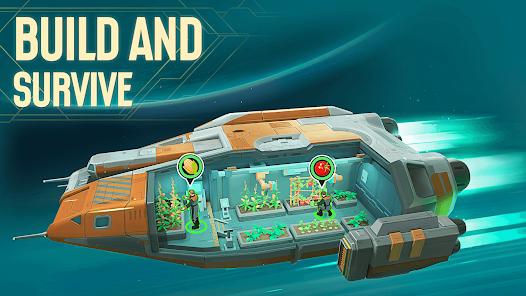
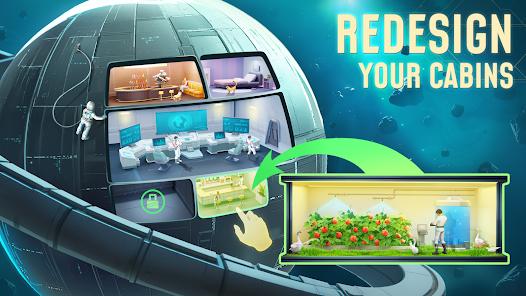
The flagship loop is the most distinctive item on the record. Our source material has players constructing and managing internal vessel cabins — life support systems, water recycling units, oxygen farms — to sustain a crew of mercenaries, bounty hunters and androids; a database pro records the same as cabin customization, crew management and resource life support. What strikes us is where the “base” sits: an interior you fit out, crewed by people with roles rather than an abstract population number. That is the part we would install this app to see.
When the strategy game becomes a shooter
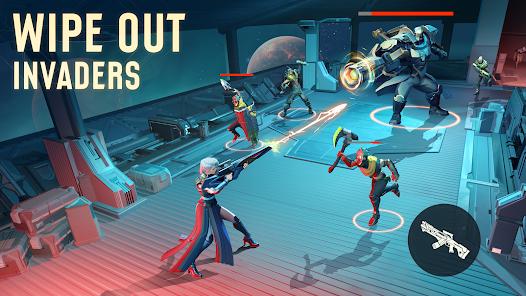
When players explore planetary surfaces or abandoned space ruins, our source material says the game transitions to a third-person landing shooter mode, where you command a three-hero squad and manually trigger special character abilities to clear hostile alien threats. Our FAQ draws the contrast explicitly: ground combat has you controlling hero movement and activating skills, while space battles focus on real-time fleet positioning. A recurring feedback theme calls that shift refreshing — its framing, not a measurement of ours. With the flagship interior, it explains the appeal: three kinds of attention rather than one screen you check on.
The Asimov connection, at exactly the recorded scope
Our source material records the game as co-developed by FunPlus International AG and Skydance Interactive, drawing inspiration from Isaac Asimov’s science fiction universe and the associated television series. Our FAQ puts it more firmly: asked whether the game is an official adaptation of Asimov’s work, the recorded answer is yes, developed in collaboration with Skydance and incorporating elements from Asimov’s classic universe and the Apple TV+ series. A database pro describes the narrative campaign as directly inspired by that lore.
Two wording differences are worth flagging rather than smoothing over. Our description’s phrase is “draws inspiration from”; the FAQ’s question asks about an official adaptation and its answer says yes. A marketing relationship and a licensing fact are not the same statement, and we cannot settle which the record means. Our description also names “Skydance Interactive” where the FAQ says simply “Skydance”. We report both wordings as they stand, make no claim about rights or licensing arrangements, and hold nothing on how the source material is used in-game.
Presentation, as recorded
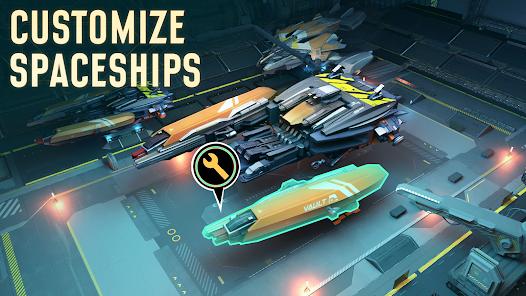
The look is the other thing our record keeps returning to. A database pro credits the visual presentation with high-resolution 3D starship designs and cinematic audio scoring, and our source material describes those designs as developed in collaboration with veteran concept artists. Both phrases sit in a promotional register; we relay them as recorded and have verified neither, having neither seen nor heard this game run.
A separate recorded feedback theme lands in the same place from the player side, praising the immersive narrative and graphics and calling the detailed starship designs and rich lore a high-quality sci-fi atmosphere. Also a characterization, but the one presentation signal we hold that is not phrased like marketing.
Size is the real gate
This is the caveat we would check first. Our source material puts the total installation size at approximately 3.15 GB and ties it to that visual fidelity, which it records as requiring substantial device resources. Our FAQ sets requirements at Android 7.0 or higher, at least 4 GB of RAM, and over 3.5 GB of free storage for full asset installations; a database con adds that the footprint requires significant storage capacity and modern device hardware. Those two figures measure different things as recorded — install footprint versus free space for full assets — so we quote both rather than reconcile them, and suggest planning around the larger.
Timers, farming, and what our data cannot tell you
Our source material records player feedback noting standard free-to-play strategy mechanics, including resource farming requirements and extended construction wait times at higher levels. A database con repeats it as extended upgrade construction timers and resource demands at advanced operational levels. And the one critical theme in our recorded feedback targets late-game wait timers and resource demands, noting that building upgrades slow significantly unless players manage resources meticulously. Scope matters as much as the complaint: all three attach it to higher or advanced levels, so what our record documents is a late-game pacing problem, and on the early game it says nothing either way.
On spending, we should be straightforward about our limits. We hold no monetization data for this app — no currency, price, purchase, subscription, pass or ad-mechanic detail — so we describe none, and we treat that as a gap in our own data rather than a statement about what this app charges for. If spending is part of your decision, read the store listing before installing.
The chat lock
Our source material records strict regional chat restrictions preventing new players from communicating publicly until specific building upgrade thresholds are achieved; a database con puts it as public chat access locked until base level thresholds are reached. Our FAQ records the stated reason: the developer enforces chat locks based on base upgrade levels to prevent spam accounts and protect public channels.
We take that rationale at face value — spam controls on open channels are ordinary — but the cost falls on the player least able to absorb it. Note that our three sources use different terms — regional, public, global alliance — so we cannot say which channels are covered. Worth knowing if finding a group early matters to you.
What the promotion communicates
Our editorial database records one further con: promotional ad materials oversimplify the game’s actual strategy and resource management mechanics. We relay that at exactly the scope it is written — an oversimplification of what the game asks of you, not a claim that anything advertised is absent. Having examined no promotional material ourselves, we report it as our database’s observation rather than a finding of ours, and leave it there.
Solo play
Our FAQ and a recorded feedback theme both point to a genuine accommodation: significant progress through the story campaign, exploration missions and fleet upgrading without immediately joining competitive guild wars, which a database pro calls steady progression without immediate reliance on guild alliances. Note the wording, though. “Without immediately” is not the same as playable as a single-player game, and commercial alliances and rival factions are part of the fleet layer our records describe.
Who it’s not for
Give it a miss if your phone falls under the recorded requirements — roughly 3.15 GB installed, over 3.5 GB free and 4 GB of RAM is a real ask. It is a poor fit if you have little patience for waiting, since late-game timers are the only critical feedback theme we hold and three separate fields record it. And newcomers who want to socialize from day one should know public chat is gated behind base upgrade thresholds.
Our take
The recorded design is genuinely varied, and that variety is what our recorded feedback praises. We call it situational rather than universal because the fit conditions are checkable up front: storage and memory for a 3 GB-plus install, tolerance for late-game timers, and a willingness to play the first stretch without public chat.
Our own arithmetic gets us to 4.0 like this. Our database holds six pros to four cons, and three of those cons — install size, the chat gate, the gap between promotion and mechanics — are conditions you can check before downloading rather than flaws in how the thing plays. That is why we do not go lower. The fourth is different: late-game timers and resource demands are the one critical theme we hold, corroborated in three separate places, and that is a real design complaint, which is why we do not go higher. Holding no monetization data caps our confidence rather than the score. The store average landing on the same number is a coincidence, not our reason.
How We Evaluate
We did not hands-on test Foundation: Galactic Frontier. This review rests on the app's Google Play listing and on our own source material's analytical description of the game — the three operational loops it names, the flagship cabin and crew systems, the third-person landing shooter mode, the galaxy-map fleet layer, the installation size and the chat restriction — plus the pros and cons recorded in our editorial database, our FAQ, and the recurring themes in published user feedback, which we read as sentiment summaries written by our team rather than verbatim quotes. We also weighed the store signals: a 4.0 average across 42,198 ratings, 1M+ installs, five screenshots, and a Play update dated July 22, 2026.
Five sourcing notes. First, the Asimov connection: our source material says the game "draws inspiration from" Isaac Asimov's science fiction universe and the associated television series, while our FAQ answers a direct question about official adaptation with yes, citing collaboration with Skydance and the Apple TV+ series; our description also names "Skydance Interactive" where the FAQ says simply "Skydance". We report both wordings rather than resolve them, we make no claim about rights or licensing, and we go no further than what is recorded. Second, storage: approximately 3.15 GB appears as an installation footprint and over 3.5 GB as required free space for full asset installations — different measures, so we quote both. Third, the chat restriction is described variously in our records as regional, public and global alliance chat, so we do not claim to know exactly which channels are covered. Fourth, we hold no monetization or pricing data for this app — no currency, purchase, subscription, pass or ad detail — so we describe none, and we treat that as a gap in our data rather than a finding about the game. Fifth, every recorded feedback theme carries the same star label, including one whose text summarizes critical feedback about late-game timers; the label therefore tells us nothing, so we report what each theme says and cite no star values alongside them.
Pros & Cons
Rich narrative campaign directly inspired by Isaac Asimov's world-famous science fiction lore.
Innovative gameplay combination merging galaxy RTS mechanics with active third-person squad combat.
Detailed flagship simulation featuring cabin customization, crew management, and resource life support systems.
Visual presentation featuring high-resolution 3D starship designs and cinematic audio scoring.
Expansive galaxy map offering asteroid mining, space ruin exploration, and trade route dominance.
Engaging solo story missions allow steady progression without immediate reliance on guild alliances.
- ✕
Large installation footprint (~3.15 GB) requires significant storage capacity and modern device hardware.
- ✕
Features extended upgrade construction timers and resource demands at advanced operational levels.
- ✕
Public chat access is locked for new players until specific base level thresholds are reached.
- ✕
Promotional ad materials oversimplify the game's actual strategy and resource management mechanics.
Download


FAQs
Is Foundation: Galactic Frontier an official adaptation of Isaac Asimov's work?
Yes, the game is developed in collaboration with Skydance, incorporating elements from Asimov's classic universe and the Apple TV+ series.
How does ground squad combat function compared to space fleet battles?
Ground combat operates as a third-person squad shooter where players control hero movement and activate skills, whereas space battles focus on real-time fleet positioning.
What are the hardware requirements to run the game smoothly?
The game requires Android 7.0 or higher, at least 4 GB of RAM, and over 3.5 GB of free storage space for full asset installations.
Why can't new players immediately send messages in global alliance chat?
The developer enforces chat locks based on base upgrade levels to prevent spam accounts and protect public channels.
Can the game be enjoyed primarily as a single-player story campaign?
Yes, players can progress significantly through the story campaign, exploration missions, and fleet upgrading without immediately joining competitive guild wars.
Hot Reviews
Reviews commend the game for allowing solo players to explore space, build flagships, and complete story missions independently without forcing constant guild reliance.
The transition from macro fleet management to active squad shooting on planetary surfaces is highlighted as a refreshing feature that sets the title apart from traditional city-builders.
Critical feedback targets late-game wait timers and resource demands, noting that building upgrades slow down significantly unless players manage resources meticulously.
Players praise the game's immersive narrative and graphics. The detailed starship designs and rich lore provide a high-quality sci-fi atmosphere.