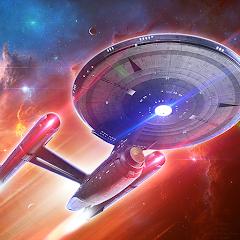
Star Trek Fleet Command


Overview
Developed by Scopely, Star Trek Fleet Command stands as a dominant flagship title within the mobile sci-fi 4X strategy market. Built around an officially licensed universe set primarily within the J.J. Abrams Kelvin Timeline—while incorporating expansive lore across The Original Series, The Next Generation, Deep Space Nine, Voyager, Discovery, Strange New Worlds, and Lower Decks—the game creates a deeply immersive narrative environment for fans and strategy enthusiasts alike. Players assume the role of a starbase commander situated at the edge of civilized space, tasked with expanding their orbital base, harvesting critical galactic resources, crafting iconic starships, and commanding tactical fleets across contested sectors.
The core operational loop of Star Trek Fleet Command seamlessly blends traditional 4X strategy elements (Explore, Expand, Exploit, Exterminate) with deep tactical RPG hero-collection mechanics. Base expansion requires managing multi-tiered resource pipelines involving Parsteel, Tritanium, Dilithium, and refined materials such as Gas, Ore, and Crystal across various grades. Players construct and upgrade famous vessels such as the U.S.S. Enterprise, Romulan Warbirds, and Klingon Birds of Prey. Combat efficacy is heavily dependent on the game’s Officer Synergy System. Assigning iconic officers like James T. Kirk, Spock, or Nero to a vessel’s bridge unlocks passive and active combat abilities that dynamically interact based on captain skills and crew synergy. This adds a layer of tactical planning where ship match-ups are governed not merely by raw power numbers, but by counter-play mechanics between crew traits and weapon loadouts.
From a macro-level gameplay perspective, the title operates on a shared galactic map divided into Alpha, Beta, and Gamma quadrants. The game's open-world PvP infrastructure allows alliances to fight over territorial control, mining nodes, and strategic star systems. Alliance gameplay is vital for long-term survival, as cooperative defense networks, shared speed-up help, and coordinated armada raids against colossal NPC bosses represent the primary end-game content. Scopely maintains high user engagement through monthly live-ops campaigns (termed "Arcs") that introduce cinematic storyline missions, new ship tiers, Galactic Anomalies, and Battle Passes, effectively sustaining long-term monetization and player retention.
When evaluated alongside category peers, Star Trek Fleet Command distinguishes itself through character-driven IP power. While hard sci-fi titles like Infinite Lagrange prioritize complex spatial grid logistics, Scopely leverages emotional franchise resonance to drive player investment. However, the title's economic design features steep progression curves; advancing into late-game operations introduces severe resource bottlenecks that strongly favor high-spending players, making free-to-play progression exceptionally demanding without dedicated alliance backing.
Pros & Cons
Expansive Canonical Franchise Licensing: Features an extensive collection of ships, officers, and storylines spanning multiple eras of Star Trek lore.
Deep Officer Synergy Mechanics: Strategic crew building offers complex tactical options beyond simple raw power metrics.
High Production Value: High-quality 3D ship models, authentic sound design, and polished user interface visuals.
Dynamic Alliance Infrastructure: Robust alliance tools facilitate multi-player armada raids, shared defense, and territorial wars.
Consistent LiveOps Engagement: Monthly episodic content updates continuously refresh storyline missions, battle passes, and special galactic events.
- ✕
Aggressive Monetization Bottlenecks: Late-game progression features high resource costs and high-priced store packages.
- ✕
Client Performance and Stability Issues: Major event releases and server wars frequently suffer from latency, desynchronization, and framerate dips.
- ✕
Significant Power Imbalances in Open PvP: Free-to-play players face severe vulnerabilities against high-spending adversaries during unrestricted space combat events.
Download


FAQs
Is Star Trek Fleet Command strictly a multiplayer game, or can it be played solo?
While the game features extensive narrative missions and solo PvE content against hostile ships, it is fundamentally an open-world strategy MMO. Joining an active player alliance is necessary to defend starbases, access endgame armada events, and secure protected mining territory.
How does the Officer Synergy system work during fleet battles?
When assigning crew to a starship, placing a designated Captain on the center seat activates their unique Captain Ability. Assigning officers on the left and right bridge seats that share synergistic faction or squad traits triggers a percentage bonus to that Captain Ability, significantly enhancing combat performance.
What are Peace Shields and why are they important?
Peace Shields are temporary consumable items that shield a player's starbase from enemy player raids. Maintaining active Peace Shields is critical during player-versus-player events or while offline to prevent adversaries from stealing accumulated base resources.
Can progress be synchronized across different devices?
Yes, player progress can be linked across multiple mobile devices and synced directly with the official PC desktop client using a unified Scopely Account.
Hot Reviews
The integration of authentic franchise lore, ship designs, and iconic crew members delivers an outstanding experience for longtime sci-fi enthusiasts. The mission storylines genuinely reflect the philosophical and tactical themes of the television series.
While the early-to-mid game allows steady progression through patient play, reaching high operations levels exposes extreme resource constraints. Microtransaction packages scaled toward endgame advancement are prohibitively expensive for casual users.
Frequent LiveOps updates introduce exciting content updates, but they often arrive with client stability issues, visual glitches, and severe lag during high-density alliance battles.
The cooperative mechanics surrounding territorial conquest and coordinate armada attacks against giant planetary stations offer a deeply rewarding multiplayer experience. Successful alliance coordination relies heavily on strategy rather than pure individual force.