Solitaire Associations Journey
A genuinely fresh puzzle idea — solitaire's board-clearing structure fused with word-association sorting — wrapped in a calm, no-timer design that's easy to love early on. Just go in knowing the difficulty climbs sharply past level 40, where the game leans harder on optional ad-watches and bonus-power purchases, and that by user accounts even the paid 'No Ads' tier still asks you to watch ads for extra moves and hints.
- Puzzle fans who want something genuinely novel — a calm, no-timer blend of solitaire board-clearing and word-association sorting that rewards planning over reflexes
- Word- and vocabulary-lovers of any age (the listing pitches kids through seniors) who want a mindful, fully offline brain-teaser they can play at their own pace
- Anyone who bristles at difficulty walls that nudge you toward watching extra-move ads or buying bonus powers — or who expects a paid 'No Ads' purchase to remove every ad, including the ones for extra moves and hints (by user reports, it doesn't)
- Players who want fast, timed, reflex-driven action, plus word-game perfectionists who'll be bothered by the occasional spelling slip or debatable word-to-category match in niche topics
Overview
Solitaire has been reskinned a thousand times, so we came to Solitaire Associations Journey braced for another deck of cards in a new coat of paint. What we found instead is one of the more genuinely original ideas we’ve seen in a casual puzzle game: the familiar rhythm of clearing a solitaire board, except the cards aren’t suits and numbers — they’re words and the categories they belong to. It’s a small conceptual swap that changes everything, and for the most part it works. The reservations we have aren’t about the idea, which is clever; they’re about how hard the later levels lean on watching ads and buying bonus powers once the difficulty climbs.
What you’re actually playing
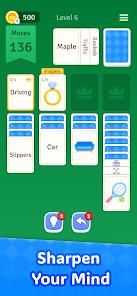
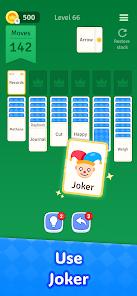
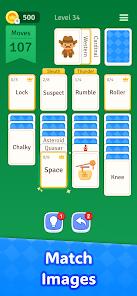
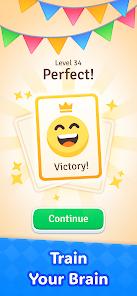
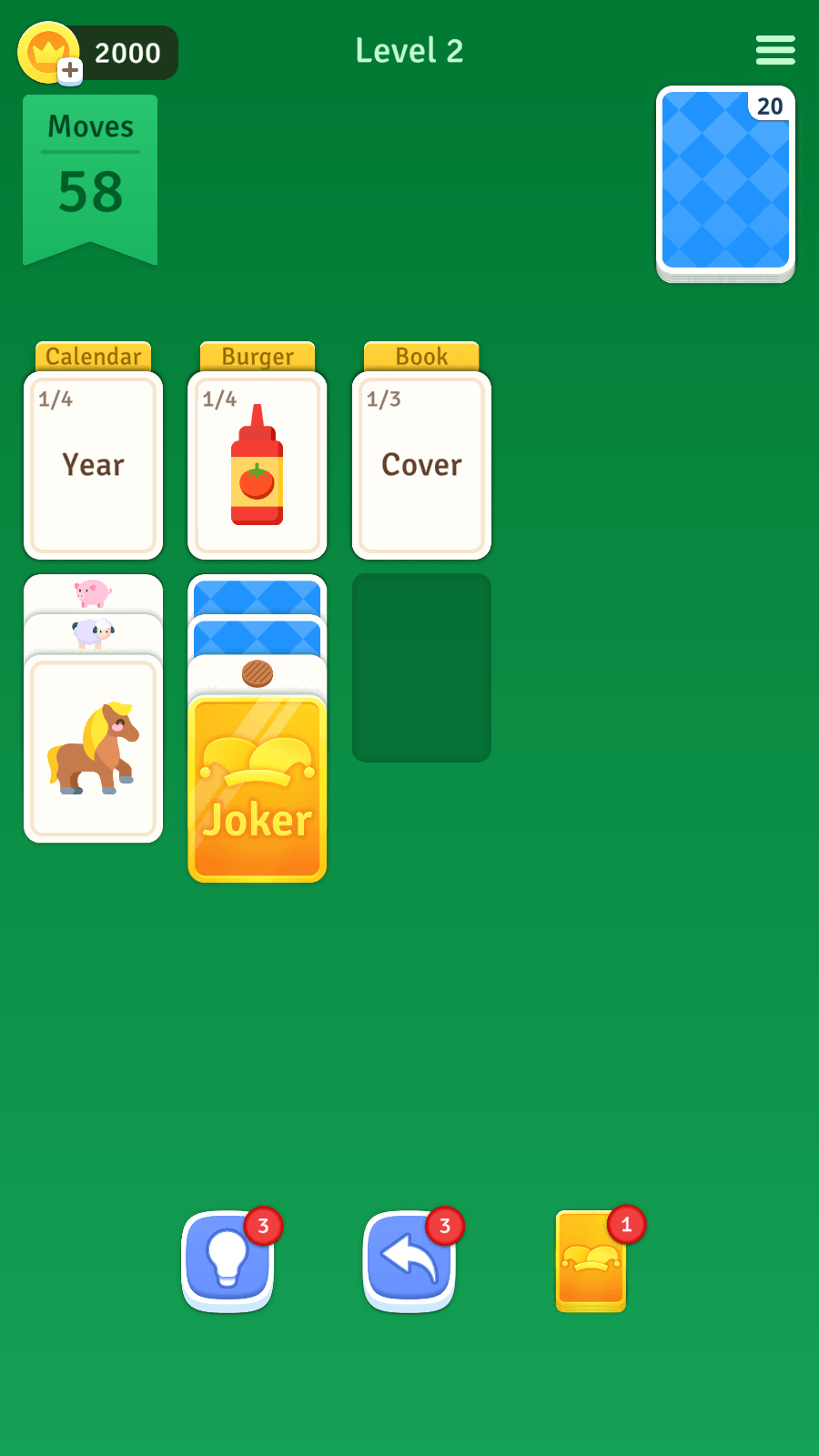
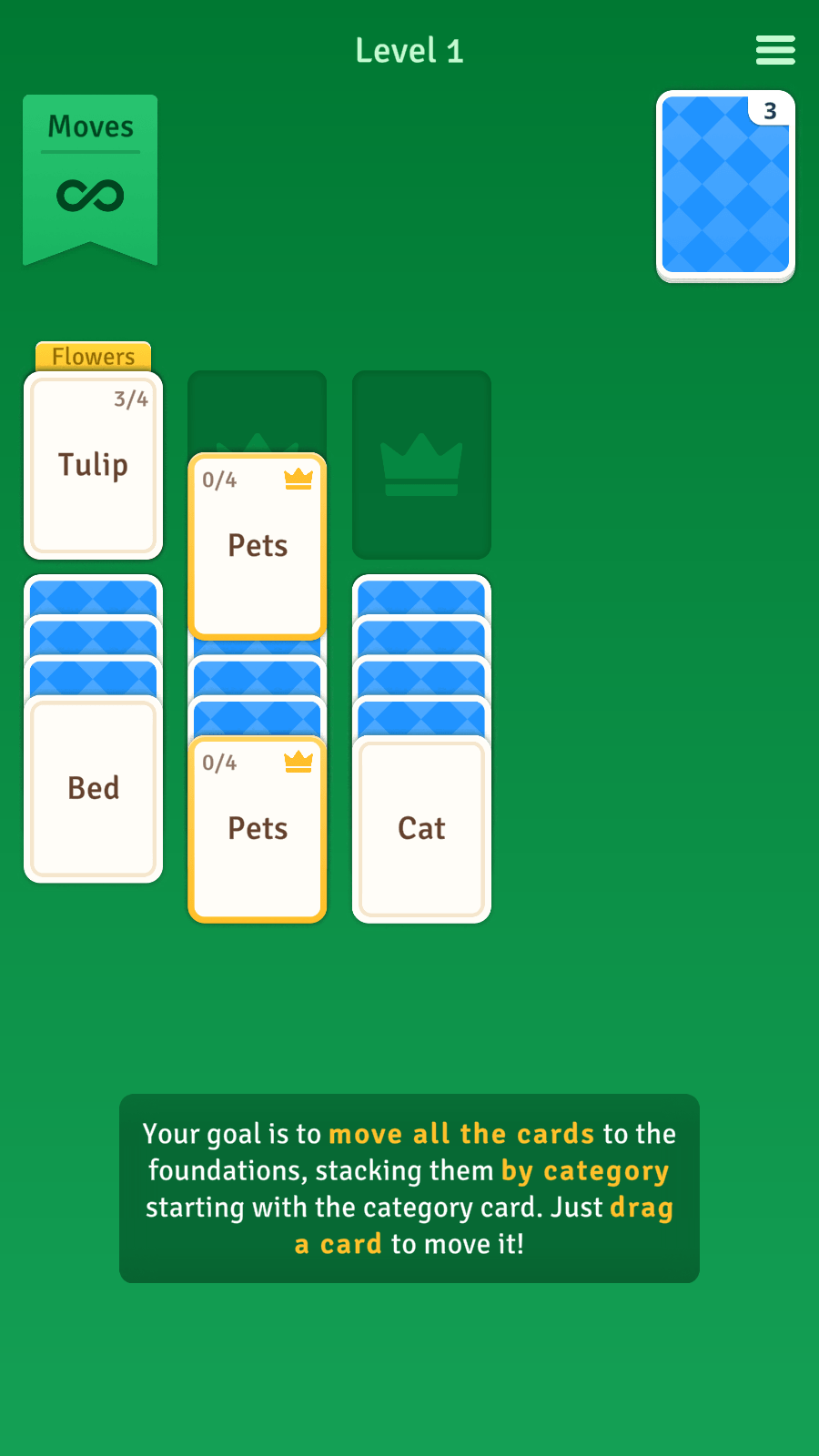
Developer Hitapps Games describes the concept plainly: this is a puzzle game that fuses solitaire’s structure with word association. Instead of stacking a red eight on a black nine, you’re handed “category cards” — themes along the lines of fruits, or emotions, or weather — and a deck of “word cards,” and you clear the board by drawing each word and dropping it into the category it belongs to. The loop itself is simple: draw word cards from the deck, place each into the correct category slot, and empty the board to win the level. It’s immediately legible to anyone who has ever played a card game, which is a real strength — there’s no tutorial wall between you and the first satisfying clear.
The move limit is the whole game
If the sorting were the entire mechanic, this would be a pleasant vocabulary quiz and little more. What elevates it is the constraint. Each level starts partially filled and hands you a limited number of moves; run out before the board is clear and you lose. That single rule turns a knowledge test into a planning problem. You can’t just place words as they arrive — you have to think about order, about which category to commit a slot to, about the moves you’re spending. The listing leans on the phrase “every decision matters,” and here the marketing is accurate: the tension between knowing an answer and being able to afford to play it is where the game lives. Reviewers repeatedly single out this no-timer-but-limited-moves pairing as the thing that makes the loop satisfying — you can think as long as you like, but you can’t act as often as you like.
The calm is real, and so is the range
The other half of the appeal is tone. There are no timers anywhere; the design invites you to sit with a board for as long as you need, and users describe the result as genuinely relaxing and “mindful.” The interface is clean and soothing, the kind of low-stimulation presentation that suits a bedtime puzzle. Hundreds of handcrafted levels give it real runway, escalating in complexity as you go, and the whole thing runs fully offline — no connection required, which makes it a natural fit for flights and commutes. There’s a legitimate brain-training angle too: sorting words by meaning exercises vocabulary and semantic categorization, and reviewers mention looking up words they didn’t know, which is about the best endorsement a word game’s educational claim can earn. The listing pitches it as all-ages, from kids to seniors, and the gentle pace supports that.
Where it gets hard — and where the ads arrive
Here’s the honest part: the difficulty does not stay gentle. By the accounts of both the store’s own description and its user reviews, levels spike sharply somewhere after level 40, and a recurring complaint is that clearing them can start to feel dependent on luck — or on watching an ad for extra moves, or on buying in-app “bonus powers.” The move limit that makes the early game so satisfying becomes, in the later stages, the pressure point the monetization pushes on: run out of moves and your options are to restart or watch a commercial to keep going. Hints work the same way — you earn them by watching ads or paying. The developer’s position, a common one, is that ads are what keep the game free, and that’s a fair trade to state openly. But players are candid that the balance tips: past a certain point, the challenge and the ad prompts become difficult to separate, and some describe the progression in the hardest stages as feeling “pay-to-win.” We’d attribute that framing to the users who reach for it rather than state it as fact — but it comes up often enough to flag clearly.
The paid “No Ads” gap
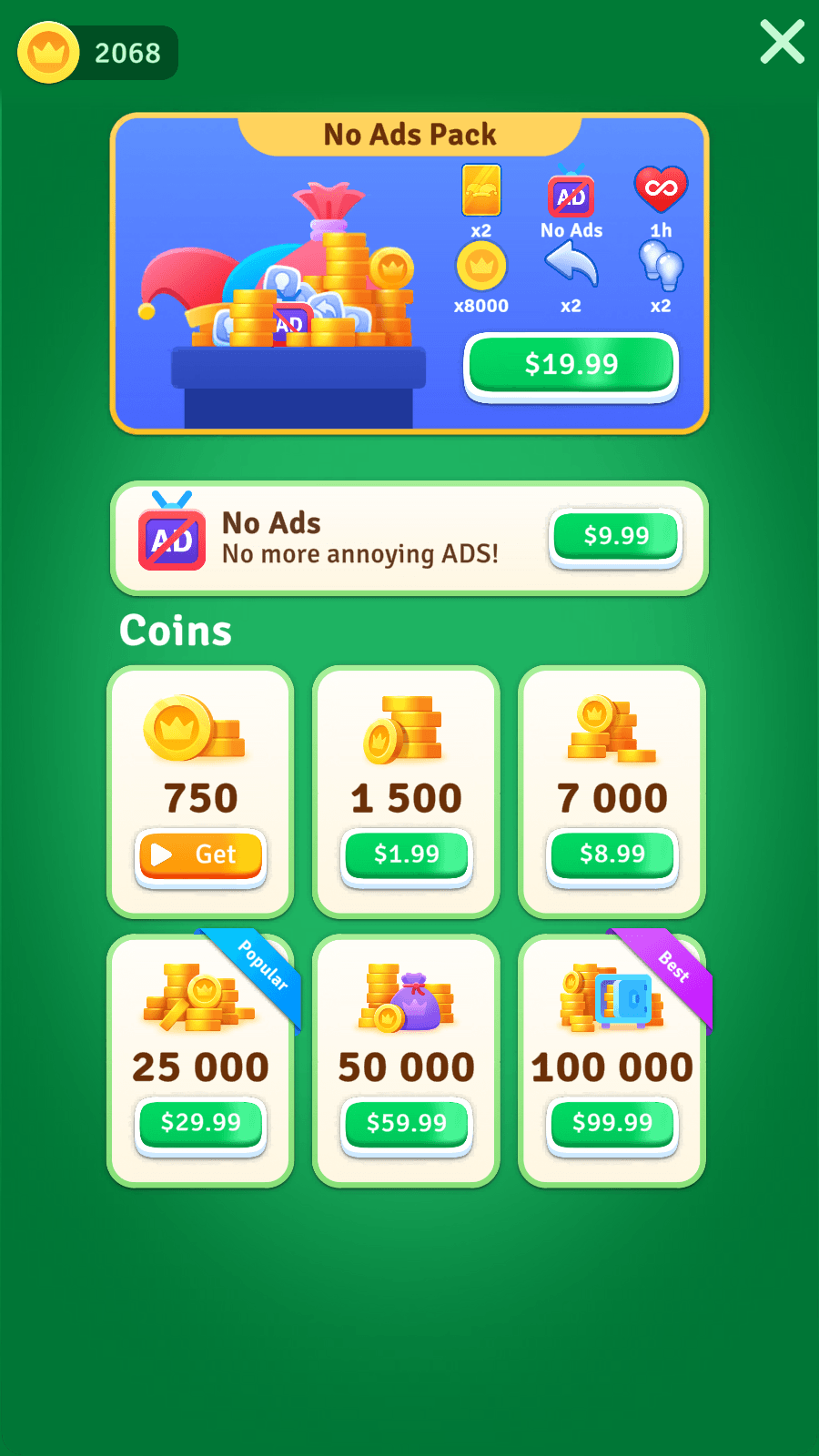
This is the caveat we’d most want to know before spending. Multiple players who paid for the “No Ads” version report that extra moves and hints still require watching ads — that the purchase removes the interstitial advertising but not the incentivized, watch-to-continue kind that shows up exactly when a hard level has you stuck. Whether that’s a deliberate distinction or a mismatch of expectations, the frustration is understandable: if you’ve bought your way out of ads, being asked to watch one to earn three more moves feels like the wall you paid to remove. If you’re considering the purchase specifically to escape that dynamic, go in knowing that by user accounts it may not.
A content-quality caveat
One more grounded flaw worth naming: the writing isn’t flawless. Reviewers report occasional spelling errors and — more consequentially for a game built on categorization — the occasional word sorted into a category you could reasonably argue with, usually in the more niche or specialized topics. For most players this is a minor blemish. For the word-game purist who’ll be genuinely irritated by a debatable association or a typo in a game that’s meant to be sharpening vocabulary, it’s a real, if small, mark against it.
How it compares
The obvious comparisons cut two ways. Against a standard solitaire app, this keeps the board-clearing structure and the moment-to-moment familiarity but replaces rote card-matching with something that actually asks you to think about meaning — it’s solitaire with a brain attached. Against a standard word game — the anagram hunts and crossword fills — it trades the usual race against the clock or letter-shuffling for a calmer, more strategic sorting puzzle where the binding constraint is moves, not time or spelling under pressure. That fusion, plus the no-timer strategy layer, is the genuine differentiator; we’re not aware of many games sitting in exactly this space, which is a large part of why the concept has drawn the “brilliant” and “addictive” reactions it has.
A note on recency
We’ll be straight about what we can’t confirm: the listing carries no “updated” date, so we won’t guess at one. What the signals do show is scale and reception — more than 10 million installs and a 4.4 average across roughly 266,000 ratings, a strong and broad endorsement even accounting for the difficulty and ad complaints. It’s a lightly presented listing, with only four screenshots, from developer Hitapps Games. A rating that high across a quarter-million votes tells you most players walk away happy; the caveats above are about knowing where the friction sits before you reach it.
Who it’s not for
Skip this one if difficulty walls that nudge you toward ads or purchases are a dealbreaker, or if you’d be buying the “No Ads” tier expecting it to remove every ad — including the extra-move and hint ones, which by user reports it won’t. It’s also a poor fit if you want fast, timed, reflex-driven play; this is deliberately slow and mindful. And if you’re the kind of word-game player who can’t let a typo or a questionable category slide, the occasional content slip will bother you more than it should.
Our take
Solitaire Associations Journey earns a recommendation from us on the strength of a genuinely fresh idea, executed with a calm confidence that its 4.4 rating across a quarter-million players clearly rewards. The solitaire-meets-word-association concept is more than a gimmick — the move limit turns it into a real planning puzzle — and the no-timer, fully offline, all-ages design makes it an easy one to keep on your phone. The honest limits are the difficulty spike past level 40 and the ad pressure that arrives with it, the “pay-to-win” feeling some players describe in the hardest stages, the reports that the paid “No Ads” tier still shows ads for extra moves and hints, and the occasional spelling or categorization slip. None of those are hidden catches — they’re the shape of a free-to-play puzzle game — and if you go in knowing where the friction sits, the idea underneath is well worth your time.
How We Evaluate
We assess every app on the same checklist: what it genuinely delivers, how honest the pitch is, where real users hit friction, and who should look elsewhere. We did not conduct hands-on device testing of Solitaire Associations Journey. This review is grounded in the app's own Play Store listing and description, its stated systems (the category-card and word-card sorting loop, the limited-move mechanic, the ad-and-IAP hint economy), its store signals (a 4.4 rating across roughly 266,000 ratings and 10M+ installs), the recurring themes in published user reviews, and the game's public reputation as a casual word/solitaire puzzle game from Hitapps Games. Where we cite user sentiment, we're reflecting documented recurring feedback in the store material rather than personal play sessions.
Pros & Cons
Unique fusion of classic solitaire mechanics and word association puzzles for a fresh experience.
Large library of hundreds of handcrafted levels with increasing complexity and variety.
Full offline capability allows for gameplay anywhere without an internet connection.
No timers or pressure, fostering a relaxing and "mindful" puzzle-solving environment.
Effective tool for expanding vocabulary and sharpening logical reasoning skills.
Sleek, elegant interface and card design that is visually soothing for long sessions.
Suitable for all ages, making it a great cognitive trainer for children and seniors alike.
- ✕
Move limits in later levels (40+) can feel overly restrictive, forcing ad-watches.
- ✕
Occasional spelling errors or misaligned word-to-category associations in niche topics.
- ✕
Ad-removal purchases have been criticized for not covering all "hint" or "undo" costs.
- ✕
The progression system can feel weighted toward "pay-to-win" in difficult stages.
Download


FAQs
How do I play Solitaire Associations?
You draw word cards from a deck and place them into the correct category slots on the board.
What happens if I run out of moves?
If the board isn't clear when you run out of moves, you lose the level and must restart or watch an ad.
Is this game good for brain training?
Yes, it is designed to sharpen logic, memory, and semantic categorization skills.
Can I play this game without Wi-Fi?
Yes, the game features a robust offline mode for play during travel.
Are there timers in the levels?
No, there are no timers, allowing you to think as long as you need for each move.
How do I earn more hints?
Hints can be earned by watching ads, completing levels, or through in-app purchases.
Hot Reviews
Players appreciate the fresh take on word games, finding the "sorting" mechanic highly engaging.
The lack of timers combined with the strategic move-limit creates a satisfying, low-stress gameplay loop.
Many users complain that after level 40, winning requires either luck or constant ad-watching for moves.
Users have reported looking up words they didn't know, making the game a fun way to learn while playing.
Some who paid for the "No Ads" version are frustrated that extra moves still require watching commercials.