Wordscapes: Word puzzle game
Still one of the most polished word puzzles on mobile, and the calm, timer-free design is a real differentiator rather than marketing language. The honest trade-offs are a heavy free-tier ad load between levels and a meta-game of pets, portraits and tournaments that longtime players say has made a once-minimal interface busier — paid ad removal is the usual route back to quiet.
- Adults who want a genuinely relaxing daily puzzle rather than a competitive one — there are no timers and no energy bars anywhere in the core loop, so a board can sit unfinished for as long as you like
- Players who want a bottomless library and don't want to run out: over 6,000 puzzles as of 2026, ramping from three-letter warm-ups to seven-letter anagrams, with the core puzzles playable offline
- Anyone who likes light collection and competition on the side — weekend star-collecting tournaments, Brilliance points that track total progress, and collectible pets and portraits, all optional
- Free players with low tolerance for interruption — the most-cited complaint in published user feedback is the length and frequency of between-level video ads, which cuts directly against the game's calm framing
- Anyone wanting a timed, competitive word game with a high skill ceiling — the no-clock design that makes this relaxing also caps how demanding it can get
- Players who want a stripped-back interface; recent user feedback describes the once-minimalist design as crowded with pop-ups for pet food and tournament placements, and that layer is now a substantial part of the experience
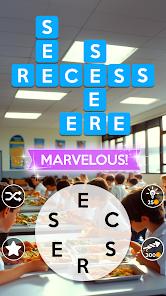
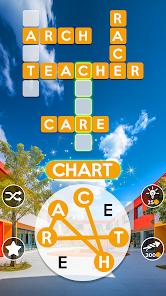
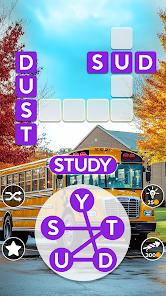

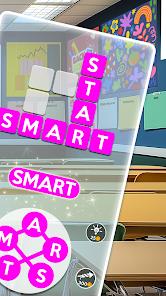


Overview
Why this one stuck
Plenty of word games have chased the same crown; Wordscapes is the one that kept it, and we think the reason is design discipline more than marketing budget. PeopleFun’s puzzle passed 100 million downloads not by inventing a new mechanic but by refusing to make its version stressful — and in a category where countdown clocks and energy meters are common, that restraint stands out. The store signals back it up: a 4.6 average across some 1.27 million ratings. We didn’t play it hands-on; what follows reads the listing, the feature set and recurring user feedback — including the parts the store copy skips.
What you’re actually playing
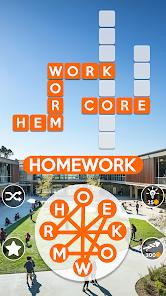
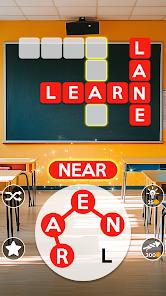
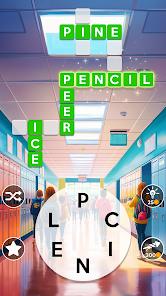
The core is a hybrid, and the blend is the clever part. A ring of letters sits at the bottom of the screen with a crossword-style grid above it; you swipe to connect letters into words, and each valid word fills its slots in the grid. That’s anagram-solving from a text-twist game married to crossword deduction, and each half feeds the other: a word you spot in the ring tells you where it fits, a gap in the grid tells you what shape to hunt for. The library is enormous — over 6,000 puzzles as of 2026, ramping from three-letter warm-ups to seven-letter anagrams at the top end. The core puzzles play offline, which matters: this is a commute-and-waiting-room game, and it doesn’t fall over when the signal does.
The zen framing is the actual product
Strip out the presentation and you’d have a competent but unremarkable word game; the presentation is why people stay. Levels sit against high-definition landscape backdrops with calming music behind them, and there are no timers or energy bars anywhere in the core loop. Nothing punishes you for sitting on a board. We think that’s the single best decision here, because it changes what the app is for: less a game to beat, more a ten-minute decompression ritual. Published user feedback matches that framing closely — players describe it as satisfying without being stressful, and a common pattern is using it to wind down before bed. That effect is hard to engineer, and it’s why the game reads as an adult productivity break rather than a kids’ puzzle.
The meta-game: pets, portraits, tournaments, Brilliance
Sitting on top of the puzzles is a second game about coming back tomorrow. Brilliance points aggregate your total experience and success across every puzzle solved — a single number that only goes up, a clean and low-pressure progression signal. Weekend tournaments run star-collecting events with local and global leaderboards, and these strike us as the healthiest social layer here: time-boxed and competitive without being punishing. Then there are the collectibles — pets you feed, butterfly events, portrait sets — and this is where opinion splits. Low drop rates on collection events are a recurring frustration in published feedback, with duplicates cited often enough to be a standing theme. If the collecting layer appeals, it’s a lot of free content on top of the puzzles. If it doesn’t, it’s mostly ignorable — but it will keep asking.
The ad reality, stated plainly
Here’s the honest accounting. The game is free to play, ad-supported, and carries in-app purchases for coins — coins being what you spend on hints, the bullseye and lightbulb reveals that uncover a single letter when a board has you stuck. As free-to-play models go that’s reasonable — hints are a convenience, not a gate. The friction is ad density and duration. The most consistent complaint in published user reviews is the length and frequency of video ads between levels, with players specifically citing roughly thirty-second spots after level completions, plus ads that sometimes hang or get stuck. The structural problem is worth naming: a game whose whole pitch is calm is unusually exposed to interruption, and a video of that length lands harder here than it would in an action title. Paying to remove ads is the usual route out; we have no current price to quote, so check the in-app pricing yourself.
When the calm gets crowded
The other criticism worth taking seriously is feature bloat, and it isn’t a fringe view — it’s in the app’s own recent-review record. The interface that built Wordscapes’ reputation was close to minimal: letters, grid, landscape. What recent user feedback describes is an interface crowded with pop-ups for pet food and tournament placements, competing for the attention the zen framing is meant to quiet. No single feature is a mistake here — pets and tournaments clearly land well with a large slice of the audience, and the tournaments in particular give lapsed players a reason to reopen the app — but the effect is cumulative. Every added live-ops system puts something else between opening the app and solving a word, and for a player who came for a two-minute decompression, that preamble is a real cost. It is also the most fixable criticism here: the puzzles themselves have not got worse, they have simply acquired more neighbours, and a pared-back “just the puzzles” view is the change we would most like to see.
A note on the listed data-safety disclosures
One item deserves careful handling rather than a headline. Our records note the app’s data-safety information as indicating that it does not use data encryption and that financial information may be shared with third parties. To be precise about what that is and isn’t: Play’s Data safety entries are developer-supplied declarations rather than an independent audit, our note reflects a point-in-time snapshot, and such declarations are routinely revised as apps and their advertising SDKs change. We are not asserting that anything has been mishandled, and have no evidence to that effect. The practical advice is simple — if data handling matters to you and you’re weighing a coin purchase, open the Data safety section on the current Play listing and read what it says today rather than relying on any third party’s snapshot, including ours.
How it compares
Wordscapes competes on mood rather than mechanics. Plenty of word games offer sharper competitive ladders or timed formats built for adrenaline, and if that’s what you want, this isn’t it. This one strips the pressure out — no clock, no lives to burn — and spends its budget on atmosphere and volume. Two practical advantages stand out: five-language support (English, Spanish, German, French and Portuguese), broader than most puzzle apps offer, and availability on Windows through Google Play Games for PC if you’d rather solve on a big screen. We won’t make claims about rivals we haven’t examined, but the trade is clear: a calm, content-heavy, ad-supported experience instead of a lean or competitive one.
A recency note
This is not a coasting listing. Google Play shows an update dated March 24, 2026, and the description reflects a current content state — over 6,000 puzzles, active seasonal tournaments — so live-ops is still running. Set that alongside 4.6 across about 1.27 million ratings and 100M+ installs, and the track record is unusually durable for the category. One caveat: updates in this genre tend to add systems rather than remove them. Judge it on how it plays today, not on how minimal it once was.
Who it’s not for
To be direct about fit: if a thirty-second video between puzzles would undercut the thing you came for, and you won’t pay to remove ads, this will wear on you — the free tier’s ad load is its most-cited drawback. It’s also a poor match if you want a timed, competitive word game with a high skill ceiling; the no-clock design that makes it relaxing limits how demanding it gets. And if prompts for pets and portraits read as clutter rather than content, recent user feedback is consistent that the interface has grown busier than its minimalist reputation suggests.
Our take
We’d recommend it, and the 4.3 we’re landing on reflects an excellent core surrounded by a busier shell than it once had. The fundamentals are strong: a satisfying crossword–word-search–anagram hybrid, over 6,000 puzzles, offline play, five languages, no timers or energy bars, landscape backgrounds that do real work on the mood, and a Brilliance system that marks progress without applying pressure. We hold back a few tenths for things worth weighing first — the frequency and length of between-level video ads on the free tier, collection drop rates that draw standing complaints, an interface carrying more prompts than its minimalist reputation implies, and a data-safety disclosure worth reading for yourself on the current listing. None of that undercuts the central appeal. For most people who want a calm, effectively bottomless word puzzle to fill ten minutes at the end of the day, this remains one of the safest picks in the category — and if the ads grate, the paid ad-removal option is the remedy the free tier points you toward.
How We Evaluate
We did not conduct hands-on device testing of this game. This review is grounded in the app's Google Play listing and store description, its stated feature set (the letter-ring "text twist" mechanic feeding a crossword-style grid, 6,000+ puzzles, the zen presentation with HD landscape backgrounds and no timers or energy bars, collectible pets, butterfly events, weekend tournaments, Brilliance points, coin-purchased bullseye and lightbulb hints, five-language support, offline play, and Windows availability through Google Play Games for PC), the pros and cons recorded in our database, the listing's FAQ, the recurring themes in published user feedback, and its store signals — a 4.6 average across 1,269,514 ratings, 100M+ installs, eight screenshots, a Play update dated Mar 24, 2026, and developer PeopleFun. Where we describe user sentiment, we are summarizing recurring themes in published feedback, not quoting individual reviews or reporting our own play sessions.
Pros & Cons
Combines multiple word-puzzle genres into an addictive and satisfying hybrid format.
Stunning nature backgrounds provide a genuinely relaxing visual experience.
Massive content library with over 6,000 puzzles ensures long-term replayability.
No time limits or energy bars, allowing players to solve at their own pace.
Available in five languages: English, Spanish, German, French, and Portuguese.
Regular weekend tournaments foster a healthy sense of competition and community.
"Brilliance" points and milestone systems provide a clear sense of personal progression.
- ✕
High frequency of ads, especially between levels, can disrupt the relaxing atmosphere.
- ✕
The "Pets" and "Portraits" systems are perceived by some as unnecessary bloat.
- ✕
Drop rates for collection events (like portraits) can be frustratingly low.
- ✕
The application does not use data encryption and may share financial info with third parties.
Download

FAQs
Is Wordscapes free?
Yes, it is free to download and play, though it contains advertisements and in-app purchases for coins.
What are Brilliance points?
They represent your total experience and success across all puzzles you've solved.
Can I play Wordscapes on my PC?
Yes, it is available for Windows via Google Play Games for PC.
How do I get hints?
You can spend in-game coins to buy "bullseyes" or "lightbulbs" that reveal single letters in the grid.
What happens in the tournaments?
Every weekend, players compete in star-collecting events to win rewards and climb local and global leaderboards.
Can I play offline?
Yes, the core word puzzles are available for offline play.
Hot Reviews
Users often report that Wordscapes is their "go-to" app for winding down before bed, noting it is "satisfying without being stressful".
A recurring complaint is the length of advertisements, with some users stating the "Zen" feel is lost when they have to watch 30-second videos after every level.
Reviewers often express frustration with the "random" nature of portrait collections, reporting they get duplicates "90% of the time".