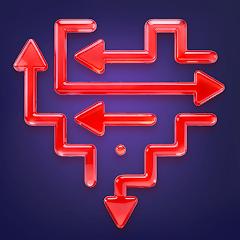
Arrowscapes™️ - Arrows Puzzle
On paper this is an unusually calm puzzle game — one collision-free arrow mechanic, no timer anywhere in it, an on-ramp gentle enough for newcomers and Nightmare stages waiting further in. The caveat, and it is the most consistent one across everything we hold on this game, is how often that calm is interrupted by advertising and by rating prompts that begin at level 2.
- Players who want a logic puzzle with no timer anywhere in it — our database records a zero-time-pressure design, so nothing counts down while you work out the order of moves
- Newcomers to puzzle games, and anyone playing alongside younger family members: our database credits the tap controls and gentle opening difficulty as genuinely low-barrier, and the hint system nudges rather than solves
- Commuters and travellers who need something that works without a connection, and who accept ad-supported free-to-play as the trade for it
- Anyone whose main requirement is uninterrupted calm — the volume of ads between puzzles is the single most repeated criticism on record, and some players say it works against the game's relaxing quality
- Experienced puzzle players who want to be challenged immediately: our own database flags the first 100–200 levels as too simplistic before the harder stages start to bite
- Players on smaller phone screens who expect to reach the high levels: our database and published feedback both record narrow tap targets and touch detection that can misfire, causing accidental errors even for careful players
- Anyone shopping for a verified brain-training or cognitive-health product — the brain-training framing is positioning, not something we have verified, and we hold no research on it

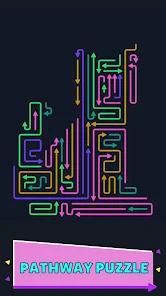
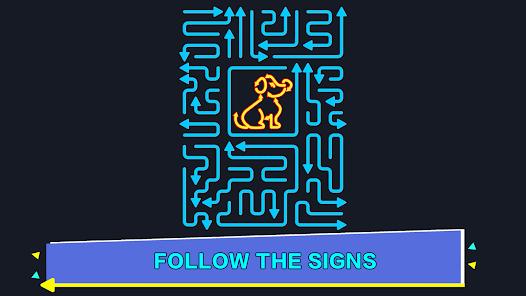
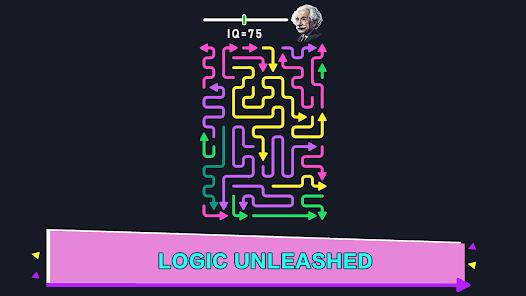

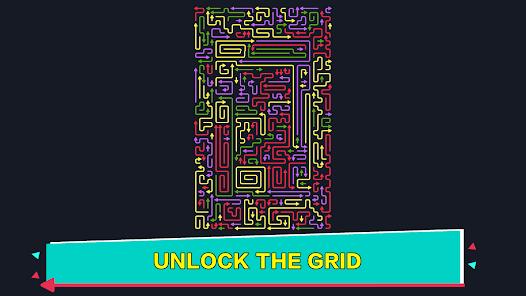


Overview
A 4.7 average across 123,442 ratings is not something a casual puzzle game stumbles into, and we think we can name the decision most likely to have earned Arrowscapes its share: a puzzle that never hurries you. On our material’s account nothing counts down while you work out the order of moves. The thing to weigh before installing is that the calm is not continuous — the most consistent criticism in our material, arriving from three separate directions, is how much advertising sits between the puzzles.
What the board actually asks of you
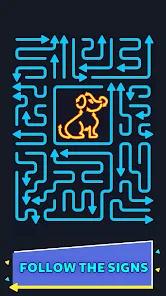
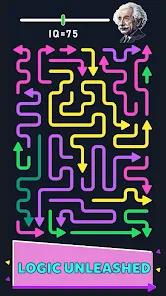
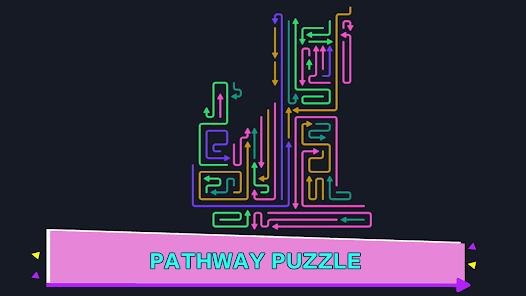
Arrows sit on a confined board and the objective is to pull all of them off without any two colliding. Our source material’s analysis names the complication: each arrow’s path is often obstructed by others, so the question is not which arrow to pull but in what order — analyse the board, as our FAQ puts it, and determine the correct order of operations.
That makes this a dependency puzzle in minimalist clothing: the difficulty is in the sequencing, not the dexterity.
The handcrafted-levels claim, attributed
Our source material flags the headline technical claim as the developer’s own: Beijing Youyoutang Technology claims thousands of handcrafted levels rather than generated ones. We report it as a claim, not a fact: a level count and its authorship cannot be audited from outside the app.
Our database records intentional level progression as a strength: an authored curve escalates on purpose, and hand-built boards are meant to avoid pattern repetition. Published feedback lends some support — players have highlighted the handcrafted puzzles as what stops play feeling like going through the motions, a theme our team summarised rather than a quotation.
No clock, and what that changes
The absence of time pressure is the decision we would put first. Our database lists a zero-time-pressure environment as a headline pro, crediting it with a contemplative playstyle suited to people who want a calm break. Our source material’s analysis reads the minimalism the same way: animation and clutter stripped back, in its account, as a deliberate choice to reduce cognitive fatigue and keep attention on the board.
That is not a small design position. A clock changes what a puzzle rewards: speed becomes part of the answer, and the player who wants to sit and stare at a board is penalised for it. Take it away and the only pressure is the board itself. Whether the execution lands is beyond what a desk assessment can settle, but the intent is legible, and it is the first thing we would point a stressed player toward.
The difficulty curve, from both sides
Our database records a con — advanced players may find the first 100–200 levels too simplistic — and, separately, a pro: intuitive tap controls and a gentle opening difficulty make the game accessible across age groups. Both readings hold. A long easy start is a tax on seasoned players and the on-ramp that stops a newcomer bouncing off.
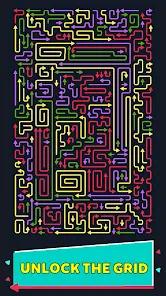
The escalation is the “Nightmare” stages: our FAQ describes high-difficulty levels appearing roughly every 25 levels, with more complex patterns demanding significantly more forward planning. Worth flagging rather than smoothing over: a stage recurring every 25 levels sits awkwardly beside a criticism that the first 100–200 are too easy, so our material is not settled on when the difficulty bites.
Hints, hearts, and the currency that cuts both ways
Two systems shape a session. Our database praises the hint mechanism for guiding without revealing the whole solution, preserving the satisfaction of finishing a board yourself. Our FAQ records that hearts are lost through incorrect moves, regenerate over time, and can be topped up by watching a rewarded advertisement; our database adds a heart-intact completion goal, which gives precision a reason to matter.
One structural note, with no intent read into it: our source material’s analysis records that both hearts and hints are supported by advertising, so the friction and the remedy route through the same place — ordinary enough in free-to-play casual games, but worth knowing going in.
The advertising, plainly
Our source material’s analysis identifies a paradoxical tension between the stress-free promise and ad-driven friction, citing both ad length and the frequency of rate-the-game pop-ups. Our database’s cons record that users frequently report advertisements appearing after nearly every move or level, breaking flow. And in published feedback, a common theme in critical responses is the play-to-ad ratio: some users report spending as much time watching promotions as solving puzzles, which they say negates the app’s relaxing quality. Three separate strands of our material land on the same complaint. We put no numbers on it: none are on record and we measured none ourselves.
Our database records a related friction: the prompt to rate the app appears as early as level 2 and repeats, which some users find annoying.
On escaping the ads, our FAQ says users can often find no-ad purchase options in the store to permanently remove forced breaks. That hedge stays: it is not confirmation such a purchase exists in this app today, and no price is on record — check the live Play listing before deciding on that basis.
Precision on small screens
The one clearly mechanical complaint concerns input: our database records that at higher levels, with smaller assets, touch detection can sometimes register a move when a finger is merely hovering. Published feedback echoes it — long-term players have noted that on smaller phone screens the game becomes hard to control at high levels, with narrow tap targets causing accidental errors even for careful players. Our material does not say what such a slip costs, so we will not assert it — but the two records belong side by side: hearts lost through incorrect moves in our FAQ, an accuracy problem in our database at exactly the levels where boards get dense.
Offline play, and the privacy line
The offline story is a genuine strength: our FAQ records that the core puzzle mechanics work without an internet connection, making it a reasonable travel and poor-signal companion.
On data we report what we hold, and no more. Our FAQ records that the developer reports they do not directly collect data, though location information may be shared with third parties for ad-targeting purposes. That is the developer’s own reported position rather than anything we have verified, and we draw no conclusion beyond stating both halves.
About the brain-training framing
Three things in our material touch cognition, and they should not be blurred. Our source material’s analysis observes that the game is positioned as a brain-training tool and markets itself as a productive use of a five-minute break. Our editorial database separately lists a pro it calls enhanced spatial logic training, describing the game as directly exercising the player’s ability to visualise multiple moving paths and sequential outcomes — that is our database’s wording, not a finding we have tested. And in published feedback, players have highlighted the game’s ability to keep the mind sharp in small windows of free time, our team’s summary, not a quotation.
None of those is evidence. We have not verified any cognitive benefit, we hold no research on it, and we cite no study. The defensible line is narrow: solving these boards requires sequential planning and spatial reasoning in the moment, which describes the puzzle. Whether that produces any lasting cognitive effect is outside what an app review can assess. Nothing here is a health claim in either direction, and nobody should install this as a cognitive intervention.
Recency, scale, and the category
An honest note on maintenance: our data carries no Play update date for this listing, so we cannot speak to cadence either way. What we can lean on is scale — 4.7 across 123,442 ratings and 1M+ installs is a substantial, broadly positive signal.
We have run no head-to-head comparison, so treat this as framing rather than a benchmark: the monetisation is ordinary for casual puzzle games, and what sets Arrowscapes apart on paper is the single clean mechanic, the total absence of time pressure and a difficulty spine that keeps escalating.
Who it’s not for
Four groups should think twice. Anyone whose priority is uninterrupted calm should weigh the ad frequency — three strands of our material agree on it. Experienced puzzle players wanting difficulty from level one may find the opening slow. Small-screen players heading for the high levels should know about the narrow tap targets. And anyone shopping for a validated cognitive product should not read the brain-training language as evidence of one.
Our take
Arrowscapes is a well-liked puzzle with a clear idea of what it wants to be: one mechanic, no clock, a difficulty curve that keeps something in reserve. The hint mechanism our database credits with guiding rather than solving, the heart-intact completion goal and the offline play our FAQ records are documented strengths, and 4.7 across 123,442 ratings reflects a large audience that found what it came for. The caveat is pacing rather than design: the ad volume between puzzles and the rating prompts from level 2 are the most consistently raised frictions we hold, and they pull against the unhurried experience the game is built around. If ad-supported free play is a trade you accept, there is a lot here to like; if interruption is what would spoil it, settle that question before you install.
How We Evaluate
We did not hands-on test this game. This review is a desk assessment built from Arrowscapes™'s Google Play listing and from our source material's own analytical description of the app, its stated features (collision-free arrow-pulling as the core mechanic, handcrafted levels on the developer's claim, the absence of timers, the hint system, the heart system with rewarded-ad refills, "Nightmare" stages appearing roughly every 25 levels, and offline play), the pros and cons recorded in our own editorial database, our database's FAQ, and recurring themes in published user feedback — which we read as sentiment summaries written by our team rather than as verbatim quotes, and whose original scope wording we have preserved. The store signals we weighed: a 4.7 average across 123,442 ratings, 1M+ installs, ten screenshots on record, category Casual, and developer Beijing Youyoutang Technology Co.,ltd. Two gaps we state rather than paper over: our data carries no Play update date for this listing, so we cannot speak to update cadence in either direction, and we cannot verify the level count — "thousands of handcrafted levels" is the developer's claim and we report it as such. We have also not verified any cognitive or brain-training benefit from this game and hold no research on it; nothing here should be read as a health claim in either direction.
Pros & Cons
Intentional Level Progression: Avoids the "sameness" of auto-generated content through thousands of uniquely designed challenges.
Zero Time-Pressure Environment: Facilitates a contemplative playstyle by removing timers, making it suitable for high-stress users seeking a calm break.
Enhanced Spatial Logic Training: Directly exercises the player's ability to visualize multiple moving paths and sequential outcomes.
Low Barrier to Entry: Intuitive tap controls and a gentle introductory difficulty make the game accessible to all age groups.
Practical Hint Mechanism: Provides subtle guidance to prevent user frustration without revealing the entire solution, preserving the satisfaction of the win.
Achievement Rewards: The goal of finishing levels "heart-intact" provides a persistent motivation for precision and planning.
- ✕
Disruptive Ad Frequency: Users frequently report that the volume of advertisements, appearing after nearly every move or level, breaks the game's flow.
- ✕
Aggressive Rating Inquiries: The prompt to rate the app appears very early (level 2) and repeats frequently, which some users find annoying.
- ✕
Shallow Early Difficulty: Advanced puzzle players may find the first 100-200 levels too simplistic before the "Nightmare" puzzles begin.
- ✕
Input Sensitivity Issues: At higher levels with smaller assets, the touch detection can sometimes register a move when a finger is merely hovering, leading to errors.
Download


FAQs
How do I successfully complete a level in Arrowscapes™?
The core objective is to pull all arrows collision-free. You must analyze the board and determine the correct order of operations, as some arrows block the paths of others.
Is there a way to play the game without seeing ads?
While the game is free to play and relies on ads for its hint system and hearts, users can often find "no-ad" purchase options within the store to permanently remove forced breaks.
What are "Nightmare" puzzles?
These are high-difficulty stages that appear approximately every 25 levels. They feature more complex patterns and requires significantly more forward planning than standard levels.
Can I play Arrowscapes™ without an internet connection?
Yes, the core puzzle mechanics are available offline, making it an ideal companion for travel or areas with poor connectivity.
Does the game collect my personal data?
The developer reports that they do not directly collect data, though location information may be shared with third parties for ad-targeting purposes.
What happens if I lose all my "hearts"?
Hearts are lost through incorrect moves. You can wait for them to regenerate over time or watch a reward-based advertisement to gain extra lives and continue playing.
Hot Reviews
Players have highlighted the game's ability to "keep the mind sharp" during small windows of free time. The handcrafted nature of the puzzles ensures that players aren't just going through the motions.
A common theme in critical feedback is the ratio of play-to-ad time. Some users report spending as much time watching promotions as they do solving the actual puzzles, which can negate the "relaxing" aspect of the app.
Long-term players have noted that on smaller phone screens, the game becomes difficult to control at high levels. The narrow "circumference" for tapping an arrow can lead to accidental errors even for careful players.