
Yelp: Food, Delivery & Reviews
Yelp's real asset is the accumulated review corpus and, more than the stars, the customer photographs attached to it — and on a phone that turns into something genuinely useful, with Request a Quote for home services the best thing in the app. The caveat that matters most to consumers is ordering: our database notes that Promoted listings can push higher-rated local favorites further down the page, so the first result you see is not necessarily the best-rated one.
- Homeowners hiring a contractor, handyman, plumber, or other trade — Request a Quote lets you message several providers at once and compare estimates, and it is the feature published user feedback singles out most enthusiastically
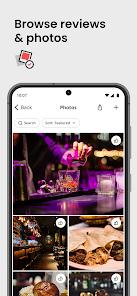
- People who choose restaurants visually: published user feedback singles out the customer photo galleries attached to reviews as more telling than the star average
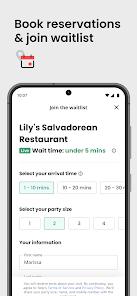
- Anyone who would rather join a restaurant's line from their phone than stand in it — Waitlist pings you when your table is nearly ready, and the filters cover price, rating, location, and curbside pickup
- Anyone who expects search results ordered purely by rating — our database is explicit that Promoted placements can push higher-rated local favorites further down the page
- Users who want a lean, low-chrome app: our data flags an interface that can feel cluttered with advertisements and prompts to upgrade to premium services
- Business owners looking for a verdict on Yelp as a marketing channel — this review covers the consumer app; Yelp for Business is a separate product, and owner sentiment appears here only as context
- People whose needs sit outside dining and home services, the two sectors the listing itself points to as Yelp's strongest


Overview
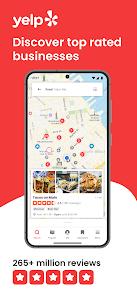
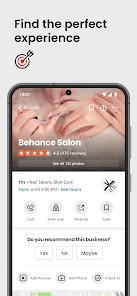
The most valuable thing Yelp owns is not the app — it is the pile of other people’s opinions, and more usefully, other people’s photographs. Published user feedback circles the same point: the star average gets you a shortlist, but the photos tell you whether the food looks like the menu implies. That corpus is why a 4.6 across roughly 612,946 ratings is believable. Our sharpest reservation has nothing to do with reviews: it is about the order results appear in.
What Yelp actually is now
Calling this a review site both undersells and misreads it. The listing’s own framing is that Yelp moved beyond reviews into a transactional platform, and the app reflects it: book a reservation, order delivery through third-party partners, join a waitlist remotely, or hire home-service professionals without leaving it. The search is tuned, in the listing’s words, for high-intent queries: people who already intend to spend. One tell about how far the product has drifted: Play files it under Food & Drink, yet the feature our database rates most highly is a home-services quoting tool.
The review corpus is the product
Our database’s first listed strength is scale — the listing states over 200 million reviews worldwide, presented as the most comprehensive consumer-facing dataset on local business quality. Scale alone is a weak argument. What makes Yelp’s version work is the photo layer. A review calling a place overpriced is one stranger’s opinion; a wall of customer photos of the actual plates is closer to evidence, and it ages better than prose. That is the recurring theme in published feedback, and the best single reason to keep this installed.
Request a Quote is the standout
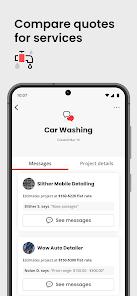
If you install Yelp for one feature, this is it. Instead of calling plumbers one at a time and leaving voicemails, you describe the job once, message multiple providers simultaneously, and compare what comes back. Our database calls it exceptionally efficient for finding contractors, handymen, and other trades; the FAQ describes a large database of verified home-service providers with a tool for requesting several quotes at once; and published user feedback describes the payoff you would hope for: finding a reasonably priced plumber quickly by messaging a few at once. We have no data on typical response rates and will not invent any; outcomes will vary by trade and area. But the mechanism is sound: it converts the worst part of hiring a tradesperson — serial phone tag — into a parallel process.
Waitlist and reservations
Less exciting, quietly valuable. Waitlist, per the FAQ, lets you join a restaurant’s queue from your phone and notifies you when your table is nearly ready — forty minutes on a sidewalk becomes forty minutes doing something else nearby. Reservations sit alongside it for places that take them. Both depend on the restaurant participating — a discovery app is only as good as the operators keeping their end current. Our database also credits the filtering: location, price, rating, and curbside pickup, the unglamorous plumbing that makes a search app usable.
Delivery, through partners
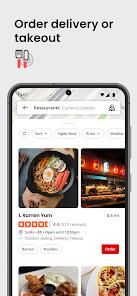
Food ordering is integrated rather than native — the listing names GrubHub and EatStreet as the third-party delivery partners behind it. That is all we know and all we will assert — we have no information about their fees, coverage, or quality, so treat delivery as a convenience layer routed elsewhere, not a Yelp-operated service. The upside is real: you go from reading reviews to ordering without switching apps.
The promoted-listings problem
This is our clearest consumer-side criticism, and it is well documented. Our database states plainly that search results are heavily influenced by Promoted listings, which can sometimes push higher-rated local favorites further down the page. The listing itself describes targeted advertising that places businesses at the top of relevant search results as part of the paid business toolset. The practical guidance: the first thing you see is not automatically the best-rated thing, and scrolling past the top of a result list is worth the two seconds. That is ordinary marketplace economics: most platforms sell placement, and Yelp does not hide that it does. It is a caveat about how to read the screen, and the one we would most want a new user to internalize.
The review recommendation software
Keep this separate from the section above. Paid search placement and review recommendation are two different systems, and we treat them separately here: this section is about how reviews are surfaced, and nothing in it concerns advertising.
Here is what Yelp documents. Its FAQ, answering how you know a review is real, describes automated software that recommends reviews based on their quality, their reliability, and how active the reviewer is on the site. A review the software does not recommend is not presented with the same weight as one it does. The criticism is equally documented: our database records that this recommendation algorithm occasionally hides legitimate reviews, frustrating users and business owners alike, and the listing itself acknowledges ongoing debates about Yelp’s review-filtering.
What we can fairly conclude stops there. An automated filter sits between a written review and a prominently displayed one, Yelp states its criteria at a high level, and some legitimate reviews get caught by it — the ordinary cost of any automated quality filter at this scale, and a reasonable thing to find frustrating from either side. Our material supports that description and nothing beyond it.
The owner side, as reported
Yelp for Business is a separate product and not what we are reviewing. But the owner experience shapes what lands in your results, so it belongs here as context. Our database records that the platform’s advertising sales tactics are often described as aggressive and intrusive by small business owners, and published feedback from an owner describes the constant calls from the sales team as overwhelming, adding that “it feels like you have to pay to stay visible.” The sales contact our material describes concerns Yelp Ads and premium business tools — the paid search placement covered further up. That characterization is theirs, not ours: we relay it because it recurs, not because we have verified it. The documented counterweight deserves equal precision — the FAQ confirms an owner can claim a business page for free and add hours, photos, and contact information. What the paid tier costs is not something our material specifies, so we will not guess.
The number worth reading carefully
That 4.6 across roughly 612,946 ratings is a consumer-side signal: people using Yelp to find a taco or a plumber, saying it works. Almost every sharp criticism in our material comes from business owners — a different constituency, evaluating a different product, under different incentives. Treating the 4.6 as a rebuttal to owner complaints, or owner complaints as a rebuttal to the 4.6, gets the picture wrong in both directions.
How it compares
The useful comparison is not a named rival but the alternative: a web search plus asking around. Yelp wins on depth of local coverage, on photo evidence, and decisively on parallel quote requests for trades, where the fallback is a morning of phone calls. It gives ground on neutrality of presentation, since paid placement sits at the top in a way an organic result set does not, and on interface calm.
Where things stand
One honest gap: Google Play shows no public updated date for this listing, so we cannot tell you when it last shipped and we will not invent a date. We would not over-read it either — a 50M+ install product with an eight-screenshot listing and this volume of ratings is not a dormant one, and missing store metadata is a listing-hygiene detail, not evidence about the app. If recency matters, check the store’s what’s-new section yourself.
Who it’s not for
This is the wrong app for you if you want results ranked purely by quality: Promoted placements can push higher-rated favorites down the page. It is a poor fit if you want a minimal interface — our data flags clutter from advertisements and upgrade prompts. Business owners after a verdict on Yelp as a marketing channel need a different review, because that is a different product. And temper expectations outside dining and home services, the sectors the listing names as Yelp’s strongest.
Our take
We land at 4.2 because the consumer app does two things unusually well — photo-backed local discovery, and parallel quoting for home services — and the frictions, while genuine, are navigable once you know they exist. Scroll past the promoted results. Read the photos, not just the stars. Treat the review filter as an imperfect automated system both sides have legitimate complaints about, and owner-side criticism as sentiment from a different constituency. Do that, and this stays one of the more useful apps on a phone for the moment when you need to know where to eat or who to call.
How We Evaluate
We did not hands-on test this app: we did not install it, book a table, join a waitlist, order delivery, request a quote, or post a review through it. This is a desk assessment built from Yelp's Google Play listing and description, its stated feature set (local search and filtering, the review and photo corpus, Waitlist and reservations, third-party delivery integration with the partners the listing names, and Request a Quote for home services), the pros and cons recorded in our app database, the developer's published FAQ — which is our source for how Yelp describes its review recommendation software and for the statement that owners can claim a business page for free — and recurring themes in published user feedback covering restaurant discovery, the quote tool, and business-owner frustration with advertising sales contact. We also weighed the store signals: a 4.6 average across roughly 612,946 ratings, 50M+ installs, eight screenshots, and developer Yelp, Inc. Two honest limits. First, Google Play shows no public "updated" date for this listing, so we cannot tell you when it last shipped and we will not guess. Second, we are reviewing the consumer app, not the separate Yelp for Business product; where we report owner sentiment we are relaying documented, attributed criticism because it shapes what consumers see, not auditing the business platform, and we attach no star ratings to that feedback.
Pros & Cons
With over 200 million reviews worldwide, it provides the most comprehensive data set for local business quality available to consumers.
The "Request a Quote" feature is exceptionally efficient for finding and hiring contractors, handymen, and other home services.
The "Waitlist" and "Reservation" features help users save time by booking tables or joining lines from their phone.
The app's interface is highly optimized for local discovery, offering filters for location, price, rating, and even "curbside pickup".
Integration with food delivery partners ensures a seamless experience for ordering from a wide range of restaurants.
Business owners can claim their listings for free, allowing them to update essential information and upload photos to attract customers.
- ✕
The platform’s advertising sales tactics are often described as aggressive and intrusive by small business owners.
- ✕
Search results are heavily influenced by "Promoted" listings, which can sometimes push higher-rated local favorites further down the page.
- ✕
The review recommendation algorithm occasionally hides legitimate reviews, which can be frustrating for both users and business owners.
- ✕
The app can feel cluttered with advertisements and prompts to "upgrade" to premium services.
Download


FAQs
How do I know if a review is real?
Yelp uses an automated software that recommends reviews based on quality, reliability, and the reviewer’s activity level on the site.
Is it free for me to list my new business?
Yes, you can claim your business page for free to provide hours, photos, and contact information.
Can I use Yelp for home repairs?
Yes, Yelp has a massive database of verified home service providers and a tool for requesting multiple quotes at once.
What is the "Yelp Waitlist"?
It allows you to join a restaurant’s line from your phone and receive a notification when your table is almost ready.
Does Yelp offer discounts?
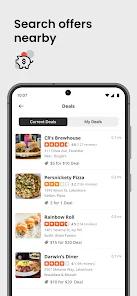
Many businesses offer "Yelp Deals" or check-in offers that provide discounts to app users.
Hot Reviews
I never try a new restaurant without checking the Yelp reviews first. The customer photos usually tell the real story about the food quality.
The app is great for finding customers, but as an owner, the constant calls from their sales team are overwhelming. It feels like you have to pay to stay visible.
The "Request a Quote" tool saved me so much time. I was able to find a reasonably priced plumber in 10 minutes by messaging a few at once.