
Nextdoor: Neighborhood Network
What holds this app up in our records is unusually concrete — missing pets found because neighbours were watching, storm and wildfire updates that published feedback describes as arriving ahead of national coverage, furniture collected off a porch with no shipping to arrange. The friction our records name most sharply is narrower than ad volume: the search algorithm has been criticised as 'monetization-first', burying organic community posts under paid results.
- People who want a feed limited to their own street rather than the whole internet — our records describe participation restricted to residents verified at a physical address inside a defined area
- Pet owners: published feedback in our records describes this as the most effective route to a missing animal, with neighbours acting as "real-time lookouts"
- Residents of wildfire- and storm-prone areas — our pro list records direct integration with public safety agencies, and published feedback describes local updates arriving faster than national news coverage
- Anyone clearing out a house: our source material describes a "Buy, Sell, Free" Marketplace where local porch pickup replaces shipping entirely
- People hiring local trades — our records describe "Neighbor Recommendations" as a trust-based route to finding handypeople, plumbers and pet sitters
- Anyone looking for a club rather than a forum — our pro list records interest-based Groups, from gardening to parenting, formed within walking distance
- Anyone who prefers to post under a handle — our FAQ records that Nextdoor requires real names, with a "Privacy Center" governing how much of the profile and address is shown
- People unwilling to verify a home address, which our FAQ records as handled by a postcard carrying a unique code or through a linked phone number's billing records
- Readers who move often: our FAQ records that after updating an address you must re-verify the new residence before you can reach that neighbourhood's feed
- Anyone with little patience for a heavily ad-supported feed — our con list records a high frequency of advertisements in the newsfeed, and published feedback describes some users putting sponsored content at half of what they see
- People who need a search box to rank by relevance, given our con list's record that the search algorithm has been criticised as "monetization-first", burying organic community posts under paid results






Overview
The most persuasive material in our records for this app is a set of completed errands rather than a set of capabilities: a missing animal recovered because neighbours were watching for it, a road closure known before it reached the news, a bookshelf gone off a porch with nothing to package. That is what a 4.6 across 392,691 ratings appears to be made of. The sharpest friction in the same records is narrower than the one usually named: not how many ads are in the feed, but what comes back when you search.
What a verified feed carries
Our source material describes participation restricted to residents verified at a physical address within a specific geographic area, and that restriction is the load-bearing decision; everything else inherits from it. Our pro list records the hyperlocal focus as ensuring content is directly relevant to a user’s immediate physical environment, which is a narrow promise and a testable one.
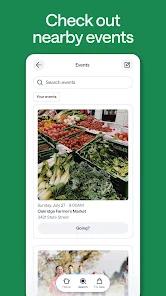
The boundary adjusts, but not far: our FAQ records a “Nearby Neighborhoods” setting for posts from adjacent areas, with the primary focus remaining your own verified community. Our source material describes the upper end of what that produces as “hyperlocal mobilization” — volunteer drives and community events among people already within reach of one another.
Porch pickup instead of shipping
Our source material describes a “Buy, Sell, Free” Marketplace whose defining property is geographic: the logistical hurdle of shipping is replaced by a local porch pickup. Our pro list records it as efficient in both directions — for getting rid of unwanted items, and for finding local bargains without shipping costs.
Two kinds of listing turn on that: the bulky item that is awkward to package, and the free item worth less than the cost of shipping it. Remove the parcel and neither obstacle applies.
What a neighbourhood feed can amplify
Our con list records that the platform can inadvertently amplify “neighborhood paranoia” and petty grievances, and it names social polarization as the result. The description we hold on file lists “neighborhood drama” among the criticisms in circulation around the app.
Asking the street for a plumber
Our source material describes “Neighbor Recommendations” as a trust-based route to finding handypeople, plumbers and pet sitters, and our pro list records it as a vetting process for local contractors. What distinguishes it in our records is provenance: because the platform is limited to verified residents, the recommendation arrives attached to someone with an address on the same map as the job.
Groups are the quieter feature: our pro list records interest-based Groups that let local clubs form — gardening, parenting, and the rest — within walking distance. That last qualifier is the feature: a club spread across a city is a message thread; one that can walk to the same meeting is a club.
Lost pets, road closures, and the storm feed
Published feedback in our records describes Nextdoor as the most effective route to a missing pet, because neighbours can act as “real-time lookouts”. The mechanism is the same geographic restriction: the post reaches people physically able to look out of a window and see the dog.
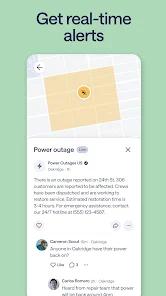
A second recurring theme comes from residents of wildfire-prone and storm-prone areas, who are recorded describing the local updates they received here as faster and more accurate than what reached them through national news outlets. Behind that sits a structural fact our pro list records: direct integration with public safety agencies, credited with authoritative real-time information during local crises. Our source material is specific about it: “Safety Alerts” often sourced directly from local police and fire departments, covering power outages, road closures and emergencies.
Where the ads sit in the feed
Our con list records a high frequency of advertisements in the newsfeed, with the effect recorded as making the app feel cluttered and less community-oriented. The description we hold on file is more specific: a feed frequently interrupted by repetitive ads, with “ad saturation” among the criticisms it records. Published feedback carries the same theme, with some users putting sponsored content at half of what they see.
Our own editorial description on file frames the broader point as a tension between a mission to “foster community” and a business model resting on advertising revenue.
What the search box returns
The sharper version of the complaint is about ranking rather than volume, and it has a different consequence. Our con list records that the search algorithm has been criticised for being “monetization-first”, often burying organic community posts under paid results. Our source material puts the same criticism in operational terms: search often prioritises sponsored businesses over relevant community discussions.
That matters more than a count of ads because of where it lands. The neighbour who recommended a plumber, the post about which road is shut, the listing for the bookshelf: each is worth what retrieval is worth. The feed is what arrives; search is what you reach for with a specific need.
One recorded fact sits underneath both complaints: our FAQ records that local companies get free “Business Pages” but must pay for “Local Deals” and sponsored posts to appear in the main neighbourhood feed.
The postcard with a code on it
Our FAQ records address verification as typically handled by a postcard carrying a unique code, or through a linked phone number’s billing records. Our pro list credits that process with creating a high-trust environment and reducing the presence of anonymous trolls — the clearest difference in our records between this and a feed anyone can join.
The same mechanism has a cost recorded in the same FAQ. If you move, you can update your address in the app, but you must re-verify the new residence before you gain access to that neighbourhood’s feed, by the same recorded methods, one of which arrives in the mail. That falls on new arrivals, the people with the most obvious reason to want a neighbourhood network.
Real names, and the Privacy Center
Our FAQ records that Nextdoor requires real names, and records a “Privacy Center” through which users control how much of their profile and address is visible. Our pro list records the control most likely to matter: limiting the visibility of a house number and a full name to immediate neighbours.
Both halves are the recorded position and should be weighed together: a real-name requirement, with granular control over how much of the address attached to that name is shown. For anyone who participates online under a handle as a matter of course, the requirement is the deciding line.
Who it’s not for
Anyone who posts under a pseudonym should take the real-names requirement at face value, and anyone unwilling to have a postcard sent to their house, or to link a phone number’s billing records, should stop at the verification step. People who relocate frequently should note that re-verification gates the feed, not merely the profile. And readers with a low tolerance for commercial density should note that ad volume is the one complaint the published feedback in our records raises.
Our take
We land at 4.4, two-tenths under the store’s 4.6, charged to one recorded line rather than to the ads in general.
The question worth answering is whether ad density is a defect inside this product or a disclosed premise of it. We think the feed density is the premise: a free, ad-supported network carries advertising, our records describe the feed as frequently interrupted by it, and that is the product the 392,691 raters were rating. An average that survives that has priced the ads in, and deducting for them would charge the same cost twice.
The search line is different, and the difference is not severity but visibility. Someone who scrolls past an ad knows what they are rating; someone whose search returns sponsored businesses above a neighbour’s recommendation does not necessarily know what ranked below it. An aggregate can absorb a visible cost in a way it cannot absorb an unnoticed retrieval failure, and that asymmetry is the whole basis of our two-tenths.
One condition would dissolve that gap. Our records place the ranking criticism among those in circulation around the app; if it circulates far enough that people open the search box already expecting it, it is not invisible after all, the pricing-in that clears the ads clears this too, and the store’s number is simply right. We cannot weigh that, because we hold no measure of how often a search returns that way. The two-tenths rests on the asymmetry holding more often than not.
What sits opposite is concrete: an animal recovered, a closed road known early, a plumber found through a verified neighbour — each depending on the same resident-verification boundary that also produces the app’s slowest requirement. The rest is local: whether the people near you are actually posting, and whether a commercially dense feed is a price you will keep paying for the days when it is the fastest thing you have.
How We Evaluate
We did not hands-on test this app. We have not verified an address, joined a neighbourhood feed, posted a listing, received a safety alert, run a search, or looked at a single real neighbourhood's content. This is a desk assessment built from the Google Play listing for com.nextdoor; the description we hold on file, which is our own editorial write-up rather than store marketing copy; the seven pros and three cons in our editorial database; the five-question FAQ we maintain for this listing; eight screenshots; and three entries of published user feedback. The store signals we work from are a 4.6 average across 392,691 ratings, 10M+ installs, the Lifestyle category, and Nextdoor, Inc. as the developer. Four limits on that material. Our data carries no Play "updated" date for this listing, so we cite none and make no recency claim. The star labels attached to the three published feedback entries are not usable as sentiment: all three carry the same label although one of them describes a complaint, so we never attach a star value to a theme. Those same entries are written in aggregate voice rather than as individual accounts, so we report them as recurring themes in published feedback and not as a measure of how common anything is. And we hold no consumer pricing figures of any kind, so we assert nothing about what this app costs a resident. Our distance from the product is a limit on this review, not a mark against the app, and it did not move the rating. This is a review of a piece of software. It is not advice about personal safety, emergency preparedness, neighbourhood disputes, or who to trust.
Pros & Cons
Hyperlocal focus ensures that all content is directly relevant to the user’s immediate physical environment.
Address verification through postcard or phone billing creates a high-trust environment and reduces the presence of anonymous trolls.
The "Marketplace" is highly efficient for getting rid of unwanted items or finding local bargains without shipping costs.
Direct integration with public safety agencies provides authoritative real-time information during local crises.
"Neighbor Recommendations" provide a more reliable vetting process for local contractors than anonymous review sites.
Interest-based "Groups" allow for the formation of local clubs, from gardening to parenting, within walking distance.
Strict privacy controls allow users to limit the visibility of their house number and full name to their immediate neighbors.
- ✕
High frequency of advertisements in the newsfeed can make the app feel cluttered and less community-oriented.
- ✕
The platform can inadvertently amplify "neighborhood paranoia" and petty grievances, leading to social polarization.
- ✕
The search algorithm has been criticized for being "monetization-first," often burying organic community posts under paid results.
Download


FAQs
How does Nextdoor verify my address?
Verification is typically handled by sending a postcard with a unique code to the physical address or through a linked phone number's billing records.
Is Nextdoor free for businesses?
Nextdoor offers free "Business Pages" for local companies, but they must pay for "Local Deals" and sponsored posts to appear in the main neighborhood feed.
What happens to my data if I move?
Users can update their address in the app, but they will be required to re-verify their new residence to gain access to that neighborhood’s feed.
Can I see posts from neighboring areas?
Users can opt to see "Nearby Neighborhoods" in their settings, but the primary focus remains on their immediate verified community.
How does the app handle privacy?
Nextdoor requires real names, but users can control how much of their profile and address is visible through a comprehensive "Privacy Center".
Hot Reviews
Users consistently report that Nextdoor is the most effective platform for finding missing animals, as neighbors can act as "real-time lookouts".
A common complaint in 2026 reviews is that the app has become "too commercial," with some users stating that half of their feed consists of sponsored content.
Residents in wildfire-prone and storm-prone areas have praised the app for providing faster and more accurate local updates than national news outlets.