Tiledom
The seven-tile collection tray is a genuinely good constraint — it turns a calm-looking board into a planning problem, and our records credit the presentation, the accessibility and the fully offline play as real strengths. What to weigh first is the interruption cadence: our source material records full-screen video ads between levels and also appearing mid-level, and both our own material and the user themes we hold put that frequency first among the complaints.
- Players who want a tile matcher with a hard planning constraint — our records describe a collection tray that holds a maximum of seven tiles, with three identical tiles clearing together
- Anyone who wants a wind-down puzzle that still asks something of them: our source material describes layered, stacked boards where you must work out which top tiles to clear to reach the matches buried underneath
- Players who need a puzzle that works without a connection — our database lists full offline support, and the listing FAQ states the app is fully optimized for offline play
- Newcomers to the genre: our database files an accessible entry curve, crediting straightforward touch mechanics that suit players of all skill levels
- Players who enjoy cosmetic progression — the FAQ records that completing levels unlocks themed tile sets such as fruits, animals and seasonal illustrations
- Anyone with a low tolerance for full-screen video advertising — our source material records it between levels and also appearing mid-level, and files the frequency as the main thing working against the game's calm
- Players who find sudden failure discouraging — our database's cons call the strict seven-slot limit a punishing buffer system that can produce abrupt game overs from minor slip-ups
- Long-haul players who need the mechanic itself to keep evolving — our database's cons record that the core matching loop lacks mechanical variety across what it describes as thousands of levels
- Players on small screens who are sensitive to mistaps — our database records that the high density of overlapping tiles can occasionally lead to accidental taps
- Anyone who wants the helper economy priced before installing — our records name Undo, Shuffle and Extra Slot but carry no prices, and our two sources describe them in different terms


Overview
Seven slots is a sharper piece of design than it sounds, and we think it is a good part of why Tiledom holds the audience it does. Our source material describes a board of stacked, layered tiles and a collection tray at the bottom of the screen that holds a maximum of seven; tapping an exposed tile moves it into that tray, and three identical tiles gathered there are matched and cleared. Every decision runs through that ceiling. Our records put the app at 100M+ downloads with a 4.6 average, and the friction they document most heavily sits not in the puzzle but in how often it stops.
The seven-slot rule is the whole game
Our source material frames Tiledom as a blend of classic Mahjong solitaire with triple-match mechanics, and draws the distinction itself: where standard Mahjong asks for identical pairs on the outer edges, this routes everything through the active tray. The consequence our records emphasise is that tapping at random is punished quickly — the tray fills with mismatched pieces and the level ends.
The listing FAQ states the operative rule cleanly: if the tray reaches its seven-tile capacity without forming a three-of-a-kind match, the puzzle is failed and the result is a game over. That is the only fail condition our material records.
One gap in our own copy is worth flagging: our source also calls the tray a “bounded FIFO-style buffer queue”, then begins a formal statement of the capacity rule that breaks off before the formula arrives. We take the working rule from the FAQ instead.
Layers, and the look-ahead they force
The stacking is where our records put the real thinking. Because the tiles sit in layers, our source material says players must look ahead and calculate which top-level tiles to clear to unlock the matching pieces buried underneath. Our database files that as a strength in its own right — engaging spatial strategy, with layered boards rewarding careful observation and multi-step planning.
That tension is what our source calls the game’s psychological balance: the simple mechanics and clean, stylized visuals support a relaxing, low-stress experience, while the threat of the tray filling keeps it intellectually engaging. The recurring themes in our stored user feedback support it — one describes the rules as simple but the layouts as requiring careful, strategic planning to avoid locking up the limited tray slots, and another frames the game as a self-paced mental workout for focus and logical reasoning.
What our records file as strengths
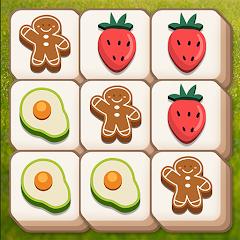
There are six, and they cluster. Presentation carries two: our database credits clean, vibrant tile designs and serene background landscapes with creating a peaceful atmosphere, and separately credits the match itself, with forming triplets delivering satisfying feedback and a sense of accomplishment. A recurring theme in our stored feedback lands on exactly that, praising the vibrant tile patterns and peaceful backgrounds.
Accessibility is filed next: straightforward touch mechanics our database says make the game highly accessible to players of all skill levels. Then offline play, listed in our database as full offline support and confirmed by the FAQ as fully optimized for solving puzzles without internet — in a game whose appeal is filling small gaps in a day, that is more than a checkbox.
The last strength is cosmetic progression: our database credits unlockable tile designs and background skins with keeping the visual experience fresh, and the FAQ says completing levels replaces the standard tiles with themed designs such as fruits, animals and seasonal illustrations.
The advertising, at the scope our records give it
This is the part to decide about before installing. Our source material states that the relaxing flow is frequently interrupted by in-app advertising it describes as highly frequent, with full-screen video ads shown between levels and also popping up mid-level. Our database’s cons file the same point more briefly — frequent interstitial ads breaking the game’s calming, meditative pacing.
Mid-level is the detail that carries the most weight, because that is the placement that cuts across a move you are in the middle of planning. We measured none of this ourselves — we have not timed an ad or confirmed a cadence, and our material gives no frequency figure, no ad length, and no indication of whether any placement can be dismissed early. Our records treat it as the leading complaint, and a recurring theme in our stored feedback agrees — praising the core gameplay as highly relaxing while saying the frequency of ads between and during levels works against that atmosphere.
The helpers, and a wording gap worth naming
Our records name three assists — Undo to reverse moves, Shuffle to rearrange tiles, and Extra Slot to temporarily expand the tray — and the FAQ says players can use them when stuck.
Our two sources describe them differently, and we would rather point that out than smooth it over. The FAQ calls them standard utility power-ups and attaches no cost. Our source material calls them premium helpers, and records that some of the more complex, highly stacked levels can feel unbalanced, occasionally forcing players to use those helpers to succeed. That characterisation is our source’s, and we reproduce it as our source’s rather than adopting it as our own finding: our material does not establish how the helpers are obtained, and carries no prices at all.
So our records document a helper system and a difficulty-balance concern on the harder layered levels, but not the economy around them. Anyone for whom the cost of an assist is the deciding factor should treat that as unresolved in our data rather than settled either way.
Where the design thins out
Two recorded weaknesses sit beyond the advertising. The first is scale against variety: our database’s cons state that the core matching loop lacks mechanical variety across what it describes as thousands of levels. That is a long-run criticism rather than a first-week one.
The second is physical. Our database records that the high density of overlapping tiles can occasionally lead to accidental taps on smaller screens — worth taking seriously where a wrong tap does not merely waste a move but consumes one of seven slots. The ceiling has its own entry in the cons list too: a punishing buffer system producing sudden game overs from minor slip-ups. That is the rule we praised above, viewed from the other side, and both readings are fair.
The names on the listing
Our records do not agree on who makes this. The developer field in our database reads Funvent Studios DMCC, while our own write-up in the same entry opens by attributing the game to Spearmint Games. The package id is games.spearmint.triplecrush, carrying both “spearmint” and “triplecrush”, while the app name is Tiledom and our source gives the fuller title as “Tiledom: Match Beautiful Tiles”. We report those exactly as recorded and offer no explanation, because our material supplies none.
Reception and recency
A 4.6 average across 945,554 ratings is both a high score and a very large sample, and our records show 100M+ downloads and a Play listing updated on April 9, 2026 — recent enough to suggest active maintenance.
One caution on the user feedback we hold: we read the four stored items as sentiment summaries written up by our team rather than verbatim quotes, and use them only for their themes rather than as rated reviews. Those themes split cleanly — visuals and strategic depth on one side, ad frequency on the other.
Who it’s not for
Anyone with a low tolerance for full-screen video advertising, given that our records place it both between levels and mid-level. Players who find sudden failure discouraging. Long-haul players who need the mechanic itself to keep evolving, given the recorded lack of variety across thousands of levels. Players on smaller screens sensitive to mistaps in dense layouts. And anyone who wants the helper economy priced before installing — our material names the helpers, describes them inconsistently, and gives no cost.
Our take
We land at 4.2, a little under the 4.6 store average. The core is well-judged: a hard seven-tile ceiling turns a calm-looking board into a planning problem, the layered stacks give that planning somewhere to go, and our records file presentation, accessibility, offline play and cosmetic progression as substantive strengths rather than filler.
The gap between our number and the store’s is almost entirely the interruption cadence, which our own material and the user themes we hold both put first, plus the difficulty-balance note our source records on the harder layered levels. We file it as situational because the advertising is the variable that decides this one: if full-screen video between levels — and sometimes during them — sits comfortably with you, our records describe a lot of carefully made puzzle here at no cost.
How We Evaluate
We did not hands-on test this game. We did not install it, clear a level, time or count an ad, buy a helper, or reach the harder layered stages. This is a desk assessment, and it rests on our own editorial database entry for Tiledom: the mechanics recorded there (the layered tile stacks, the seven-tile collection tray, the three-of-a-kind clear and the fail state), the six pros and four cons filed alongside it, the listing FAQ, and the recurring themes across published user feedback — which we read as sentiment summaries written up by our team rather than verbatim quotes, and to which we attach no individual star ratings. We also weighed the store signals: a 4.6 average from 945,554 ratings, 100M+ downloads, a Puzzle category listing, five screenshots, and a Play listing updated April 9 2026. Three limits on what follows. First, we describe tray rules, level structure and assists only where our source states them, and leave anything unstated rather than filling it in with what this style of game usually does. Second, where our material records a monetization or difficulty criticism, we report it at the scope it is written, attributed to the source, and add nothing to it — including where our material simply does not record a price. Third, where two parts of our material disagree, we say so rather than quietly picking one.
Pros & Cons
Highly Polish Visual Design: Clean, vibrant tile designs and serene background landscapes create a peaceful atmosphere.
Engaging Spatial Strategy: Layered board setups reward careful observation and multi-step planning.
Satisfying Clears: Forming matching triplets delivers satisfying visual feedback and a sense of accomplishment.
Accessible Entry Curve: Straightforward touch mechanics make it highly accessible to players of all skill levels.
True Offline Functionality: Full offline support makes it an excellent option for on-the-go play.
Aesthetic Customization Options: Unlocking new tile designs and background skins helps keep the visual experience fresh.
- ✕
Punishing Buffer System: The strict 7-slot tray limit can lead to sudden, frustrating game overs from minor slip-ups.
- ✕
Highly Frequent Ad Interruptions: Frequent interstitial ads break the game's calming, meditative pacing.
- ✕
Repetitive Level Design: The core matching loop lacks mechanical variety across its thousands of levels.
- ✕
Prone to Visual Mismatching: High density of overlapping tiles can occasionally lead to accidental taps on smaller screens.
Download


FAQs
How does the collection tray function in Tiledom?
The tray holds up to seven tiles. Tapping a tile on the board moves it to the tray; gathering three matching tiles clears them to make room.
What happens if the collection tray fills up completely?
If the tray reaches its seven-tile capacity without forming a three-of-a-kind match, the puzzle is failed, resulting in a game over.
Are there tools to help when players get stuck?
Yes, players can use standard utility power-ups like "Undo" to reverse moves, "Shuffle" to rearrange tiles, or "Extra Slot" to temporarily expand the tray.
Can Tiledom be played without cellular data or Wi-Fi?
Yes, the application is fully optimized for offline play, allowing users to solve matching puzzles anywhere without internet.
How do the tile designs vary as you progress?
As players complete levels, they unlock new aesthetic themes, replacing standard tiles with designs like fruits, animals, and seasonal illustrations.
Hot Reviews
An excellent casual puzzle game that offers a solid, self-paced mental workout to help sharpen focus and logical reasoning.
While the core gameplay is highly relaxing, the frequency of ads shown between and even during levels ruins the soothing atmosphere.
The rules are simple, but the puzzle layouts require careful, strategic planning to avoid locking up the limited tray slots.
The vibrant tile patterns and peaceful background landscapes make the visual matching experience highly satisfying.