
Impulse - Brain Training Games
Impulse is one of the better-built things in its category on Android — clean, legible, and short enough to survive contact with a real morning — and its adaptive 'brain map' gives the daily session more structure than a bare set of minigames. Two things to settle before you tap start: the cognitive-improvement pitch is GMRD's positioning rather than an outcome we can verify, and the commercial structure our source material reports (a three-day trial requiring cancellation 24 hours ahead, then roughly $6.99 a week) is worth understanding in advance.
- Anyone who wants a genuinely pleasant ten-minute daily mental-exercise habit and enjoys the exercises for their own sake — the presentation and the adaptive difficulty are the real product here
- Subscribers who will do the arithmetic first: check Google Play Pass, then weigh the reported lifetime license against the weekly plan rather than defaulting into the weekly one
- Anyone who needs assurance of a real-world cognitive result — the memory, focus, and problem-solving claims are the developer's framing, and we are not in a position to verify them
- Anyone looking for a treatment for ADHD or any other condition — the app's own FAQ describes it as a supplement to professional care rather than a primary medical solution, and nothing in this review is medical advice
- Anyone who won't tolerate a weekly subscription or an auto-billing trial, or who hopes to settle in on the free tier long-term — the free version's ad load is its most consistent complaint



Overview
Impulse is one of the better-presented apps of its kind on Android, and that is exactly why it deserves careful reading rather than a quick yes. The craft shows in the listing and in what users say about it. What no store listing can demonstrate is that any of it makes you sharper. Ten million-plus installs and a 4.5 average across roughly 562,400 ratings say many people enjoy it; keeping that apart from the improvement pitch is the work here.
What it actually is
Commercially, Impulse is a subscription: GMRD Apps Limited selling short, gamified cognitive exercises on a recurring plan, filed under Health & Fitness rather than Games. The rhythm is daily — open the app, run a few timed exercises, get scored, watch running metrics move — a fitness app’s daily workout rather than a puzzle game’s level ladder.
The baseline assessment and the “brain map”
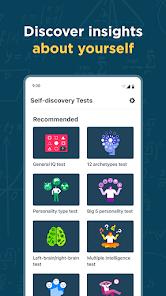
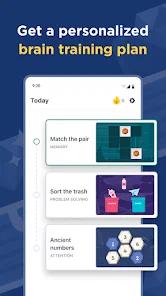
The app opens with a baseline assessment that generates a personalized “brain map” of your strengths and weaknesses, feeding a curriculum the listing says adapts as you improve — difficulty calibrated to your own ceiling, per our database, plus charts and “brain quotient” metrics over time.
Adaptive difficulty is good design: exercises that stay slightly too hard make a better habit than ones you outgrow in a week. As measurement it is narrower — the brain map is the app’s own score, telling you that you have got better at Impulse’s exercises. Whether that transfers outside the app is a question the app cannot answer about itself, and neither can we.
The exercises and the session length
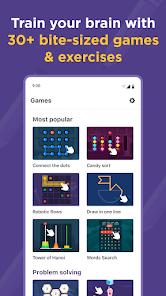
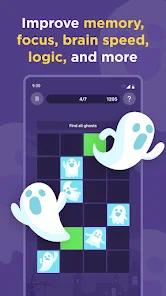
Training splits into five categories: Memory, Processing Speed, Attention, Mental Math, and Logic. The description says the design draws on neuropsychological testing and names the Stroop Test as an example of its stated basis. Working from a named framework is a more considered choice than assembling arbitrary minigames, and we credit the intent; that is a point about design, not evidence that a gamified version produces any clinical benefit.
Sessions are short, though the listing is inconsistent about how short: the description cites 10–15 minute daily sessions, our database’s pros 5–15 minutes. Either way the commitment is small, which largely decides whether a daily-habit app survives week one.
The design is the strongest thing here
On presentation Impulse is straightforwardly good, and published feedback agrees on this more than on anything else: reviewers who have used older apps describe it as feeling more like a modern gym than a digital classroom, and our database credits engagement design that makes training feel like play rather than a clinical chore.
One wrinkle: users praise the app’s “dopamine fix”, and the listing pitches partly at people struggling with doomscrolling — the same reward language as the habit it offers to replace.
The subscription, plainly
The central issue with Impulse is commercial. Our source material cites roughly $6.99 per week, or about $39.99 once for lifetime access; the FAQ notes pricing varies by region and that the app is often included in Google Play Pass. Treat those as reported figures rather than a live price list, and confirm current terms in-app.
A weekly cadence makes a running cost easy to underestimate: seven dollars reads as small, but at the reported rate that is a little over $360 across a year before any regional variation — materially more than most productivity or fitness subscriptions, which is exactly what our database flags. The reported lifetime license sits beside it at roughly six weeks of the weekly plan, so anyone staying for months is buying the expensive way.
Then the trial. Our source material describes a three-day window requiring cancellation 24 hours in advance, and reports that this often leads to unexpected charges; our database heads that con with the word “predatory” — its characterization, not our wording. Ours is plainer: three days is short, the 24-hour notice makes the real evaluation window closer to two, and the charge proceeds automatically if you do nothing.
The ADHD question
This part of the listing needs careful reading, so we will be exact about who says what.
Our database’s pros include an “ADHD Support” line describing specific modules as engineered to help users build “impulse control”. The FAQ is more careful: asked whether Impulse can treat ADHD, it says the app is marketed as a training tool for focus and impulse control, but should be used as a supplement to professional care and not a primary medical solution. Credit to GMRD for that answer. Impulse is not presented here as a treatment for anything, and nothing in this review is medical advice.
There is also a marketing observation, and it is not ours. The store description itself notes that the marketing “often targets individuals looking for improved impulsivity control”, a group it calls potentially vulnerable to the short trial and automatic billing; published feedback goes further, with reviewers characterizing the app as “marketed at ADHDers who won’t remember to cancel”. Both are attributed characterizations — the listing’s own, and users’ — not findings of ours, and we will not generalize about what any group of people can or cannot manage. Our own point is narrower and about product design: a three-day trial requiring cancellation 24 hours ahead is worth understanding before you start it, for anyone.
The free tier, and the ad load
There is a free tier, and our database’s cons are blunt: users report the free version is heavily interrupted, which our material notes can hinder the very focus the training requires.
That friction lands in an awkward place: the free tier is the mode most people try first, and it is where a prospective subscriber decides whether the exercises are worth paying for. We have no frequency numbers, so read it as a documented recurring complaint rather than a rate.
What is claimed, and what is established
Every cognitive-benefit claim in this review belongs to the developer and the listing. The description positions Impulse as designed to improve memory, focus and problem-solving; the FAQ says its exercises are “recognized for stimulating neural plasticity”. Those are GMRD’s framings. We are not in a position to verify whether this training produces real-world cognitive improvement, we ran no testing, and we will not cite research to settle it. Nothing here should be read as the app preventing, treating, delaying or improving any condition.
Credit where due: the FAQ concedes as much, calling Impulse a wellness tool and not a medical treatment.
A recurring theme in published feedback is users reporting a tangible difference in their mental agility after a few weeks. Take that for what it is — subjective perception, not measured improvement. Set the credentials aside too: the listing’s claimed “Apple App of the Day” features and the health-ministry recognition our database cites are both unverified.
Offline behaviour
Per the FAQ, most training games are downloaded to the device and playable offline, but updating your progress and receiving new personalized workouts requires a connection. A commute without signal will not stop you training, but the adaptive layer — the part the app sells hardest — needs one.
How it compares
We have not benchmarked Impulse against named rivals. Published feedback is directional and unnamed: reviewers who have used older apps say Impulse feels more modern, and that is the comparison it wins. Since real-world outcome is not something we can settle for Impulse or its competitors, the honest basis for choosing is which app you will actually open tomorrow.
A note on recency
One gap, stated rather than papered over: Google Play shows no public “updated” date for this listing, so we cannot say when it last shipped. We will not guess, nor over-read the absence — a missing field is not evidence of abandonment, and the ratings volume suggests an app still very much in circulation.
Who it’s not for
Anyone wanting assurance of a real-world cognitive result should not buy on that basis: those claims are the developer’s, and we cannot verify them. Anyone seeking a treatment for ADHD or any other condition is in the wrong place, and the FAQ says so. Anyone unwilling to take on a weekly subscription or auto-billing trial should pass, or at least check Play Pass first. And anyone settling in on the free tier should weigh its ad load — the most consistent complaint about it.
Our take
Impulse is a well-made product with a claim attached that we cannot check. The design is genuinely good — clean, legible, rewarding, short enough to survive a real morning — and the adaptive curriculum gives the daily session real structure. If you want a ten-minute daily mental-exercise habit, this is among the more pleasant ways to have one.
Buy it on that basis rather than on the cognitive-improvement pitch, which is GMRD’s positioning and not a verified outcome — and go in knowing the structure: a three-day trial with 24-hour cancellation and automatic billing, a reported $6.99 a week that adds up faster than it reads, and a roughly $39.99 lifetime alternative. Check Play Pass first.
How We Evaluate
We did not hands-on test this app. This review is a desk assessment grounded in Impulse's Google Play listing and store description, its stated features (the baseline assessment and personalized "brain map", the Memory / Processing Speed / Attention / Mental Math / Logic categories, the adaptive curriculum, the progress analytics and "brain quotient" metrics, the short daily sessions, and the streak system), the pros and cons recorded in our app database, the listing's FAQ, recurring themes across published user reviews, and the store signals available to us — a 4.5 aggregate across roughly 562,400 ratings alongside 10M+ installs, five store screenshots, a Health & Fitness category placement, and developer GMRD Apps Limited. One gap we note honestly: Google Play shows no public "updated" date for this listing, so we cannot report when it last shipped a change, and we have not guessed one. Pricing and trial figures are our source material's reported figures rather than a live price list; the FAQ itself says pricing varies by region, so confirm current terms in-app. Most importantly: every cognitive or health-related benefit described here is attributed to the developer and the listing. We are not in a position to verify whether this training produces real-world cognitive improvement, we cite no research, and nothing in this review is medical advice or a claim that the app prevents, treats, or improves any condition.
Pros & Cons
Customized Training Plans: Initial assessments ensure that the difficulty level is always calibrated to the user's specific cognitive ceiling.
High Engagement Design: The modern, vibrant UI makes the act of training feel like play rather than a clinical chore.
Comprehensive Skill Coverage: Unlike niche puzzle apps, Impulse targets a wide array of executive functions in one platform.
Detailed Analytics: Users can track their progress through sophisticated charts and "brain quotient" metrics over time.
ADHD Support: Specific modules are engineered to help users build "impulse control," directly addressing a major focus-related need.
Rapid Session Length: Puzzles are designed to be completed in 5–15 minutes, making it easy to build a daily habit.
Global Pedigree: Recognition from major app stores and health ministries adds a layer of credibility to its training modules.
- ✕
Aggressive Subscription Costs: A weekly charge of $6.99 is significantly higher than most productivity or fitness apps.
- ✕
Predatory Trial Tactics: The three-day trial requires cancellation 24 hours in advance, often leading to unexpected charges.
- ✕
High Ad Volume in Free Tier: Users report that the free version is heavily interrupted, which can hinder the focus required for the training itself.
Download


FAQs
Is Impulse - Brain Training scientifically proven?
Impulse uses games based on established neuropsychological tests like the Stroop Test and various memory span tasks. While it is a wellness tool and not a medical treatment, these exercises are recognized for stimulating neural plasticity.
How much does the premium subscription cost?
The pricing varies by region, but standard reports cite $6.99 per week or a $39.99 one-time payment for lifetime access. It is often included in the Google Play Pass.
Can I use Impulse to treat ADHD?
The app is marketed as a training tool to improve focus and impulse control, which are challenges associated with ADHD. However, it should be used as a supplement to professional care and not a primary medical solution.
What happens if I miss a day of training?
The app tracks your "streak," and missing a day will reset it. However, your cumulative progress and brain map remain saved, allowing you to pick up where you left off.
Does the app work offline?
Most training games are downloaded to the device and can be played offline. However, updating your progress and receiving new personalized workouts requires an internet connection.
Hot Reviews
Many users report feeling a tangible difference in their "mental agility" after a few weeks of use. The app is praised for its "dopamine fix," where the satisfying sound effects and visuals make self-improvement feel addictive.
A significant volume of feedback highlights frustrations with the trial-to-subscription pipeline. Several users have warned that the app is "marketed at ADHDers who won't remember to cancel," calling the weekly $7 charge "crazy".
Reviewers frequently compare Impulse to older apps, noting that Impulse feels more like a "modern gym" than a "digital classroom." The "personality tests" integrated into the experience are a fan-favorite feature.